
Wood heat has been around forever. Well, I can’t say forever: I suppose there was a point in time when mankind didn’t even have control over fire! But once we did, wood has been the fuel of choice ever since.
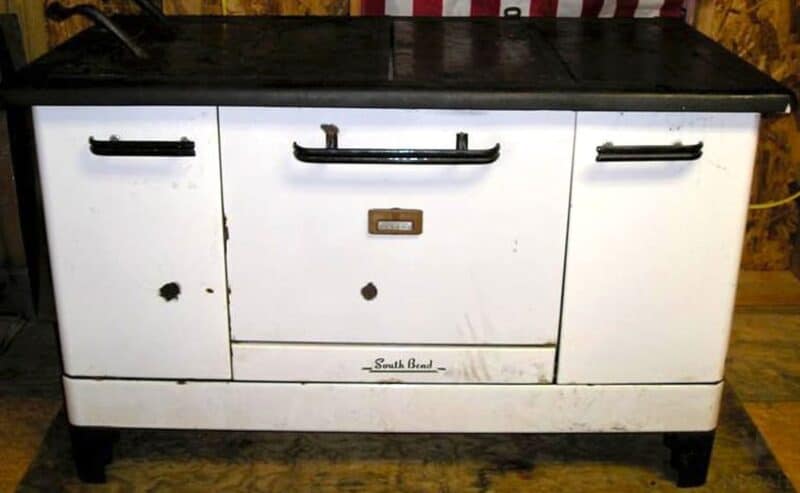
Versatile, abundant, and cheap, it still makes a great choice today if you have a wood stove for primary or supplementary heating.
Modern wood stoves are remarkably effective and efficient compared to the designs of yesteryear, but they aren’t all created the same.
Some types are known to be more efficient than others, and that can help you enjoy more heat longer and make the most of your fuel, which is always a good thing.
Keep reading and I’ll tell you about the 5 most efficient wood stove designs to consider.
Fireplace Insert
A fireplace insert is exactly what it sounds like. It’s basically a metal or steel box, a type of module, that you can install in the firebox of a pre-existing fireplace and chimney.
It’s a wonderful way to spruce up an existing fireplace as part of an efficiency overhaul, and will let you enjoy the ambiance in your living room or wherever your fireplace happens to be.
Typical radiant wood stoves, made from cast iron or steel, have an efficiency rating that’s anywhere from 50 to 70% on average.
Fireplace inserts are not remarkably more consistent than this, but they tend to more consistently be on the higher end of that range, with most being anywhere from 65 to 70% efficient.
This is certainly a worthwhile improvement, especially compared to an old and poorly maintained radiant stove!
Circulating
Circulating wood stoves increase efficiency and the throw of hot air into a room because of their special double-wall construction. The firebox and the walls of its chamber sit inside an outer set of walls that forms the exterior of the stove. As air is heated by the fire, it circulates through and between the inner and outer walls.
From there, either convection or fans will push the heat out and into the room. These fans might themselves be powered by rising hot air or electricity, depending on the model.
In any case, the result is greater comfort and coverage because you won’t have to sit as close to the stove to feel its warmth.
These stoves are also nominally safer compared to typical radiant models because the outer walls don’t get quite as hot on average.
Efficiency gain over radiant wood stoves is minor, but still noteworthy, anywhere from 65 to 80%.
Soapstone
One of the coolest and certainly most attractive types of wood-burning stoves isn’t made from metal at all, but soapstone!
Soapstone stoves offer extraordinary heat retention and a gentle, gradual release of that heat into the surrounding room. In a way, they are really just a specially constructed type of a typical radiant stove design.
You might say a soapstone stove gives you more bang for your buck because it will release accumulated heat over a much longer period of time even if you aren’t actively heating the stove with fresh wood.
If you compare them to iron or steel radiant stoves, soapstone fares very well with efficiency metrics averaging anywhere from 70 to 80%. Very impressive! However, these stoves are not without some drawbacks…
For starters, they are massively heavy compared to their metal counterparts, more fragile, more expensive, and tend to be more difficult to install.
They also start heating up the room more slowly because the soapstone absorbs so much more heat initially. But a nice perk is that the outer surface won’t get quite as hot compared to a cast iron or steel model.
If you’re willing to shell out for a soapstone stove, you probably won’t regret it!
Catalytic
One of the most technologically advanced types of wood-burning stoves are catalytic models. If you immediately thought of a catalytic converter in your car, you are on the right track!
Catalytic stoves, sometimes called catalytic combusters, use a special element that will burn off tiny particles of fuel still present in smoke and exhaust gases at a much lower temperature than would ordinarily be required.
The payoff is you get greatly increased efficiency, with most models being well above 80%. This means significantly more warmth per unit of fuel and, as a happy byproduct, reduced emissions.
Catalytic stoves are definitely one of the most environmentally friendly models if you care about that sort of thing, and they also burn steadily for a much longer period of time on a given amount of fuel compared to radiant or circulating models.
But for all of their advantages, catalytic stoves have some drawbacks to be aware of. Cost is a major one, both in terms of initial acquisition due to complexity and the special materials, and also maintenance.
Servicing the catalytic element will take more time and effort, and depending on your usage tempo, you’ll have to replace it every three to five years.
Operation of catalytic stoves can also require a little more know-how and care in use to get them burning at maximum efficiency.
Generally, though, this is a trifling concern compared to the cost and nothing that should stop you from enjoying the efficiency and fuel savings these models can offer.
Baffle
Last but not least, we have baffle-type stoves. Baffle stoves use a simple, or sometimes very complicated, series of metal baffles inside and around the firebox to route smoke and other gases through the body of the stove.
This approach gives us two advantages in the form of better heat gain under all conditions because:
- the hot exhaust doesn’t escape the body of the stove as quickly,
- and also more complete combustion, meaning a fair improvement in efficiency of between 65 and 75%.
One of the best attributes of the baffle-type stove is that your chimney and duct will require less cleaning and maintenance because they tend to cut down on soot and creosote buildup drastically. But, as with all the other stoves on our list, there are flaws to contend with…
By their very nature, baffle stoves tend to be more complex and some can be highly complicated compared to radiant and circulating stoves. Maintenance of the stove itself or parts replacement can be a major pain in the butt.
The baffles themselves will slowly degrade over time and it might require replacement before the service life of the stove is finished.
It can be such a tricky job that I know a few baffle stove owners who opted to save time and grief and just buy a completely new stove when that day arrived!

Get your gift and learn things like:
- how to make this really quick pest spray
- how to prevent egg waste
- two cheap automation devices that will make your life easier
Tom has lived and worked on farms and homesteads from the Carolinas to Kentucky and beyond. He is passionate about helping people prepare for tough times by embracing lifestyles of self-sufficiency.