
Squash bugs are notable garden pests. They are large, their penetrating mouthparts do considerable damage to all parts of vulnerable plants, and worst of all, they reproduce pretty quickly – and can be difficult to get rid of without a specially tailored approach.
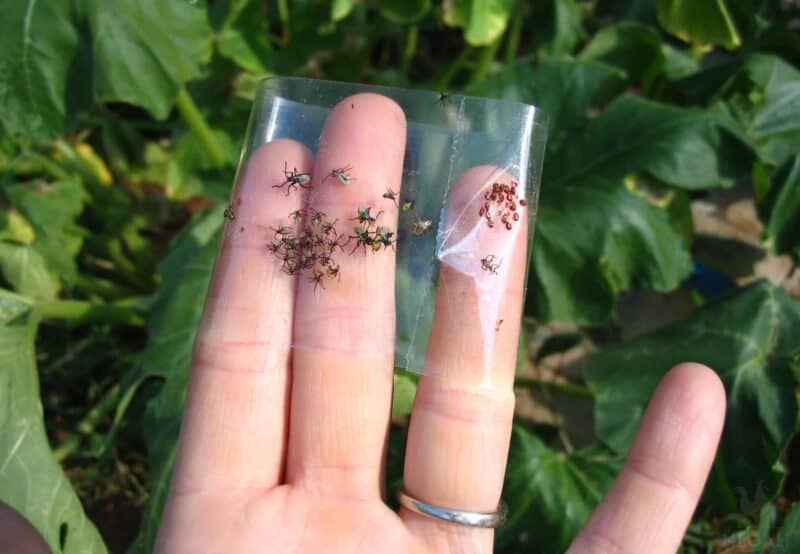
I know more than a few gardeners who have wound up at their wit’s end because of these big, brown bugs.
That doesn’t have to be you, and to help you in the fight, I’m bringing you a bunch of proven tactics for eliminating the squash bug menace once and for all. Keep reading and I’ll tell you everything you need to know…
What Are Squash Bugs?
Squash bugs, scientific name Acanthocoris scabrator, are large, mottled brown bugs that look a lot like oversized stink bugs.
There are differences in the structure of the abdomen and the antennae, but they are easier to identify simply on their larger size, slenderer build, and somewhat flattened appearance compared to a common stink bug. But just like stink bugs, they also emit a foul odor when you hassle them or crush them.
Another easy way to identify them is to look for a ring of light tan or orange dashes surrounding the edges of the abdomen.
Although squash bugs can fly, they are far more commonly found crawling all over surfaces and plants in and around your garden. They do this looking for vulnerable plans to suck nutrition out of.
As you probably guessed from the name, every manner of squash is on the menu, including winter and summer varieties from pumpkins and zucchini to spaghetti squash, acorn squash, and more, and other plants besides including tomatoes, eggplants and peppers, and even fruits like mangoes and all kinds of berries.
Stink bugs feed on fruits directly, but also on all other parts of the plant including leaves and stems, and do so by injecting a digestive secretion that is then sucked out as a slurry with their straw-like mouth parts. The results are sunken, rotting and quickly withering plants.
Young leaves especially are vulnerable and will die quickly, depriving the rest of the plant of nutrition and stunting your harvest.
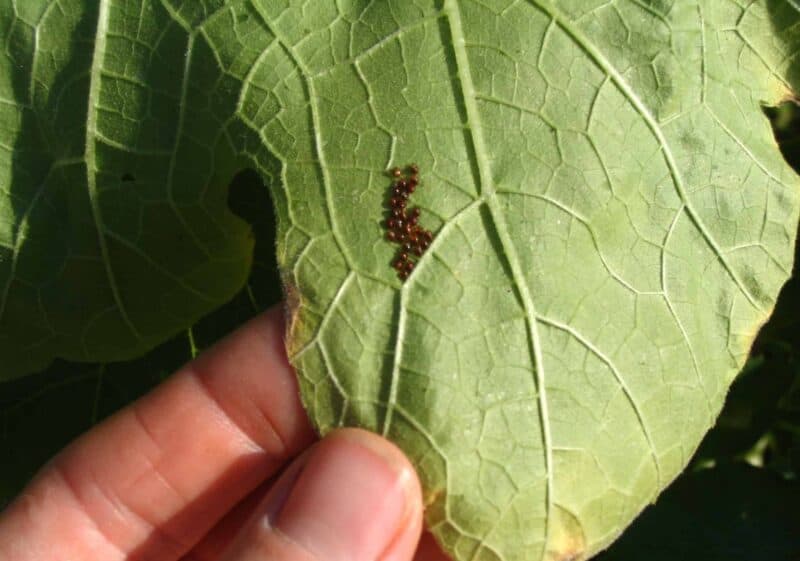
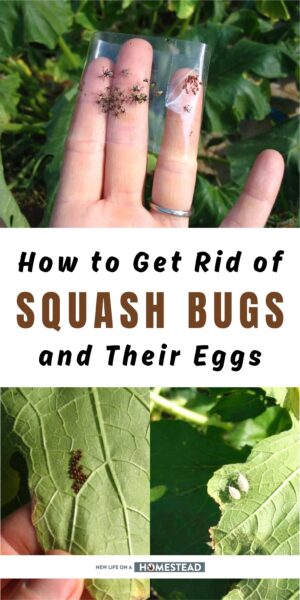
They really are a menace, and you’ll need to be especially alert to spot their eggs which they lay in clusters on leaves and elsewhere on the plant. Look for what appears to be a small coffee bean-shaped case with a glossy finish; that’s the eggs!
In a little time, those eggs will hatch into adolescent squash bugs called nymphs, which will then grow up into adults repeating the destructive cycle.
Stopping Nymphs Prevents Plant Damage Later On
Special mention should be made of the nymphs because they look quite different from adult squash bugs…
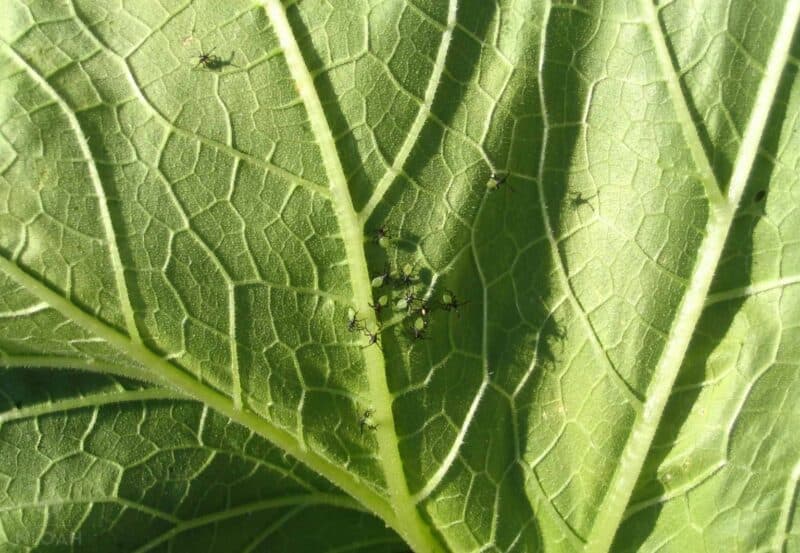
Nymphs are smaller and typically much lighter in color compared to adults, often gray or sandy brown. They also show strongly contrasting jet-black legs which can make identification easy, and while they’re at this tender age they tend to stick together with other young bugs. If you find one nymph, there are bound to be more nearby so start investigating closely!
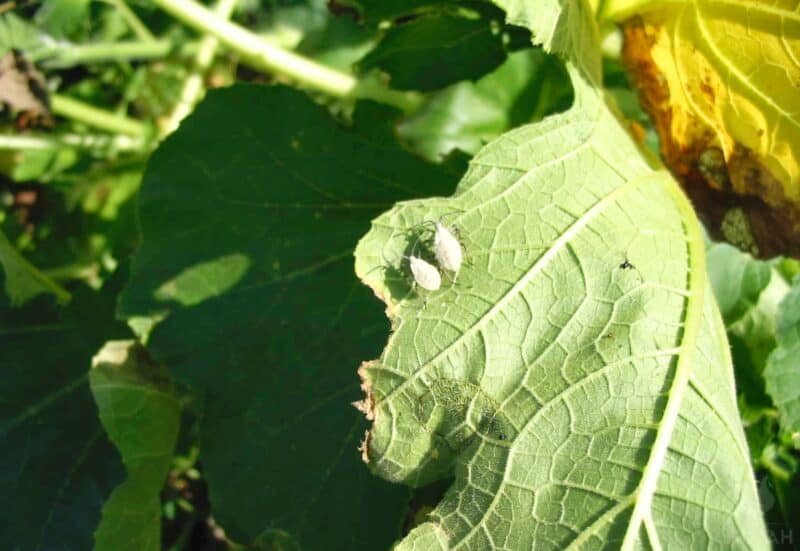
If you can catch them and eliminate them while they are young, you can save yourself a ton of damage and hassle in the future. Squash bugs all reproduce very rapidly and persistently, and this means a minor incursion can quickly give way to a full-blown infestation that will require drastic measures to curb.
A Thorough Approach is Definitely Needed
As mentioned, squash bugs are very pervasive and persistent and this means you must employ a comprehensive approach to combat them. Preventing them from getting to and nesting on plants in the first place is imperative, but you also have to assume that some of them will get through and must be dealt with directly.
A combination of prevention and active countermeasures is what’s needed. I’ve provided plenty of both in the following sections, and it’s up to you to decide which ones are best for your situation and your unique circumstances.
Prevent Squash Bug Damage with These Methods
When it comes to preventing squash bug damage and infestation, as a rule, the more of these methods you can employ simultaneously the better your protection will be.
Inspect Daily
No one wants to do it, but it’s critical for stopping the squash bug scourge. Inspect your plants daily, and not just your pumpkins, zucchinis, and other typical squashes. Remember that squash bugs can hide and feed on lots of different plants and not just on the fruits themselves.
You need to be diligent about checking under leaves and vines and especially close to the ground if there’s lots of litter or other ground coverings.
Remember that catching an infestation early is the best thing you can do if you want to make your life easy later.
Scrape Squash Bug Eggs Off Plants
If you spot a clutch of squash bug eggs, those glossy little cases that look like miniature coffee beans, you can gently and safely remove them from the plant using any blunt tool. I’ve seen plenty of folks that have good success using a butter knife or the back of a sharpened blade, but I prefer using a chopstick or wooden skewer for the purpose.
Scrape them off gently and then make sure to crush them totally or drop them into one of the solutions I will describe in the next section that can kill them off before they hatch.
Plant Squash Bug-Repelling Companion Plants
Believe it or not, there are some plants that will actively repel squash bugs. If you can plant any of them alongside your more vulnerable plants, they will provide a degree of protection to your vulnerable crops.
Herbs like dill, lavender, catnip, lemon balm, and oregano are proven effective at repelling all sorts of insects because they contain volatile compounds that are basically natural insecticides. Other effective but decorative plants include petunias and marigolds.
These are just a few, and this is a great way to repel squash bugs without getting into more invasive or active measures, but of course, you’ll have to care for these plants as you would all the others in your garden.
Don’t Use Mulch Unless Totally Necessary
I know this is bound up to be bitter news to at least some of us. The fact is that mulch and other ground coverings like pine straw and more tend to be highly preferable environments for squash bugs to shelter in.
They love to hide under stuff and then out of the way nooks and crannies at night, and they also try to overwinter in insulated places. Mulch and other garden litter on the ground is perfect for the purpose.
This means if you’ve got any of them in your garden you have a higher risk of squash bug infestation. I know, ground coverings like this have lots of very real advantages but if your area is already prone to hordes of squash bugs or you’ve suffered from them in the past, it might be time to make the hard choice.
If you do decide to take up your mulch out of the garden and have been struggling with an active infestation, I recommend you burn it to completely eliminate the bugs. They can exit the pile and then fly right back to your garden!
Remove and Dispose of Old Squash Plants to Reduce Overwintering
If you’ve got any old, dead, or dying plants at the end of the fall season, go ahead and get rid of them permanently, preferably by burning or mulching. As mentioned, these bugs can overwinter to emerge again in the springtime and wreak even more havoc.
Naturally, they like to feed on and infest edible plants, so your squash plants and also your nightshade veggies like tomatoes, eggplant, and peppers are high-likelihood hiding spots that should be reduced and eliminated.
Be especially diligent about this if you had a bad year of squash bug activity!
Consider Bug Resistant Squash Varieties
It’s possible to reduce squash bug harm generally by relying on squash bug-resistant varieties of their favorite foods.
Young plants tend to be the most vulnerable to squash bugs, with mature plants being more resistant, so if you can get varieties like Royal Acorn, Sweet Cheese, and Butternut to maturity you’ll be better equipped to haul in a good harvest despite the presence and activity of squash bugs.
This won’t be everybody’s cup of tea, but it’s certainly a viable strategy for harm reduction.
Use Row Covers or Mesh to Protect Vulnerable Plants
As always, vulnerable plants can be protected by individual nets or by entire row covers. If your squash bugs cannot reach the plants they cannot feed on them and they cannot lay eggs on them.
This is a labor-intensive and potentially expensive method of prevention, and also one that can cause other problems when it’s time to pollinate your blooming plants, but that can be worked around by various means.
Consider this solution mandatory if you live in an area that is known for serious squash bug infestations, and you can either roll back or temporarily remove the covers at the appointed time to give pollinators access to them assuming you aren’t going to try and pollinate them yourself.
Remove Active Squash Bugs with These Methods
Assume that no matter how diligent you are with your prevention efforts, squash bugs will eventually gain access to your plants. When they do, you’ve got to get rid of them to start breaking the reproductive cycle and reducing population.
Make a Squash Bug Trap
You can use a small, square piece of plywood, a flat paver stone, or anything else that’s flat, rigid, and low to the ground. Prop it up just a little bit using stones or anything else that’s convenient but keep it very low to the ground and level more or less. At night, many squash bugs will take shelter beneath the object and congregate together.
You can come out right at sun up the next day and then smash them all at once by pressing your panel into a hard, flat surface. I like to use another piece of plywood or an identical paper stone for the purpose, but you can make do on your driveway or anything else that’s convenient.
It’s a little gross, and it will stink some, but it’s very easy to set up and completely repeatable. It also has the added advantage of not using any poisons or other chemicals.
Use Decoy Plantings
Another clever way to use additional plants in your efforts against squash bugs is to put in sacrificial or decoy squashes. Squash bugs, obviously, love squashes above pretty much everything else but there are certain varieties that are even more attractive to them than usual. This is sometimes referred to as the practice of trap cropping.
Planting an outermost row or perimeter of highly attractive squashes like Blue Hubbard will see most of these squash bugs head to those plants and spend a whole season devouring and nesting on them.
Note that you must take the time to collect and dispatch both the bugs and their eggs on these plants unless you want them to completely overrun your property. This is a great way to protect the produce you actually plan on eating.
Pick Off Squash Bugs by Hand
Sometimes the old ways are best. Squash bugs aren’t dangerous and on your daily inspections, any that you find can be plucked off or flicked off of your plants to remove them.
Note that it isn’t enough to just knock them off: if you don’t crush them, I strongly recommend you dunk them in a small pail of water made sudsy with a few tablespoons of dish soap. The bugs will invariably drown and die and then you can just throw them in the trash if you want or dump them anywhere else on your property.
Try a Dish Soap Spray
Speaking of dish soap, you can use dish soap as a countermeasure spray against squash bugs. Grab a half gallon to a gallon of water, stir in a tablespoon or two of dish soap, then load it into a spray bottle or a garden sprayer and go to town.
It won’t hurt your plants, and you can directly squirt any bugs you see whether they are adults or nymphs. The soap will slowly break down the coating of their exoskeleton resulting in their eventual dehydration and death. If you’re worried about chemical residues in the soap, just try an organic or natural dish soap brand.
Make a Better Spray Using Neem Oil
If you want even better bug-killing power out of the previous mixture, add a tablespoon of neem oil, a natural and potent insecticide, to the mixture of water and soap. Make sure you stir it very vigorously before you use it to combine the ingredients because it has a tendency to separate over time.
This can kill squash bugs quicker and so means they’ll have less time to do damage overall.
Vinegar Spray Also Works on Squash Bugs
If you don’t have dish soap handy or just don’t want to use it on and around your plants, you can try vinegar. The recipe is the same more or less and two to three tablespoons of apple cider vinegar to a half gallon of water. Add to a spray bottle or garden sprayer, and then hose the little beasts down.
You don’t need to worry about this stuff harming your plants unless they are incredibly delicate or already vulnerable, but keep in mind that repeated applications can start to yellow foliage. I really like this method particularly because it doesn’t add any sort of strange chemical that could even conceivably be harmful to food I’m planning on eating later.
Diatomaceous Earth Will Kill Squash Bugs
A long-time standby for gardeners all over the world, diatomaceous earth is a great way to kill off mass amounts of squash bugs and other pests over time. This stuff works by lacerating their exoskeletons and causing them to dehydrate.
Simply sprinkle a ring of powder around the base of every plant and a somewhat lighter coating everywhere in the garden. It is completely natural and not harmful to people or pets. However, a major downside is that it kills insects indiscriminately, including helpful insects that also reside in your garden.
Import or Attract Squash Bug Predators
Squash bugs have plenty of natural predators at all stages of life, with various beetles, damselflies, tachinid flies and mantises that massacre these crop pests as adults and nymphs by the boatload. Even better, they won’t hurt the plants themselves meaning they are great guardians for your garden.
The trouble is getting them where they need to be. It’s possible to attract these insects if they live in the area by planting plants that they are drawn to, and it’s sometimes possible to purchase them online or elsewhere to release them into the wild on your property, so to speak.
They work best for preventing squash bug populations from spiraling out of control, but major infestations can’t be curbed by them alone.
Hose Them Off
If a plant is being mobbed by squash bugs, you can remove them in a single blast by hitting them with the water hose. Use a setting that is a larger, coarse stream of water or a “shower” rather than a thin, high-pressure jet to avoid damaging plants and fruit.
Thoroughly wash the plant, making sure to get under leaves and vines, and then dispatch the squash bugs before they scurry away on the ground.
Try Commercial Pesticides as a Last Resort
As a last resort, you might try to use typical pesticides against squash bugs, specifically ones that are rated as safe for use on and around fruits and veggies.
Although squash bugs have a reputation as being resistant to some pesticides, they still fall prey to pyrethrin-based chemicals and other formulations. You can look for a species-specific killer or any wide-spectrum product designed for garden use.
As always, make sure you thoroughly read and follow all instructions for preparation, mixing, and application that were provided with your product. Improper use can hurt you, your pets or family, and the environment!

Get your gift and learn things like:
- how to make this really quick pest spray
- how to prevent egg waste
- two cheap automation devices that will make your life easier
Tom has lived and worked on farms and homesteads from the Carolinas to Kentucky and beyond. He is passionate about helping people prepare for tough times by embracing lifestyles of self-sufficiency.