
Raised beds are one of the most versatile ways you can set up your garden, or a great addition to a traditional in-ground garden. The beds make it easier to care for your plants, save your back, and can be downright attractive when done properly.

Also, raised beds are easy to build yourself. Easy to build, but hard and expensive to fill. The taller the bed, the more filler you will need, and if you’re going to use nothing but premium potting mix or rich topsoil, you can spend a small fortune.
That is, you’ll spend a small fortune if you don’t reach for the materials I’m going to share with you on the list below. In this article, I’ll tell you about five things you can use to help fill up your garden beds quicker and cheaper.
Logs, Branches, Sticks
This is my favorite way to go for tall beds. Depending on the size and overall height of the beds themselves, adding logs, branches, and sticks gives you a two-pronged benefit:
it eats up space so you don’t have to use as much dirt, and as the wood slowly breaks down over time, it adds carbon and other nutrients to the beds themselves.
Plus, most of us have plenty of these lying around on our own properties or we generate a pile of them as a consequence of doing yard work and prepping firewood. If you don’t have any, your neighbors can probably hook you up.
The big downside with reaching for wood here is a consequence of the benefits; as it breaks down over time, the surface will start to sink. That means you’ll need to add more soil to keep them topped off over time.
If you do want to use branches and sticks here, use varying sizes and shoot for filling up the beds about halfway, ensuring that the roots of your plants will have plenty of room to grow without running into them.
Rocks
If you have lots of rocks handy, be they stones or gravel, there’s no reason you can’t use them as filler in your raised beds. Unlike wood, rock won’t add anything meaningful or significant back to the soil in terms of nutrients, but on the other hand, it doesn’t break down over time either, meaning less labor in the long run.
The big shortcomings with rock are probably what you are thinking right now: it’s heavy, and that can make transport and installation a pain, and you’ll have to take care that the beds themselves are strong enough to withstand the lateral pressure they can exert on the sides. If the rock starts to slump one way or the other, it can bow or blow out the sides of your bed!
Removing the beds and leveling the area, too, will be twice as painful in the future if you’ve used rock because you’ll have to get rid of it again!

Leaves and Straw
Normally not considered a good choice for filling raised beds because they break down quickly and lower the soil level just as quickly, as part of a more strategic plan, leaves and straw can work wonders in raised beds.
Adding layers of leaves, straw, or both between layers of dirt, compost, or other materials can make for extremely rich bed soil that your plants will love.
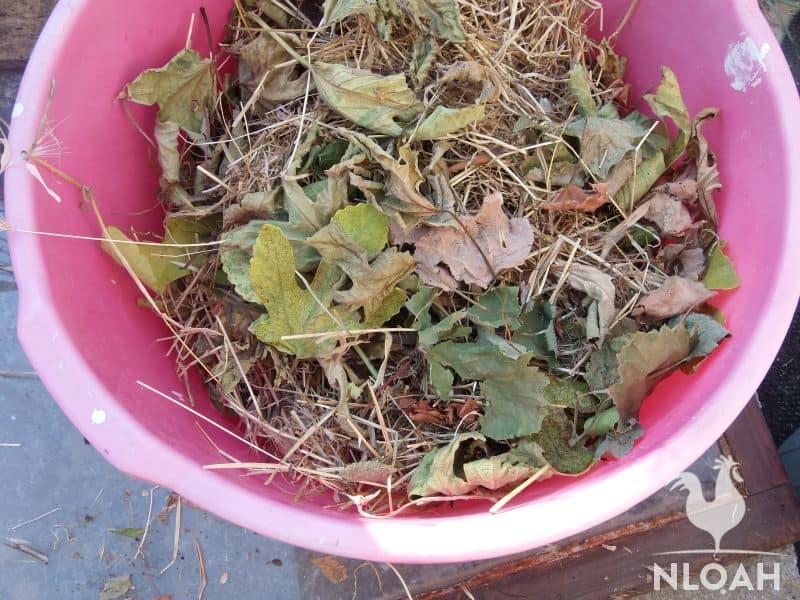
A little bit of patience goes a long way here; add the leaves and straw, along with the other material, then give it time to break down, tracking the soil level over the following weeks and months.
Once it slows down or stops sinking entirely, give it a little top-off and then plant. What you don’t want to do is use nothing or mostly leaves and/or straw and then a thin layer of dirt. That will prove disastrous.
Fill Dirt
A time-tested trick and a good one. You can save yourself a ton of money by using common fill dirt to fill your beds about halfway up, or even a little more if you are planting herbs, veggies, or ornamentals that have shallow root zones.
You can use any dirt you can lay hands on, technically, but you’ll get best results by avoiding troublesome soils like those that are too loose or have too much clay. Likewise, make sure that your dirt hasn’t been sourced from any contaminated area!
Triple Mix
The first-place choice for filling, or at least topping, raised beds. Triple mix is, as the name suggests, a three-part mixture consisting of peat moss, topsoil, and compost in equal amounts.
It is extremely nutrient-rich, has a perfect texture for basically every kind of plant, and it adds nutrients back to the dirt as it breaks down over time. You can also mix your own for cheaper than you can usually get straight topsoil for.
Great stuff, and the perfect thing to top your beds with. But because it contains so much organic matter, matter that will decompose in time, you’ve got to be prepared for a periodic top-off every 3 to 6 years, or 2 to 4 years if environmental conditions facilitate breakdown.


Get your gift and learn things like:
- how to make this really quick pest spray
- how to prevent egg waste
- two cheap automation devices that will make your life easier
Tom has lived and worked on farms and homesteads from the Carolinas to Kentucky and beyond. He is passionate about helping people prepare for tough times by embracing lifestyles of self-sufficiency.