
Once you get into keeping chickens, and I mean really into it, you’ll discover that half the fun is learning all about the different domestic breeds out there. Just like dogs and cats, different chicken breeds have their own unique attributes, quirks, and personalities…

Suffice it to say that there is a chicken out there that’s just right for everyone, and whether you’re looking for the perfect breed for your planned flock or an interesting and novel new addition, the hunt, as it’s called, is the reward for many a keeper.
To help you find that perfect breed, I’m bringing you yet another need-to-know breed guide, this time on the Cochin.
This huge, fluffy Asiatic breed is a beloved exhibition bird and an increasingly popular pet chicken. If you have your eye on them, keep reading and I’ll tell you everything you need to know…
At a Glance
- Breed Name: Cochin
- Origin: Chinese
- Breed Type: Exhibition
- Standard Size: 12 lb, 22 in, roosters. 10 lb, 16 in, hens.
- Bantam Size: 2 lb, roosters. 1 ¾ lb, hens.
- Plumage: White, blue, brown, black, buff, barred, golden laced, silver laced. Many other colors for bantams.
- Temperament: Personable, docile, and friendly. Makes a great pet that is comfortable with handling. Avoids conflict with other chickens and people unless broody.
- Egg Laying: 150 on average.
- Age of Lay: 8 months.
- Broodiness: Moderately high.
- Lifespan: 8 to 10 years, or slightly more with excellent care.
- Noisiness: Very quiet.
- Foraging Ability: Poor, they tend to be lazy and have poor hunting instincts.
- Cold Tolerance: Good if kept dry, but loose, fluffy feathers and feathered legs make them prone to frostbite.
- Health: Prone to unhealthy weight gain, vulnerable to bumblefoot and falls. Highly prone to infestation by external parasites.
History of the Breed
The Cochin is thought of as a stereotypical Chinese breed, but if you dig into the origins of this venerable domestic bird, you’ll find that that’s not quite true.
It is thought that the birds were originally developed from Chinese stock, yes, but as best we can tell from the evidence, Cochins were first brought into the West via a French colony in Vietnam, and even there, they were already descended from some truly jumbo-sized Chinese chickens.
The reason for this persistent misconception is that the Cochin was originally called the Cochin China! It’s hard to get rid of the association with a name like that, even though the name was shortened to just Cochin decades ago.
More importantly, these birds have the honor of being some of the most beloved domestic specimens ever, and they single-handedly, or single-wingedly, set off chicken fever throughout Europe in the middle of the 1800s. They’ve been with us ever since!
Long kept both as a beautiful pet or companion animal and historically for being a good layer of jumbo eggs, selective breeding for exhibition over the years has given us the Cochin of today.
This bird may be a so-so layer but it’s a truly gorgeous, big, fluffy, and friendly bird that’s perfect for fanciers who want to get up close and personal with a docile chicken.
Cochin Uses
Today, Cochins are overwhelmingly kept as pets, showbirds, and occasionally as supplementary egg layers or surrogate mothers in backyard flocks.
As we will learn, these birds are big, impressive, docile, and frankly pretty lazy. They are entirely happy to just hang around and, if raised right, be held, petted, and treated very much like you would a dog or cat.
Although Cochins do lay eggs, and a fair few of them nominally, they have a tendency to lay only during the colder months, and they also have a marked tendency to go broody, which, of course, will cut off the egg supply.
Despite their great size, they don’t make good meat birds either: they mature slowly, and even if harvested as soon as possible while still young, physically, their meat is dark, stringy, and of generally poor flavor.
Size, Weight, and Build
These are big and impressive birds! Roosters tip the scales at a whopping 12 lb on average and can be somewhat heavier. The males usually stand around 22 inches tall.
The hens, as ever, are smaller as a rule but still quite beefy, weighing around 10 lb on average, but they are significantly shorter, usually topping out at 16 inches.
These birds are heavy, but they aren’t quite as girthy as they look, at least not usually. Their feathers are loose, puffy, and serve to increase their overall impression of size.
I should note, though, that Cochins are pretty notorious for being even heavier than that categorically if they aren’t given a moderated diet. They aren’t particularly active, and they are big eaters, especially if they are given unhealthy, fattening foods. They can really pack on the pounds and turn properly rotund!
Are There Cochin Bantams?
Yes, indeed there are. Well, sort of. The Cochin bantam, sometimes known as the Pekin bantam, is called as such officially, but genetically, it is not a relative or a dwarf variety of the full-sized Cochin.
The shorter legs, different posture, wide variety of different plumage colors, and other physical differences, along with genetic confirmation by scientists, confirm as much.
Roosters weigh just 2 lbs, and fully grown hens just 1 ¾ lbs. Superficially, they have many of the same desirable characteristics as the standard Cochin, including fluffy, loose feathers, a wonderfully docile temperament, and a generally good disposition.

Plumage
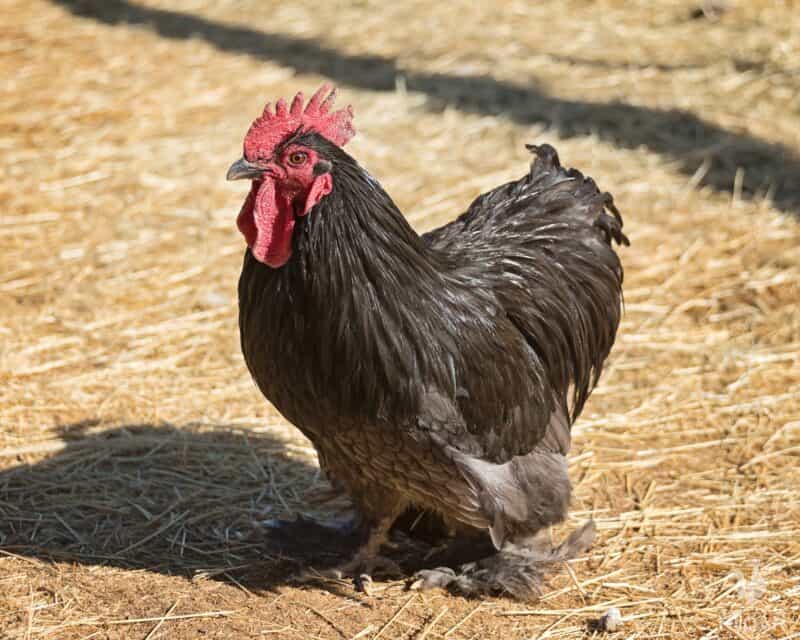
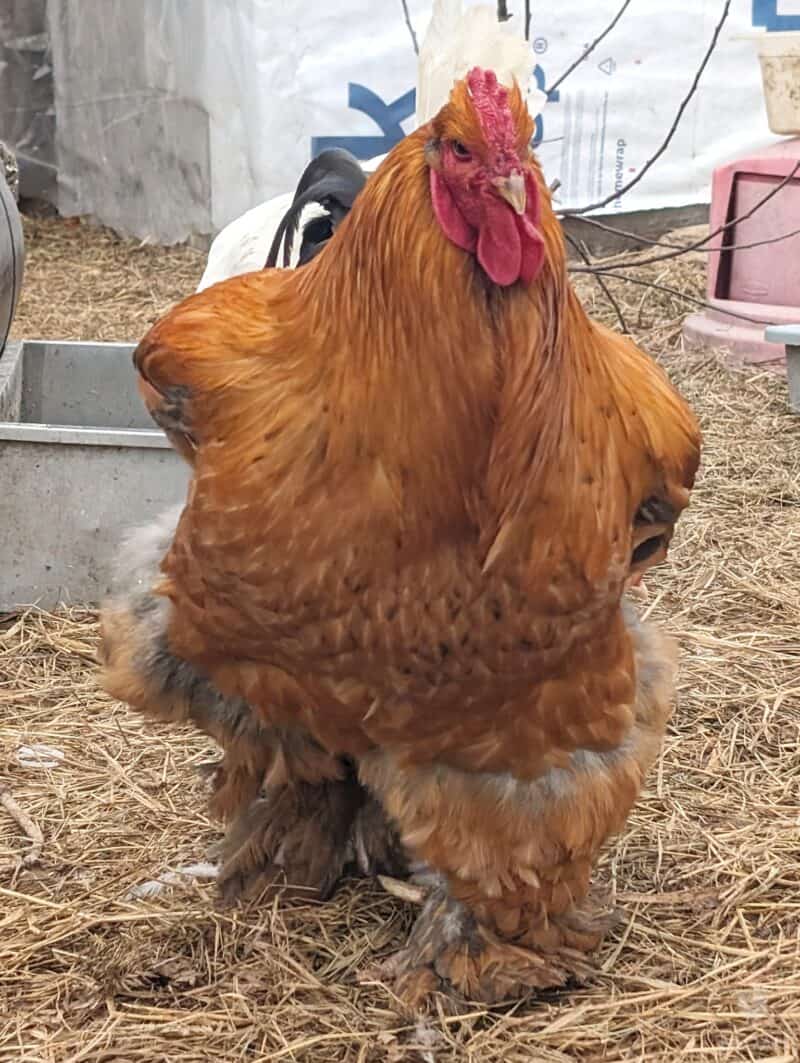
The defining trait of the Cochin is its plumage. Often described as excessive, their feathers are loose, ruffled, fluffy, and cover them from the tops of their heads all the way down their legs and to their feet.
This soft, appealing appearance is downright alluring, and it’s why so many keepers choose these birds as purpose-picked pets. Not only are they fun to pet and stroke, but they don’t mind handling and attention as a rule!
Depending on what country you are in, you’ll find many different standard colors for the Cochin, and many more non-standard colors. In the United States, the APA officially recognizes white, black, blue, brown, buff, barred, golden laced, silver laced, and partridge.
In England, they recognize fewer colors overall than the U.S. but throw in cuckoo and grouse.
Specialist breeders have selected for many other colors besides, and owing to the popularity of the Cochin, it’s conceivable that you can find nearly any color you prefer as long as you don’t mind skipping over strict breed standards.
Temperament
Famously friendly and highly docile. If I were going to pick just one breed of chicken that I could bank on being a total sweetheart, it would be the Cochin.
I can think of precious few exceptions where individual birds, given a modicum of care in their upbringing, weren’t good-natured and amenable to people and other animals.
As a rule, with only one exception (which we will get to below), these birds are friendly and easy to handle, even by children, and this makes them a good backyard flock option for families with kids.
However, you can make an argument that the Cochin is a bit too amenable, specifically with other chickens. In mixed flocks, they’re often targets of bullying, and usually wind up low on the pecking order if placed with more assertive breeds.
This can become a serious problem for flock cohesion and harmony if not managed by a seasoned keeper. Among their own kind, though, you won’t have to worry about such issues…
Egg Production
Back in the day, Cochins were pretty good egg layers, at least compared to the utilitarian breeds of the time. Today, though, after countless generations of selection for good looks and docility, they’re only slightly above average at best.
A hen in her prime can be depended on to lay around 150 very large eggs per year on average, up to 180 at most. That’s not a lot compared to super-layers like Australorps or Leghorns, but it is more than enough to keep a family in eggs throughout the year with just a few birds.
Something else to note is that Cochins will also dependably lay through the winter. That’s a nice perk, but it comes with a quirk: sometimes, they will only lay during the colder season! That can set the stage for disappointment if you are depending on these birds for eggs all year round.
Age of Lay
Around 8 months. Cochins are among the slowest-growing domestic breeds, and accordingly, they reach sexual maturity later than most.
Egg Color
Cochins lay light to medium brown eggs.
Are Cochins Broody?
Yes, they are fairly broody. Above average at least.
A couple of things to consider: if you don’t stay on top of egg collection, a hen will generally want to hatch her clutch once she has several eggs together. When this instinctive change happens, she will stop laying eggs! That means no more eggs for you.
Also, this is the exception to the rule I talked about above in the section on temperament: a broody Cochin mother will defend her eggs with surprising ferocity! These birds aren’t particularly athletic, but they are big, and they are strong, and that can make them a handful.
The good news, though, is that Cochins tend to be good, doting mothers who do a good job of raising their chicks. That means you won’t have to if you want to expand your flock naturally.
Cochin Lifespan
Surprisingly enough, they live a good long time for such a big breed. The average lifespan is between 8 and 10 years, and birds that are well cared for and given a good and calorie-controlled diet may live beyond 10 years in good health.
This is another perk for them as an exhibition bird or pet; your favorite Cochin could be with you for a significant portion of your own life.
Typical Diet
No surprises here; Cochins should be given a typical diet of appropriate chicken feed at all stages of life. Chicks need starter feed, adolescents need grower feed, and then they will need standard feed of one kind or another or layer feed in adulthood.
Note that, owing to their slow growth and large size, additional protein is a good idea. A 17% protein feed seems to be the sweet spot based on my experience, and don’t hesitate to supplement with the usual chicken goodies and snacks like mealworms.
Unfortunately, you can’t depend on these birds to find their own bugs; even if you let them out to free-range, you’ll find that your flock is likely more concerned with just hanging out and taking it easy than they are with finding a few tasty morsels roaming in the yard. As mentioned, they are lazy, and they don’t have sharp hunting instincts.
Health
Cochins have dependably good health overall, but they are fairly vulnerable to certain conditions.
As stated, they are big but not particularly athletic, and their size and weight make them vulnerable to bumblefoot and leg injuries, particularly if they take a tumble or fall. Make sure ramps have a gentle grade, and don’t put roosts high up off the ground. Ten inches or less is ideal.
That amazing feathering, and particularly their feathered legs and feet, also makes them prone to infestation by mites, lice, fleas, and other external parasites. Regular, thorough inspection and treatment is a must with this breed.
Lastly, they tend to get obese, and fast, if overfed. Mind the quantity of food they are given at any time, and decrease their rations slightly if they start to fatten up.


Get your gift and learn things like:
- how to make this really quick pest spray
- how to prevent egg waste
- two cheap automation devices that will make your life easier
Tom has lived and worked on farms and homesteads from the Carolinas to Kentucky and beyond. He is passionate about helping people prepare for tough times by embracing lifestyles of self-sufficiency.