
It’s hard to overstate just how important pollinators are. Pollinators ensure all kinds of plants, including the ones in our garden, can share their pollen to make new seeds, and it improves genetic diversity. Among pollinators, some of the most important ones are bees.

Bees visit all sorts of different blooms on different plants looking for nectar, and so they happen to be highly prolific and efficient purveyors of pollen.
A healthy bee population is therefore one of the best things to naturally improve the productivity of your plants, whether they are fruits, veggies, herbs, or just ornamentals.
Bees will stop by for certain highly attractive plants, but while they visit, they will go to others. If you want to keep bees coming back year after year and encourage them to hang around, you need to plant any of these easy-to-grow plants in your garden and around your property.
Black-Eyed Susan (Rudbeckia hirta)
- Sun Exposure: full sun
- Soil Type: does best in well-drained, loamy soil. Somewhat adaptable to other loose soil.
- Soil pH: 6.0 to 7.5 is ideal.
- Blooms: early to midsummer through early fall.
- Lifespan: perennial, grows as an annual in cooler regions.
Sometimes mistaken for daisies due to the similarity of their picturesque blooms, black-eyed susans are a prolific, hardy plant that’s irresistible to bees and a wonderful decorative addition to any garden or landscaping.
The plant is also sometimes used in traditional wellness regimens for its supposed immune-system-boosting properties. Whether or not you care to mess with that, bees will flock to black-eyed Susans at the earliest opportunity.

Bee Balm (Monarda didyma)
- Sun Exposure: partial shade to full sun.
- Soil Type: needs well-drained soil, but the soil should stay slightly moist.
- Soil pH: thrives in the 6.0 to 7.0 range.
- Blooms: summertime.
- Lifespan: perennial.
In case you couldn’t tell from the name, bee balm is indeed a beautiful sight if you are a bee!
The vibrant red flowers will also attract many other pollinators besides, including hummingbirds, hoverflies, and others. If you were going to plant just one pollinator attractor, you can make a great case for bee balm.
The plant is also sometimes used as a tea substitute, called a tisane, when dried because it has a flavor that is citrusy and minty at the same time. It’s pretty good!
Purple Coneflower (Echinacea purpurea)
- Sun Exposure: adaptable, grows well in full sun or partial shade.
- Soil Type: loose, well-draining soil is a must. Loamy soil preferred.
- Soil pH: 6.0 to 7.5.
- Blooms: summertime.
- Lifespan: typically grows as a perennial.
Even if you aren’t familiar with the purple coneflower, you’ve probably heard it by another name: echinacea.
Well-regarded as a nutritional supplement because of its high antioxidant content and health-boosting properties, this is a critically important plant for pollinators and other animals.
Bees will swarm all over it during its relatively short growing time in the summer, but do note that seed-eating birds like finches will also flock to it, and some of them might get after other plants in your garden, so keep that in mind.
This is a great low-maintenance option because it is so drought-tolerant, too.

Wild Bergamot (Monarda fistulosa)
- Sun Exposure: thrives with full sun, can tolerate partial shade on an intermittent basis.
- Soil Type: moist, well-drained soil. Take care to prevent waterlogging of roots.
- Soil pH: 6.0 to 7.5. It often flowers better in more acidic soil.
- Blooms: late spring through summer.
- Lifespan: perennial.
A relative of bee balm mentioned elsewhere on this list, wild bergamot is a remarkably attractive plant: the delicate, pale violet blooms contrast with the resinous, peppery, almost oregano-like scent of the plant.
The shape of the blooms makes it trickier for small bees to access the nectar, though they will visit it if there are no other good options around. However, if you have bumblebees or carpenter bees around, you’ll be in luck because they seem especially drawn to wild bergamot.
Once established, this plant will reliably return year after year unless it is severely injured or sickened.

Goldenrod (Solidago spp.)
- Sun Exposure: full sun, can tolerate some shade.
- Soil Type: does best in dry or just-moist soil. Soil must be well-draining.
- Soil pH: 6.0 to 7.5.
- Blooms: summer through fall.
- Lifespan: perennial
Goldenrod gets a very bad rap, unjustly, with most folks: Kentucky’s state flower is commonly mistaken for ragweed because of its appearance, with long, dusty, spire-like blooms of tiny golden flowers.
Consequently, it is blamed for terrible seasonal allergies, but goldenrod is a hypoallergenic plant!
In any case, this is a mainstay for bees and is an especially important late-season food source for them. It’s one of the few pollinator-friendly plants on our list that does great in dry soil, as these plants have deep taproots.
It’s also a voracious grower and can break up compacted or clay-heavy soil. If you want to cultivate it on your property, take care to keep it contained or it will take over!
Aster (Symphyotrichum spp.)
- Sun Exposure: full sun to partial shade.
- Soil Type: thrives in well-draining, loam-rich soil.
- Soil pH: 5.5 to 7.5
- Blooms: the tail end of summer through fall.
- Lifespan: perennial
Another late-season lifesaver for pollinators, and honey bees particularly, aster species are easy to grow, showy, and very long-lived, coming back like clockwork year in and year out. Their star-shaped blooms are highly distinctive and will add beauty and a touch of whimsy to nearly any property.
This can be a go-to choice for most homesteaders because asters have a surprisingly wide pH range and can grow well nearly anywhere as long as the soil is well-draining.
If you’ve been struggling on account of your soil being a little too alkaline or acidic, you can count on asters to bring in the bees.

Milkweed (Asclepias spp.)
- Sun Exposure: full sun.
- Soil Type: sandy, well-drained soil.
- Soil pH: 6.0 to 7.5, can cope with somewhat more acidic soil.
- Blooms: summer.
- Lifespan: perennial.
Milkweed is best known for attracting a different pollinator from bees: the gorgeous monarch butterfly, known for its long-distance migrations and jaw-dropping swarming behavior.
Nonetheless, bees also love the stuff, though not as much as their butterfly cousins. This can be a good choice to cultivate for the purpose and works as a nice one-two punch: the butterflies will service other plants that the bees don’t.
However, it must have tons of sunshine in order to thrive, so it’s not a good pick for shady properties.
Also, be aware that the plant is highly toxic to mammals if eaten, and contact with the skin or eyes can cause irritation. Handle carefully and watch your livestock and pets!
Lanceleaf Coreopsis (Coreopsis lanceolata)
- Sun Exposure: full sun, does not tolerate much shade.
- Soil Type: loose soil is a must, sandy or loamy is okay. Ensure good drainage.
- Soil pH: 5.5 to 7.0.
- Blooms: near the end of spring through early summer.
- Lifespan: perennial.
The vibrant yellow flowers of Lanceleaf plants are absolutely irresistible to bees. This is also one tough customer, tolerating poor soils and rough treatment while still blooming prolifically unless it is already close to death.
Sometimes called tickseed since the seeds of the plant look like the fat, nasty bloodsuckers of the same name, this plant has also been used historically to make red dyes.
It has a relatively short blooming season compared to other plants on our list here, but it more than makes up for that with sheer quantity and attractiveness to pollinators.
Blue Vervain (Verbena hastata)
- Sun Exposure: full sun to partial shade.
- Soil Type: needs well-draining soil kept slightly moist.
- Soil pH: 6.0 to 7.0.
- Blooms: throughout summer months.
- Lifespan: perennial.
Tall, slender, and studded with spikes of attractive, tiny bright blue flowers, this herbaceous plant is a favorite with smaller bees and other pollinators like hoverflies, though honey bees will still give it some attention.
Note that it has to have well-draining soil to survive—root rot is devastating to it—but at the same time, it adores constantly moist soils. In the wild, it’s often found growing not too far from streams and rivers for that reason.
Blazing Star (Liatris spicata)
- Sun Exposure: lots of sun, as much as it can get!
- Soil Type: tolerates nearly any soil as long as it’s well-draining.
- Soil pH: 5.5 to 7.0.
- Blooms: summer through mid-fall.
- Lifespan: perennial.
This famous North American native is a powerhouse of a pollinator attractor. The tall stalks of bright purple to indigo flowers will bring in bees and butterflies by the dozens.
It’s a common sight out in the prairie lands, and it’s also routinely cultivated in gardens for its alluring growth habit, blooms, and specifically for bringing beneficial insects.
It’s surprisingly drought-tolerant but needs lots of sunshine, so make sure you take pains to avoid letting it become shaded.
Also, fun fact, its underground stems are edible and were harvested by various Native American tribes.
New England Aster (Symphyotrichum novae-angliae)
- Sun Exposure: full sun.
- Soil Type: well-draining soil kept moist.
- Soil pH: 5.5 to 7.5.
- Blooms: typically the end of summer through fall.
- Lifespan: perennial.
This aster deserves its own entry. For starters, it’s among the latest blooming species in the entire genus, and it’s also noteworthy for the extremely high sugar content of its nectar.
Aside from being a valuable late-season source of energy for pollinators, most tend to show a marked preference for it, and bees will remember where it is because it’s such a valuable food source.
If you can entice local bees to try it, they’ll always come back for it, and it will also bring in butterflies, too. You’ll love how the purple and yellow flowers look in any case!
California Poppy (Eschscholzia californica)
- Sun Exposure: full sun.
- Soil Type: well-drained, sandy, warm. Cool soil can be especially harmful.
- Soil pH: 6.0 to 7.5.
- Blooms: typically in the springtime, may start as late as early summer.
- Lifespan: usually an annual, sometimes persists as a short-lived perennial.
This iconic and vivid orange flower is a favorite of folks in the western US. Although it typically grows as an annual, it is a prolific seeder and will usually reseed and regrow itself.
This can make it a tricky proposition to control in gardens if you don’t prune it back before it goes to seed because it can easily go out of control without vigilant tending.
This is a particularly nutritious plant for many pollinators, bees particularly, and another one they will show a marked preference for.
One thing to keep in mind is that the sap has marked, ah, sedative properties, so don’t ingest it!
Culver’s Root (Veronicastrum virginicum)
- Sun Exposure: full sun to partial shade.
- Soil Type: moist, well-draining, acidic soil.
- Soil pH: prefers 5.5 to 6.0, can tolerate up to 7.0.
- Blooms: summertime.
- Lifespan: perennial.
At one time a crucially important medicinal plant cultivated both as an emetic and cathartic, the tiny, bright white flowers that adorn the tall stems of Culver’s root are immediately attractive and highly visible to smaller bee species and other pollinators. Hoverflies and certain wasps are also drawn to it.
The height of Culver’s root makes it a great border plant since it will always be visible to any insects in the area, even if they don’t fly directly near your garden. One tip from me: take care to keep the soil lightly moist at all times as it will suffer quickly if it dries out.
Joe-Pye Weed (Eutrochium purpureum)
- Sun Exposure: full sun to partial shade.
- Soil Type: does well in moist, well-draining soil.
- Soil pH: 5.5 to 7.0.
- Blooms: summer through early fall.
- Lifespan: perennial.
It’s got a funny name, but there’s nothing funny about how awesome this plant is at attracting bees. It’s downright magical how good it is at attracting pollinators of all kinds!
Commonly seen growing wild in moist areas near streams and riverbanks, ponds, and in low-lying areas, Joe-Pye weed produces dense, drooping clusters of large pink or purplish flowers.
This plant is a heavy drinker, so you’ve got to stay on top of watering and water it deeply. Don’t let the soil dry out all the way, but it should stay slightly moist at all times between waterings.
Spiderwort (Tradescantia virginiana)
- Sun Exposure: full sun to partial shade.
- Soil Type: moist, well-draining.
- Soil pH: 5.5 to 7.5.
- Blooms: spring through early summer.
- Lifespan: perennial.
A truly unique plant, spiderwort produces blue to purple flowers that are heavily laden with nutritious nectar.
Naturally, it’s a favorite of bees particularly, and it will draw them in from miles around. If you have nearby bee colonies, they will prefer spiderwort over most other plants.
Now, it’s got some quirks that you’ll need to manage: spiderwort blooms are incredibly short-lived, lasting only a day or a little longer before dying back, but the plant produces blooms successively for weeks at a time. Cultivate multiple plants in close ranks to help bees find it initially.
Serviceberry (Amelanchier spp.)
- Sun Exposure: full sun to partial shade.
- Soil Type: moist and well-draining.
- Soil pH: 6.0 to 7.5. More acidic soil produces sweeter berries.
- Blooms: early spring.
- Lifespan: perennial as a shrub or tree.
To some readers, serviceberries are better known as juneberries, and botanically are famous for being one of the very earliest spring bloomers you’re likely to encounter in North America.
Bees prioritize this plant because it is a critical food source when the hive is coming out of winter hibernation, and without access to serviceberries or other plants like it, starvation and colony collapse are a very real possibility.
The delicate white flowers of the plant are pretty, and you can eat the edible berries, too!
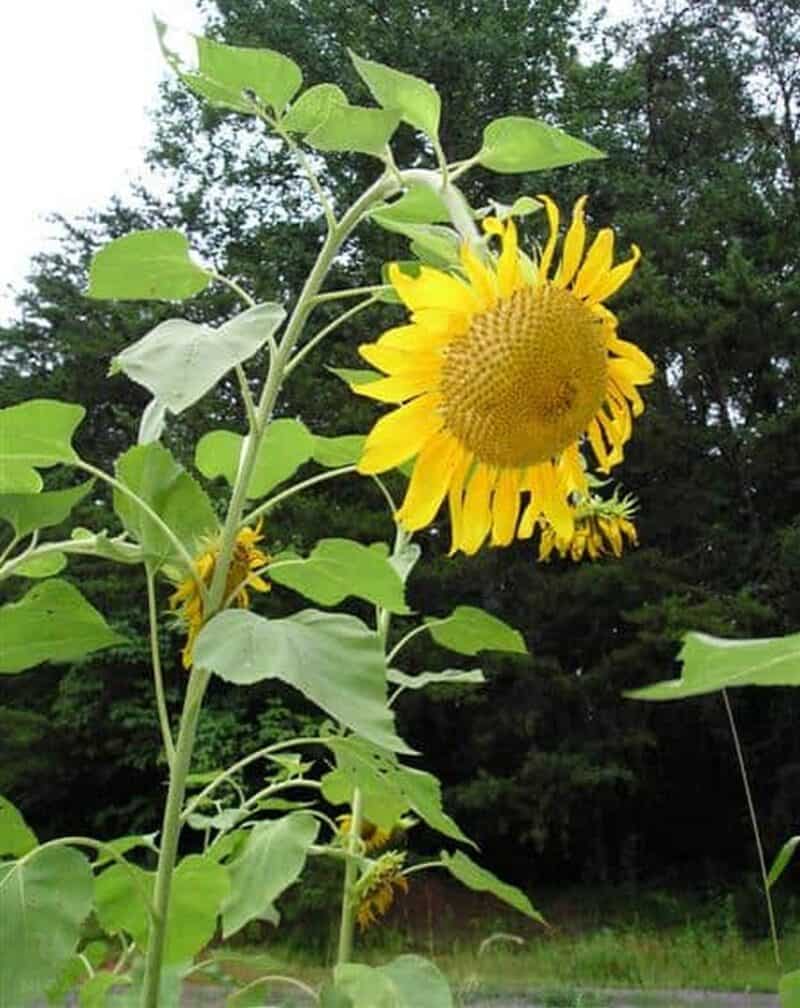
Sunflower (Helianthus annuus)
- Sun Exposure: full sun and lots of it!
- Soil Type: well-drained, tolerant of different compositions.
- Soil pH: 6.0 to 7.5.
- Blooms: summer to early fall.
- Lifespan: annual.
Ounce for ounce, one of my favorite flowers and garden plants ever! The massive, cheery blooms of sunflowers are gorgeous, entertaining (you can watch them follow the sun), and utterly irresistible to every kind of bee there is.
They have a huge yield of pollen and nectar, and that’s partially why they are so attractive to pollinators.
These plants are also known for rapidly detoxifying contaminated soil, and attracting other beneficial insects besides, like ladybugs and predatory wasps.
If you don’t want to commit a huge part of your garden to them, look into a smaller variety you can put in containers instead.
Wild Lupine (Lupinus perennis)
- Sun Exposure: full sun to partial shade.
- Soil Type: well-draining, loose, sandy soil.
- Soil pH: 6.0 to 7.0.
- Blooms: late spring through early summer.
- Lifespan: perennial.
Wild lupine is one of the single most ecologically important plants for a very specific butterfly. Without it, the species would almost certainly go extinct. That’s ominous, but luckily, bees also like it well enough, so it would still have a reason to exist even without the butterflies.
The stunning blue or purple blooms are also pretty enough that they are reason enough to grow it as an ornamental.
Something else that can help you out in your garden is that this is a nitrogen-fixing plant, like most beans, so growing it on a rotational basis can improve soil nutrition levels.
Penstemon (Penstemon digitalis)
- Sun Exposure: full sun to partial shade.
- Soil Type: well-drained, loamy, or sandy soil.
- Soil pH: 5.5 to 7.5.
- Blooms: late spring through early summer.
- Lifespan: perennial.
The tall stands of tube-shaped white or pale pink blooms on penstemon are instantly recognizable by their hairy stamen. No jokes, now, this is a family site… 🙂
Though it is a wild and fairly prolific plant in North America, you’re just as likely to see it cultivated in a wildflower garden. The blooms are highly attractive to most bees, but can only be readily serviced by larger species with longer tongues, like bumblebees.
This can be a good choice nonetheless for your garden if you’re dealing with mammalian pests because it’s deer and rabbit resistant.
Blue Wild Indigo (Baptisia australis)
- Sun Exposure: prefers full sun, can handle partial shade.
- Soil Type: tolerant of most soil types.
- Soil pH: 6.0 to 7.5.
- Blooms: mid-spring through early summer.
- Lifespan: perennial.
One of the most long-lived perennial plants out there, and famously used throughout history to make blue dyes, the, what else, bluish-purple blooms of wild indigo are greatly beloved by bees and many other pollinating insects.
Despite its beauty, this is a hardcore plant that tenaciously clings to life wherever it finds soil. It’s drought-resistant, can thrive even in a wide pH range, and is unaffected by many plant diseases. A truly inspired choice for a pollinator attractor!


Get your gift and learn things like:
- how to make this really quick pest spray
- how to prevent egg waste
- two cheap automation devices that will make your life easier
Tom has lived and worked on farms and homesteads from the Carolinas to Kentucky and beyond. He is passionate about helping people prepare for tough times by embracing lifestyles of self-sufficiency.