
Nothing beats homemade food. Absolutely nothing. If your family is like mine, you’ve probably got a signature recipe or two that everyone who tries it claims can beat all the others in the county, if not the state.
If it’s that good, you might think, why not start selling it for a profit yourself? Lots of people do, and plenty find some success by doing so. It’s possible to sell homemade food directly to consumers, and with a little luck, you’ll set the stage for a business empire if you want to take it that far.
However, there is a whole lot you need to know before you embark on this venture. The age of selling food without some kind of government oversight is long gone. You’ve got to know the law, rules, regulations, and best practices if you want to do things right. Keep reading, and I’ll tell you what you need to know.
You’ll Be Subject to Various Laws
No surprise here. You can’t do one single thing these days without the government getting its grubby, sticky, money-hungry hands all over your business.
As ever here in the U.S., depending on which state you live in, you’ll be facing Draconian laws covering homemade food sales or comparatively very little. There are also two sets of laws that might impact your operation, broadly speaking.
Cottage Food Laws
A catch-all term for laws and regulations that specifically cover the small-scale production and sale of homemade food. As a rule of thumb, cottage food laws apply to individuals that are making relatively small volumes of certain foods for sale locally or on a limited basis.
You may or may not be able to look up the relevant laws in your state using this term, but regardless, you will see the applicable laws referred to as such casually, so keep your eye out for this descriptor during your travels.
Commercial Food Laws
These laws, obviously, cover industrial-scale production of food on a much larger level. Commercial food laws, as a rule, are far more stringent with considerably more oversight compared to cottage food laws. In most states, you won’t have to worry about most of these laws unless you really grow your business and want to expand your reach and customer base beyond the local level.
That said, there are some commercial food production laws that apply to all makers and sellers of food, big or small.
Getting the Info You Need
If you’re like me, any talk of legalese and associated nonsense probably makes you roll your eyes up in your head and gives you a bad case of brain lock…
Don’t panic: it’s usually simple and straightforward to find the relevant laws that will affect your operation by contacting your state Department of Health or Department of Agriculture.
They can easily direct you if you don’t want to go through the dreaded hunt-and-peck, rifling through online state statutes looking for all the info you need and praying you don’t miss anything important.
If that doesn’t work or if they aren’t helpful, your local university extension can probably assist you.
What Kinds of Homemade Food Are Typically Okay for Sale?
First things first: what are you making, and is it okay to sell? Good news and bad news here: many foods are a-okay to sell to customers on an individual level, but this varies considerably from state to state.
If you want to sell pie filling or preserves, you shouldn’t expect too many roadblocks. If you want to sell your world-famous ceviche, well, maybe go with Plan B.
You can lump most typical foods into two categories, colloquially called low-risk and high-risk foods.
“Low Risk”
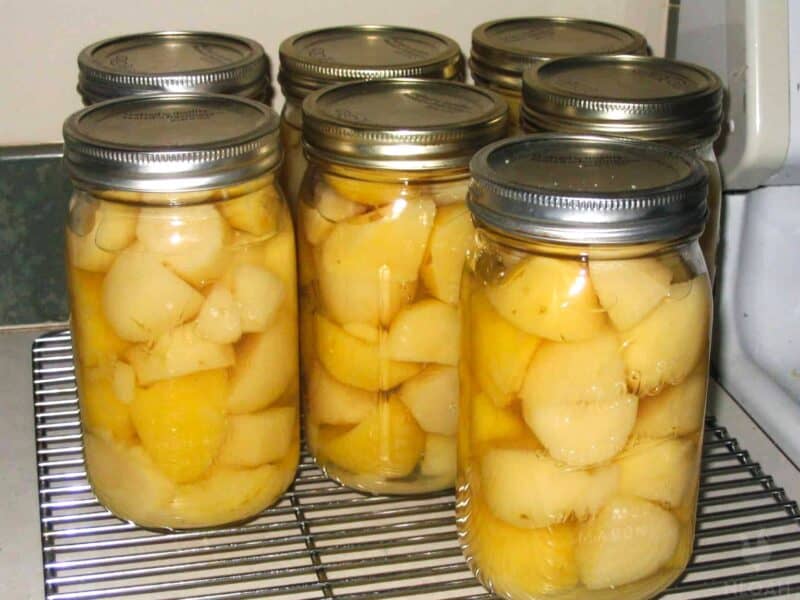
Includes no or minimally hazardous foods. All kinds of baked goods like bread and cookies, as well as preserves, jams, jellies, candies, and most dehydrated foods.
Sometimes included in this category are pickles, fermented foods, and jerky. If the risk of illness or other mishap is relatively low even if the food is mishandled, it goes in this category. Usually, but not always, these foods are subject to less regulation.
“High Risk”
Foods in this category can make you dreadfully sick or even kill you if they are prepared improperly or allowed to spoil. Meats, eggs, all dairy products, and canned veggies belong here. As a rule, these foods will be subject to considerably more regulation and oversight if you want to sell them to individuals, and dramatically more oversight if you want to sell them to restaurants, groceries, and the like.
You May or May Not Have Much Government Interference
The notion of government oversight and interference is what stops many would-be homemade food barons from starting in the first place.
Again, depending on where you live, you’ll have to put up with more or less in the form of the following.
Inspections
If you make your food in your own home kitchen, or a small outbuilding or “facility,” you may have to put up with county or state inspectors coming by to make sure you’re doing things right. These visits can be announced or unannounced.
Registration
It’s pretty common for states to force you to register as a cottage food seller no matter how much you sell or what you are selling. Some don’t, though.
Process and Equipment Mandates
The more bureaucratically inclined states can subject makers and bakers of cottage food to strict requirements for the processing of said food and even what kind of equipment is suitable for the processing.
Vendor Considerations
This is where it gets complicated. Depending on where you live, and depending on what you are selling, you might be restricted to how and where you can sell your wares…
It might be consumer-direct only via face-to-face sales, pick-up at your home, or direct mail. You might be allowed to sell at a farmers market, festival, or other similar gatherings. You might not; it all depends. But getting this wrong could see you fined or even criminally charged!
It’s up to you to do your own due diligence concerning these factors; it really does matter where you live! For example, strict states compared to permissive states: New Jersey is often thought of as the strictest of the strict, outright banning cottage food production in most capacities until a few years ago.
Even now, as always, folks who would engage in the practice labor under truly burdensome regulations and must sell direct-to-consumer only.
Hawaii is another stereotypically strict state, one that requires permitting and the passing of an intricate food safety course before you embark. Even then, only low-risk foods are allowed as a rule, and the state forces sellers to adhere to pretty strict labeling and packaging requirements.
Thankfully, it’s not all bad: a few states like Wyoming believe in freedom, with genuinely relaxed laws on cottage food production even for hazardous foods, and sellers have many routes to monetization concerning where the point of sale can take place. Texas is similar, though slightly more restrictive.
Understanding the “Cap”
Another important concept you need to keep in mind, especially if you find a receptive customer base that’s clamoring for more of whatever it is you are making.
Most states institute something called a revenue cap for cottage food sales. Basically, this is a certain gross amount of sales, in dollars, that you are allowed before you are subjected to commercial food production laws. Once more, the cap or cut-off is all over the place, state by state.
Colorado, for instance, allows you to make $250,000 per year before you’ve got to level up to the big leagues. Texas, though, for all of its other advantages, allows you to make only $50,000.
You Might Not Be Allowed to Have Employees!
An insidious gotcha for some folks. To qualify as a cottage food seller, and accordingly to benefit from cottage food laws, you may not be able to have employees, or employees outside of your immediate family, by law.
If your operation rates having an employee, some states will want a big cut of that sweet, sweet revenue for themselves in the form of taxes on your business, and they may use the presence of employees as an indicator.
Double-check and account for this as part of putting together your business plan—if needed!
Liability, Insurance, the Law, and You
Insurance is an ugly but increasingly necessary part of life if you want to be in business in any way. That’s because liability law is a hugely lucrative domain in its own right.
This is a lengthy and intricate conversation in its own right, one we will have to save for another article.
Suffice it to say, if you are serious, this is a conversation you should have with your family attorney, and if you need a jumping-off point for that conversation, you need to look into and discuss both property and product liability insurance.
The latter will protect you in case someone gets sick or hurt eating your food, and the former will hopefully protect your home and possessions against total loss in case there is an accident stemming from the production of said food.
Sharpen Your Pencil if You Want a Profitable Home-Based Food Business
Selling a few jars of your great-grandma’s pear preserve recipe for praise and the satisfaction of seeing others’ enjoyment is one thing; making it a profitable and sustainable business is another.
You might not think of yourself as a proper business doing this, but if you don’t understand that, it can do nothing but cost you money. If you want to make a go of selling homemade food, put on your business hat and sharpen your pencil.
You’ll need to learn and understand the law, calculate expenses, figure out a reasonable selling price that won’t drive customers away, and still engineer in some profit while planning for expansion and future growth. It’s a challenge, all right, but well worth it, and the rewards can be sweet!

Tom has lived and worked on farms and homesteads from the Carolinas to Kentucky and beyond. He is passionate about helping people prepare for tough times by embracing lifestyles of self-sufficiency.