
What’s better than farm-fresh eggs? Almost nothing! The difference in flavor, quality, and nutrition compared to grocery store eggs really stands out and makes chickens worth owning. It’s why I got into keeping chickens in the first place, and I know that’s the same sentiment held by lots of would-be keepers.

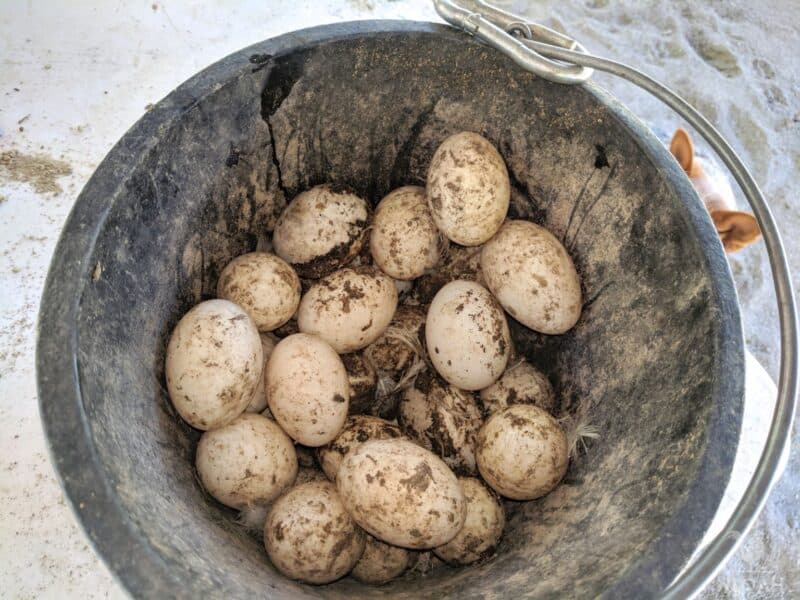
But something that newbies probably won’t be prepared for is the fact that the eggs your girls give you won’t be pearly white or evenly brown and perfectly clean like the ones you get out of the carton from the grocery store. Your eggs might have flecks of dirt, feathers, and even poop stuck on them! Gross!
Naturally, most folks will want to clean those eggs right away before putting them away, but as it turns out, you might actually be making a mistake.
Don’t worry; I won’t tell you to leave filthy eggs rolling around, but proper procedure makes a huge difference when it comes to longevity and also safety. Keep reading, and I’ll tell you how and when to clean your farm-fresh eggs.
Washing Eggs Right Away Shortens Shelf Life
Here’s the shocking truth when it comes to washing farm-fresh eggs: if you do, you’ll shorten their shelf life, and you won’t be able to keep them safe during room-temperature storage anymore. They will have to go into the fridge.
If you want to keep your fresh eggs stored safely at room temperature, do not wash them in water or anything else prior to storage.
All Fresh Eggs Have a Protective Bacteria-Beating Barrier
All eggs naturally have a protective protein coating around them called a cuticle, though you’ll often hear it referred to as the bloom or “egg bloom.”
This coating is vital because it prevents bacteria and other harmful microorganisms and contaminants from getting through the shell and into the organic material it contains.
That’s right: as solid as they look and feel, eggshells are actually permeable and can let air in and moisture out, along with other things. Accordingly, we need to strategically choose whether or not it’s worth washing our eggs right away…
This choice is based on:
- how you want to store them,
- when you anticipate using them,
- and the frequency at which you cook with eggs or use them for anything else.
When to Wash Right Away
You should wash your eggs right away if you plan on using them all that day or in the next few days—a week or two at most.
If you’re going to use some of the eggs soon but not others, just wash the ones that you know you’ll need.
Rule of Thumb: Wash Them Right Before You Crack Them
When I was first learning the ropes of caring for chickens and collecting eggs, my mentor taught me the following simple guideline: don’t wash the eggs until you’re ready to crack them and cook with them.
It’s that simple. This ensures that the cuticle stays intact, and your eggs will enjoy the best possible protection from contaminants, last as long as possible, and taste the best. That’s because air won’t be able to get into the shell quite as readily and cause oxidation of the yolk.
If you want to store them on the countertop, you can—just keep them out of direct sunlight in a basket or other holder. You can also pop them in the fridge, but I recommend you keep them in a container rather than letting them roll around on the shelf.
I know a fair few folks reading this are probably losing their minds at this—you’re not going to clean off the chicken crap, dirt, and feathers!? That’s not what I said at all: I said we merely aren’t going to wash the eggs…
New Eggs Can Be Gently Brushed or Wiped to Remove Debris
Whether or not you decide to wash them right away, always remove the big, chunky contaminants clinging to the shell. Dirt, poop, feathers, whatever—it’s unsightly, and you certainly don’t want it on there.
Look, eggs come out of the backside of a chicken, and it’s dirty back there and in her nest. Keeping nesting boxes scrupulously clean will cut down on these contaminants, but not completely eliminate them.
The good news is, even if chunky stuff is on the egg, the attendant germs will still not get through the shell. Nonetheless, you should gently brush the debris off with a clean, soft brush or a dry, soft cloth. As long as you aren’t scrubbing or using water, the cuticle will stay intact.
Proper Egg Washing Procedure
When it is time to wash your eggs, proper procedure is important. Messing this up will cause problems and even taint the flavor or accelerate spoilage.
Luckily, this is easy stuff. Do the following:
Step 1: Run or Draw Room Temp Water
You only want to wash them under room-temperature water. Hot water causes the pores in the shells to expand, letting stuff get in.
Cold water will do the opposite and cause them to contract, and this will lead to other kinds of problems. Either wash the eggs under lukewarm running water or draw a bowl full.
Step 2: Gently Wash and Wipe Off Dirt, Rinse
Using paper towels or clean, soft kitchen rags, wash the eggs in water only—no soap, no additives, no weird stuff. Water is all it takes. When you’re done, rinse them under running water or in a separate bowl of water.
Note: If you have an egg sanitizing solution made specifically for the purpose, you can use that for the rinse. Follow the instructions on the package for preparation and use.
Step 3: Dry Carefully
Once the eggs are rinsed, dry them gently using clean paper towels or clean, dry rags or kitchen towels. Do not leave them wet and put them in a bowl or a container!
After toweling them off, I’ve found it helpful to leave them sitting flat on the counter on a dry towel to fully air dry. This should only take half an hour or so.
Step 4: Put Away in a Clean Container
With the eggs clean and dry, it’s time to put them away. Baskets and other decorative egg holders look charming, but they don’t facilitate long storage life. I like using disposable or reusable egg cartons for the purpose.
Just make sure that the carton is likewise fully clean and dry. Never put your cleaned eggs back in your collection container because it will be contaminated with the same stuff we just worked so hard to remove!


Get your gift and learn things like:
- how to make this really quick pest spray
- how to prevent egg waste
- two cheap automation devices that will make your life easier
Tom has lived and worked on farms and homesteads from the Carolinas to Kentucky and beyond. He is passionate about helping people prepare for tough times by embracing lifestyles of self-sufficiency.