
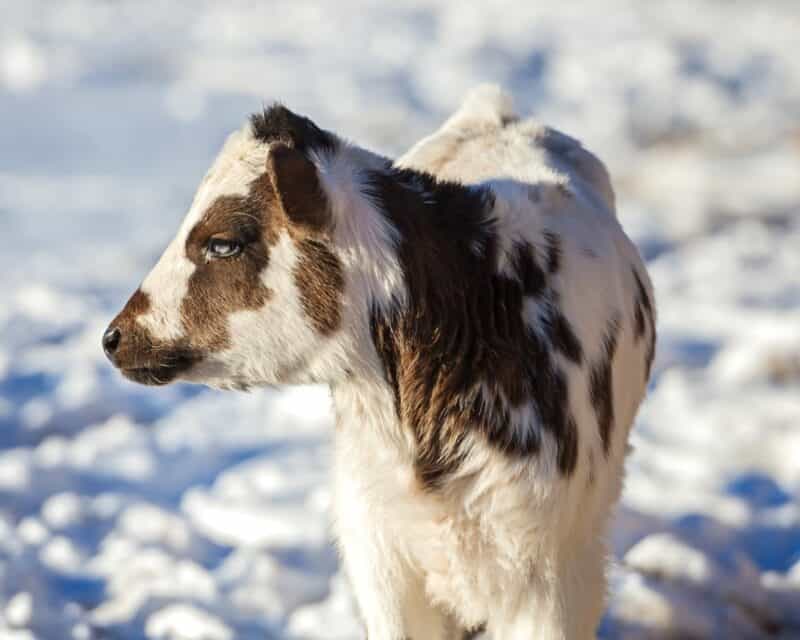
Calves are bar-none the most adorable animal you can have on any homestead. They’re energetic, friendly, playful – and they look so darn cute!
It’s so funny to watch them sucking on milk, too. It makes you wonder if they’re ever going to switch to other foods – especially given how big they are.
If you’re not only thinking about weaning your calves but also want to give them a treat every now and then, this guide will help you make sense of the foods you can and cannot feed them.
Make no mistake, all treats should be fed in moderation, but some can be so toxic, they’re not even worth considering. Focus on giving them mostly high quality grains such as hay, oats, barley, etc., and don’t forget to give them enough water as well.
Veggies
Veggies are some of the safest treats for calves and adult cows alike – because they tend to be lower in sugar compared to fruits. Here’s a selection of the ones you can feed them…
✅ Carrots
Calves can have carrot, but, you’ll definitely want to wait until they are starting to eat solid food at least part of the time when they are weaning.
If you wean your cows earlier, you can give them a few small tidbits of carrot to see how they do. Same thing if you are weaning them later at around 8 or 9 months.
In both cases, start small, keep the quantities tiny and see how your babies do before you give them carrots more regularly.
✅ Cabbage
Be very cautious about giving them cabbage until they’re quite a bit older. At no point should a calf have it until it’s completely weaned from milk and starts to eat a variety of other foods.
The digestive system of calves is particularly delicate at this early stage of life, and likewise, the consequences for upsetting it are even worse than they would be for an adult cow.
When you serve them cabbage, keep that portion size small and keep a close eye on how they do after. If they have diarrhea or seem to lose their appetite, you want to discontinue giving them cabbage for a while.
✅ Onions
This may surprise you but onions are actually a viable option for calves. As always, though, start with an even smaller quantity and keep a close eye on the behavior and demeanor of a calf when giving them any new food, and particularly onions.
They’ll be more gravely affected by toxicosis if they get too much, and their stomachs are more prone to upset generally.
✅ Tomatoes
Yes to tomatoes, but I say so hesitantly until they are well into adolescence, at least a month after they wean.
Though there’s nothing in a tomato that is overtly harmful to a baby calf, they are somewhat harsh on their stomachs, and this can easily give them diarrhea or cause a loss of appetite.
Either can be seriously bad news for a calf at this critical stage of development. Remember to start small, go slow, and abort feeding tomatoes if there are any signs whatsoever of trouble! There are plenty of other foods that are much easier on them they can eat instead.
✅ Green Beans
Yes, but only with significant caution. Calves should be weaned off of milk and eating solid food full-time before they get to try green beans. You should also keep the quantity very small to avoid any risks whatsoever of disrupting their digestive tract.
✅ Celery
Calves can also eat celery, but you’ll want to wait until they are starting to wean off of milk and are properly eating solid food. Depending on your plans for your calves, this might be as early as 3 to 4 months, or as late as 7 or 8 months.
In any case, the same standards apply for calves as they do for adult cows: only give them celery as a treat in small quantities periodically, and especially for calves start out with small bites only, and give them just a few.
See how they react on a basic level before you even make it a semi-regular treat for them… and if you have any doubts whatsoever, stop giving it to them.
✅ Cucumbers
Calves can start eating cucumbers as treats as early as three to four months old, as long as they have started moving away from consuming only milk and are consuming some solid foods regularly.
However, it’s important to introduce any new foods, and that includes cucumbers, gradually and in moderation.
When you give cukes to calves for the first time, I’d recommended starting with small slices and quantities, and then monitor their reaction. Assess the calf’s response and prevent any digestive upset. Remember: calves should only be getting cucumbers as a treat, not as a staple!
✅ Spinach
Yes, but not for very young calves. The problems associated with spinach can be especially devastating for baby cows. I recommend you wait for them to mature somewhat before giving them spinach in the rotation of solid food.
✅ Cantaloupe
When calves start to diversify their diet, you can give them just a few small pieces of cantaloupe to see if they like it and see how they do.
If all goes well, increase the portion size just a little bit later in the week and back off if they get indigestion or diarrhea.
✅ Lettuce
Lettuce is just fine for calves as long as they have weaned and are eating solid food. But, do be careful: calves are especially prone to diarrhea from dietary upset, and lettuce, as hard as it is to believe, can trigger that.
Calves are so much smaller than adult cows that they’ll dehydrate much faster and so diarrhea is a far more serious problem than normal. Watch that serving size!
✅ Radishes
Yes, but cautiously. Baby cows have far more sensitive digestive systems compared to adults, and as we’ve learned today, radishes tend to cause significant diarrhea. Diarrhea can be very hard on a calf, and if they get dehydrated, they’ll be in real trouble.
As always, wait until they are totally weaned off of milk before introducing new foods like this to them, and keep the quantity very small until you’re sure they are handling it well.
✅ Zucchini
Zucchini, too, is safe for baby cows. As with everything they start eating, you want to wait until they are weaned off of milk and then only give them a tiny quantity to see how they do. Any signs of trouble, any indigestion or loss of appetite, and definitely any diarrhea, back off at once.
✅ Potatoes
Yes, they are. In fact, potatoes are one of the best foods for calves to eat as they start to wean off of milk. But as with every other new food that you give to baby cows, you want to start them very slowly and observe closely to make sure they don’t get an upset stomach or diarrhea.
For young calves, they can have anywhere from 10 to 15 pounds of potatoes per day once they are acclimated to them.
✅ Pumpkin
Yes. Once baby cows have weaned, they can have pumpkin also with no expectation of issues as long as you are very careful with the quantity and introduce it to them slowly.
As always, the golden rule still applies: if there are any signs of gastrointestinal upset or diarrhea, back off of the pumpkin servings immediately.
✅ Broccoli
Yes, but cautiously. Calves should be eating solid food and totally weaned prior to giving them broccoli for the first time. And once you do, make sure it is only a very small amount, observing them afterward to make sure it doesn’t upset their stomach.
Fruits
Calves can eat fruit, but only in smaller amounts, and – you guessed it! – only when they have weaned off of milk and are eating solid foods all the time.
Upsetting the digestive tract of a calf is seriously bad news and can have fatal implications, so don’t be in a rush to give them fruit.
✅ Mango
Yes, but I say that with reservations. The only time that calves should get mangoes is once they are weaned off of milk and well into a life of eating solid food.
I don’t think you should give them mango right after they are done with milk because their digestive system still has a long way to go before it is fully developed and stabilized.
Mango is so sweet that it can still be quite a shock to their system, particularly if you give them too much.
Remember that stomach and rumen ailments that adult cows could weather easily enough are so much worse for a little calf, and it’s hardly out of the question that it might kill them during this delicate phase of development.
✅ Apples
Apples are safe for calves as long as they have weaned and are switching over to solid food. Give them just one small apple as a treat every now and then in order to let their stomach adjust to them as they grow.
✅ Bananas
Calves can have bananas just like adult cows can. But, they should only be given bananas once they have started to wean and are actually eating solid food. Generally, this will be no earlier than 4 months, perhaps three.
You can make a great case for waiting longer to give calves bananas in the first place because they are so sugary.
Whatever the case, only give them a very small portion and then observed to see how they do. Any scours (diarrhea) is a sign that you should discontinue immediately, as is any sign of bloating.
If this happens, don’t worry, just let your cows grow up a little bit and then they can try bananas again in the future. They don’t have to have them as part of their diet.
✅Pineapple
Yes, but very cautiously. Pineapple is incredibly sweet and even when calves are switched over to solid food their digestive systems still have a long way to go in terms of development, and they can be easily upset.
I recommend you give them only a very small quantity of pineapple to try and even then, keep a close eye on them to make sure they handle it okay. No harm in waiting for them to mature quite a bit before they get to try pineapple and other super-sweet fruits for the first time.
✅ Peaches
Yes, peaches are safe for baby cows but serve them cautiously. For starters, they should be completely weaned and well into eating solid food before you ever let them try a peach. Their stomachs are just too easily upset by new foods and sweet food in particular to risk it.
Give them a very small quantity, and then observe to make sure they don’t start acting weird or suffering from bad bowel movements or diarrhea.
If they seem like they are feeling bad, stop giving them peaches straight away.
✅ Strawberries
Yes, calves can have strawberries also. But, you should wait until they’ve actually started to eat solid food on a fairly regular basis. It usually occurs around the time of weaning, between 3 and 4 months and 8 or 9 months depending on your protocols.
There’s nothing in strawberries that is overtly harmful to your calves, but you definitely don’t want them to get too many especially when they are very young. A calf’s digestive tract is poorly developed compared to an adult cow, and any sort of novel food can upset it.
Accordingly, give your calves only small amounts at first, and then observe them to see how they do.
✅ Blueberries
Yes, they are. Your calves can have blueberries once they’re old enough to start eating solid food most or all of the time.
But I want you to keep in mind that baby cows are still developing at this early age, and very vulnerable to having their stomachs upset. Diarrhea is also very bad news for a calf, and should be avoided at all costs.
Keep the quantities very small, and always monitor them for signs of trouble. If you notice or just suspect problems, discontinue feeding the blueberries at once and wait till they grow up a little more.
Grains
✅ Corn Husks
Yes, corn husks are safe for calves but keep in mind that they’re more likely to choke on the stringy silks or the larger, relatively tough husks compared to adults.
As long as your calves have started to wean off, or are completely switched over to solid food you can start feeding them corn husks. But remember, mind that quantity and start small to avoid upsetting your stomach!
✅ Rice
Yes, but only when they are finished weaning and eating solid foods at all times. Give them only a tiny bit and observe them closely for any discomfort or digestive upset. Raw rice is fine, no need to cook it.
Be very conservative with increasing the amount they get during this delicate phase of life. Diarrhea or grain poisoning can easily kill a calf.
✅ Bread
Calves can have bread when they start eating solid food and weaning away from milk. Depending on your plans for your cattle and when you start weaning them, this might be as young as 3 months or so, or it might be as late as 8 or 9 months of age.
In any case, remember that the digestive system of calves is significantly more sensitive than those of adults and you should only give them a little bit of bread as a treat initially to see how they handle it.
Be especially alert for any signs of bloat. If your they don’t seem to be responding well, don’t give them any more bread, and consult with your vet or a bovine nutritionist for guidance on when to start incorporating it into their diet.
Avoid These At All Costs
❌ Chocolate
Absolutely not! Regrettably, calves have proven way more vulnerable to the effects of theobromine compared to adults, and it takes very little to cause serious health complications and illness.
This is a particular threat when you’re dealing with dark chocolate or baking chocolate, or milk chocolate that happens to have a high concentration of the stuff.
That, and the digestive system of baby cows is already very sensitive. Chocolate is just a no-go for them, it’s that simple. You should wait until your little ones are fully mature, physically, before you give them chocolate at all.
❌ Honey
No. Honey is simply too sugary for calves. Even when they have switched from milk to solid food, their digestive system and the rumen in particular are going to be very delicate and still developing for a long time.
Honey is rich enough and sweet enough to throw a wrench in the works and can easily make them seriously ill.
And don’t discount something seemingly innocuous like diarrhea when talking about calves, either.
They’re far more vulnerable to dehydration and losing electrolytes compared to adult cows, so it’s possible that even a little bit of honey could cause life-threatening problems for them.
❌ Lemons
No, I don’t recommend it. I believe that the digestive system of young calves is just too vulnerable to the harsh acidity of lemons until they are nearly fully mature, physically.


Get your gift and learn things like:
- how to make this really quick pest spray
- how to prevent egg waste
- two cheap automation devices that will make your life easier
Tom has lived and worked on farms and homesteads from the Carolinas to Kentucky and beyond. He is passionate about helping people prepare for tough times by embracing lifestyles of self-sufficiency.