
I love chickens, and lots of other homesteaders feel the same way. When it comes to livestock, ounce for ounce, I think chickens give you the most bang for your buck in terms of expense, effort, and return on investment.

They can keep even a large family stocked up on eggs and meat for very little effort in the long run. Plus, they’re just tons of fun to have around!
But not all breeds of yardbird are created equal. Some, as far as I’m concerned, were spawned in Hell’s furthest craters. Aggression toward people, territoriality, viciousness towards other breeds, flightiness, and more: some chickens are just going to make your life a whole lot harder than it has to be.
Below is a list of five breeds that I urge you to avoid, as they are some of the worst you could possibly own based on my experience. Brace yourself, and I’ll tell you about them.
Malay
If ever there was a chicken that simply has “bad idea” written all over it, it is the Malay. This is a truly ancient breed, one with a verified history reaching back over a millennium.
As far as I’m concerned, it can reach all the way back to the age of the dinosaurs because these birds are huge.
Standing nearly three feet tall, with an incredibly stocky, muscular build, these are powerful animals that can do some genuine damage to people and other animals. This is especially a consideration in the case of roosters, which have thick, strong, and sharp beaks and spurs.
I’m telling you, these birds are downright terrifying. And this isn’t the part of the story where I tell you that it’s okay because they’re actually gentle giants and wouldn’t hurt a fly.
No, the Malay is a stone-cold killer, infamous for aggression and fighting to the death for dominance or to dole out justice to trespassers in their territory. That includes you, by the way.
These huge chickens are fearless, temperamental, and very difficult to handle without getting mauled. Their size and strength also make them prone to escaping and difficult to round up when they do get out.
Unless you have tons of experience and you’re willing to make special housing considerations for this novel breed, don’t even dream of getting one, and adding one to a mixed flock is tantamount to animal abuse. The Malay is only for hardcore chicken keepers!
American Game
A distant but much smaller cousin to the Malay explored in terrifying detail above, the American Game was developed explicitly as a fighter, and excelled at that purpose.
Bred accordingly for generations, these chickens are highly aggressive and will go off on people, animals, and other chickens at the drop of a hat, attacking relentlessly until restrained.
To make matters worse, they are extremely fast and agile; unless you clip their wings, they are known to be quite flighty.
Aside from making them a huge pain to contain, it also makes it really hard for you to get away from them, and it isn’t out of the question that they could jump up and slash you in your chest, neck, or face.
Believe me, don’t underestimate them. I did once—once—and still have the scars to remind me of my complacency.
To further compound the misery, these are some of the most vocal and loudest chickens around, with roosters taking the cake for volume and frequency of crowing.
Other charming attributes include total xenophobia towards additions to their existing flock, and for roosters, a total unwillingness to have any junior or subordinate males around at all.
They do have some positive traits, though, ones that might endear them to serious chicken fans: these birds are beautiful and athletic, and lots of fun to watch from a safe distance.
Interestingly, both males and females tend to be highly attentive and responsible parents, meaning it’s easy to expand your flock naturally. They’ve also been raised for their meat, as they have a good carcass yield and are said to be exceptionally tasty.
Still, not a breed for the faint of heart!
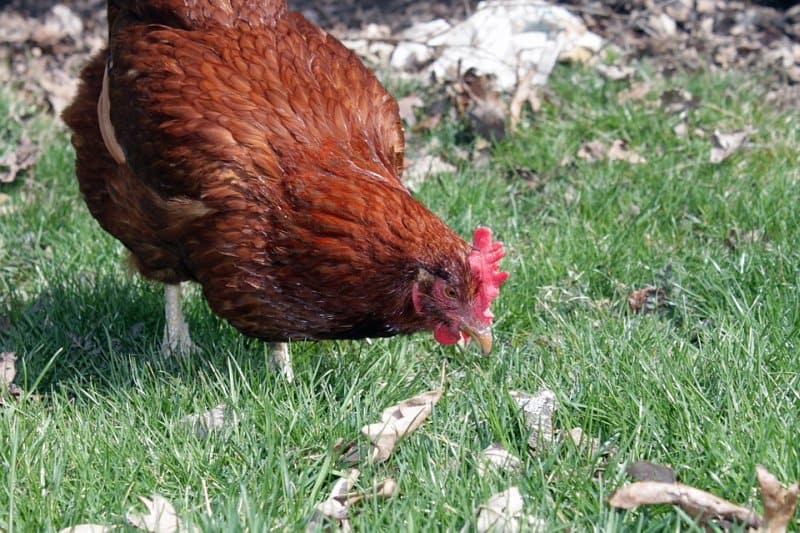
Rhode Island Red
I know this is bound to be a shock to some people: the Rhode Island Red is a beloved heritage breed and ostensibly one of the most popular ones around!
Yes, that’s true, and though these big and burly birds are excellent egg layers, there are lots of strings attached. For starters, these chickens only tend to be good layers for the first two years, or maybe three at most.
That’s hardly remarkable because most laying hens slow down past their maiden years, but unlike most other breeds, Rhode Island Red hens show a marked tendency towards getting egg-bound when their most productive years are behind them.
Egg-bound chickens often die unless detected and treated promptly, and even then there are no guarantees.
Why this happens, I have been unable to determine, but I suspect it has something to do with convergent genetics, i.e., inbreeding, insidiously taking hold over time owing to the popularity of these birds.
It will take better minds and better breeders than me to say whether this is true or not and fix it, but that alone is reason enough to avoid them.
But just in case you need another reason, Rhode Island Reds are infamous bullies. They get along well enough in a flock of their own kind, as long as all chickens are healthy, but they remorselessly peck, pluck, and bully other breeds, injured birds, or any bird that is born with a deformity.
I’ve watched harmonious flocks descend into chaos with the addition of just one or two RIRs, and even in very large ones of hundreds of other birds, just a couple dozen of these birds can send stress levels skyrocketing.
All in all, I think they are simply not worth the trouble. Think twice before you commit, especially if you have a pre-existing flock of other breeds.
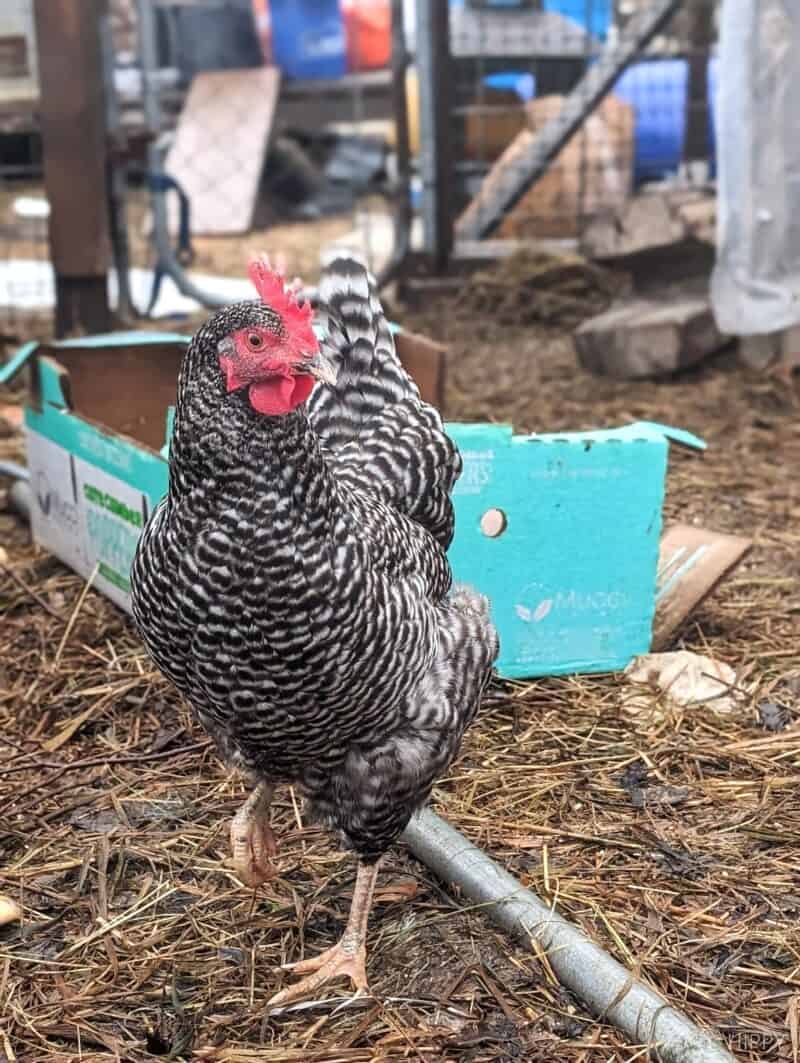
Barred Rock
This is another beloved heritage breed that I truly hate putting on this list… but I’ve got to.
At first glance, or in a flock consisting only of their own kind, the Barred Rock can be a good choice: healthy, hardy, good with people, and with solid genetics, they can make a great dual-purpose bird kept for both meat and eggs.
They also look good, in their traditional barred plumage or rarer penciled varieties. They tolerate confinement well, are only modestly broody, and flock dynamics are easily sorted out between these birds. So what’s not to love?
I’m here to tell you that despite constant assertions to the contrary, my experience with the Barred Rock, from several different lineages to boot, has been anything but harmonious in mixed flocks.
I’ve found these chickens to be quite assertive, even cruel, to other breeds and especially to smaller chickens. This makes them a liability if you have adolescent birds around, bantams, or even standard breed birds that are underdeveloped…
It’s hard to describe, but they get downright twitchy in mixed flocks. Call them xenophobic or just chickens that genuinely prefer birds of a feather—I don’t know.
Aside from that, Barred Rocks also tend to be quite noisy, chittering to themselves more or less constantly, with periods of stress, agitation, or excitement being orders of magnitude worse.
Roosters don’t crow particularly more than those of other breeds, but their call has a shrill, shrieking note that really does set my nerves on edge.
I’d only recommend getting Barred Rocks if you’re going to have them and no other breed.

Old English Game
One of the most legendary, you might even say venerated, game breeds around and one that’s been with us for half a millennia, the Old English Game tells you everything you need to know about it right in the name: this is a game breed developed in jolly Old England.
Selectively bred for speed, agility, and small size, these birds are nimble, pugnacious fighters, and among the modern game breeds that are sometimes kept as ornamentals, these have the fieriest temper.
These chickens are infamous for being highly territorial towards anything that moves. Woe betide the person, or even mouse, that dares to enter their run or coop.
And you’d better keep them in a run if you know what’s good for you: they are exceptionally flighty and must have their wings clipped or be contained with a sturdy overhead barrier.
Beyond that, if you let them free-range, they will come to see your entire yard as “theirs” and they won’t want you, pets, or kids in it.
Too small to offer much in the way of meat, they are decent layers of eggs, good parents, and pretty cute, but you’re only going to get much enjoyment out of them if you keep them contained and out of a mixed flock.
And even with constant socialization and good treatment, they tend to remain standoffish and untrusting of people.


Get your gift and learn things like:
- how to make this really quick pest spray
- how to prevent egg waste
- two cheap automation devices that will make your life easier
Tom has lived and worked on farms and homesteads from the Carolinas to Kentucky and beyond. He is passionate about helping people prepare for tough times by embracing lifestyles of self-sufficiency.