
Do you like lavender? I know I sure do. I love the aroma, I love how it looks, and I even bake with the stuff. You might say I’m infatuated with it!
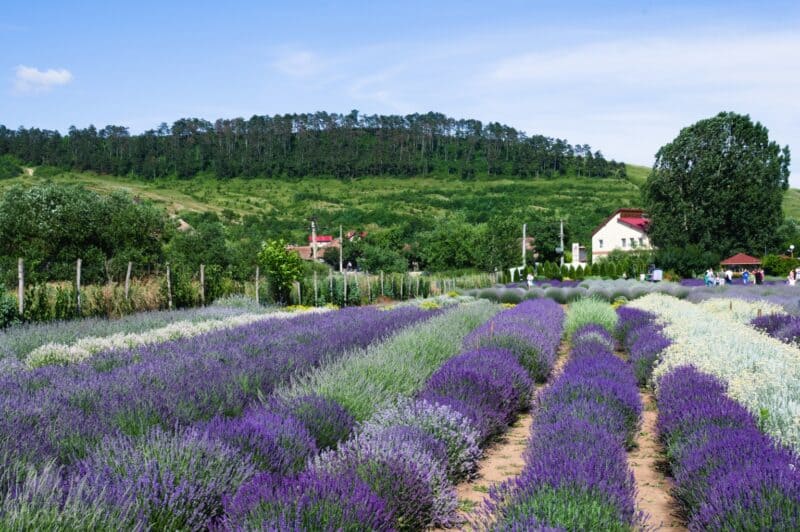
Compared to most other herbs that you might grow in your garden or containers, lavender can be highly productive when conditions are right.
And therein lies the problem: lavender has a reputation for being prissy, fussy, and difficult to manage. But it doesn’t have to be…
Most of the aggravation comes from gardeners that make one or more of the 12 most common, but serious, mistakes when growing lavender. I’ll tell you all about them, and how to avoid them, down below.
Not Enough Sun
Lavender is a sun-craving herb and needs lots of sun every day. Full sun is a requirement for optimum growth, health, and production, and you should plan on it getting no less than 6 hours and preferably 8 hours or a little more daily. More sun means more flowers and better fragrance.
If you let your lavender get shaded or plant it in the wrong spot, you can expect poor health, slow growth, fewer or even a total lack of flowers, and greatly increased vulnerability to disease.
Like all other sun-loving plants, if you can choose a spot on your property that is south-facing, you’ll get the best results.
Failing to Prune
This is one of the major quirks associated with lavender that turns some people off: it requires a lot of pruning for it to maintain its shape, stay productive, and prevent it from going leggy.
Worse, lavender requires pruning at different times during the growth cycle, including before, during, and after flowering.
But before you roll your eyes in frustration, remember that we’re talking about a perennial that will come back the following season as long as it survives the winter. With periodic pruning, it’ll look even more attractive and produce even more blooms.
The rule of thumb you should follow when pruning is to always cut only the green, fleshy parts of the plant when trimming. Do that, and you won’t have any issues.
Failing to Deadhead
This might be considered a part of pruning, but it’s really a separate chore that should be done anytime your lavender is in bloom. When individual blooms, buds, and whole stems are spent, you should cut them off so that the rest of the plant can devote resources to new growth.
This process, commonly called deadheading by gardeners, will make your plants more bountiful and productive and should always be done.
Cutting into Woody Parts
With all this pruning and deadheading, it’s easy to get carried away, especially if you want your lavender plants to maintain that teardrop shape that is so attractive.
Like I mentioned above, you should only ever cut into the green, fleshy parts of the plant and never, ever into any woody growth.
Those woody parts are necessary for the plant to survive and sustain, and if you wound them or, worse, cut through them entirely, it’s highly likely that you’ll kill the plant or make it vulnerable to infection.
You might have a lot of lavender to tend to, but stay focused and pay attention when pruning.
Overwatering
Far and away, the most common cause of sickly or poorly performing lavender comes from overwatering.
Lavender thrives in quickly draining soil, and it hates staying wet. If lavender’s roots stay wet, it is quite likely that it will start to suffer from root rot or other fungal infections which will invariably turn fatal and then spread.
You don’t need to water your lavender every day in most climates, even when temperatures are very high. It loves it!
My personal rule of thumb for watering lavender is to only do so when the top inch and a half of soil feels completely dry to the touch. And I mean totally dry, not a little damp!
For us folks who are consistent waterers in our garden, this can feel almost abusive. But trust me on this, and your lavender will thank you.
Poor Drainage
You might water your lavender sparingly and still manage to drown it. How can this be?
If the soil isn’t draining or if something is keeping the area where you have your lavender planted wet, you’ll have the same problems.
Check to make sure that your property is draining properly, especially the area where you have the lavender planted and the area immediately around it. Problems somewhere else might domino and start to affect your lavender crop.
If you’re having drainage problems, do whatever you have to do to correct them…
Wrong Soil Composition
Beyond soil drainage alone, soil composition is critical for the health and success of your lavender plants. Lavender never does well in heavy, hard-packed, or high-clay soil.
Conversely, it loves sandy, loose, and pebbly patches that better replicate its native range. If you don’t have this kind of soil, that’s okay…
Lavender grows readily in containers or raised beds with the right kind of dirt, and you can easily set that up yourself using perlite, gravel, sand, and other additives.
These additives also improve drainage, helping to take care of another requirement we just talked about.
Soil Too Rich
I talked to more than one excited friend in my life who looked forward to a bumper crop of lavender because they had done so much work making their soil as rich as possible. Imagine their dismay when the lavender still came out stunted and leggy!
How is this possible? Don’t all plants need abundant nutrients in order to thrive?
Yes, but it’s possible to give lavender too much of a good thing, specifically nitrogen: when soils are too rich, lavender produces too much foliage and fewer blooms on even longer stems. In short, soil that’s too rich will stunt its growth!
This is why it’s so much easier to prepare a patch for lavender specifically: keep soil nutrient levels very lean, and also well-draining and loose as detailed above, and get ready to watch it take off!
Acidic Soil
Simply enough, lavender won’t do well in acidic soil, and it won’t even do its best in neutral soil.
In order to grow best, lavender needs slightly alkaline soil with a pH between 6.7 and 7.3 depending on the variety and other conditions.
Check your soil pH well before you plant, and adjust as necessary.
Picking the Wrong Variety
There’s more than one type of lavender out there, and though they’re all wonderful, as far as I’m concerned, you’d be wise to spend some time researching which variety is best for your climate.
If you live a little bit farther north, you’ll need a cold-hardy type like English lavender. If you live farther south, French lavender is a better choice.
But no matter where you live, there’s bound to be a variety that’s right for you thanks to several innovative hybrids which can grow beautifully almost anywhere.
If you are in doubt, talk to someone at your local nursery or professional garden center for advice.
Overcrowding
Remember how I mentioned up above that lavender is very vulnerable to fungal infection? It can fall victim to it even if the soil is kept quite dry. Assuming that root rot isn’t the issue, this typically arises from overcrowding.
Lavender needs lots of room to both grow and spread out so that lots of air can circulate between its branches. When you crowd your plants, you’ll give mold and fungus a better chance of establishing themselves.
At the bare minimum, you should give each plant 12 inches of space on either side, and if you’re going for larger bushes, give them up to 3 feet.
Letting It Freeze
Some lavender varieties like various hybrids and English lavender are quite cold-hardy, often doing just fine well below zero, but they must still have winter protection.
Repeated frosts or a hard freeze can hurt them or even kill them off entirely, meaning they won’t be regrowing come next season.
The good news is that it’s pretty easy to protect established lavender from winter’s touch by heavily mulching around the base to insulate the roots.
Covering the entire plant with a frost blanket can also be a good idea during sustained cold. That’s another great trick if an early fall frost comes in.
For you container gardeners, you’ll have it easy because you can just move the lavender into a greenhouse or indoors once winter properly settles in.


Get your gift and learn things like:
- how to make this really quick pest spray
- how to prevent egg waste
- two cheap automation devices that will make your life easier
Tom has lived and worked on farms and homesteads from the Carolinas to Kentucky and beyond. He is passionate about helping people prepare for tough times by embracing lifestyles of self-sufficiency.