
Mold is one of those things you’ll often detect before you ever see it. It makes your nose scratchy, your eyes water, your throat ticklish, and your sinuses throb. Then the coughing starts.
This post contains affiliate links. If you click them and buy, I may earn a commission. Read my disclosure policy.
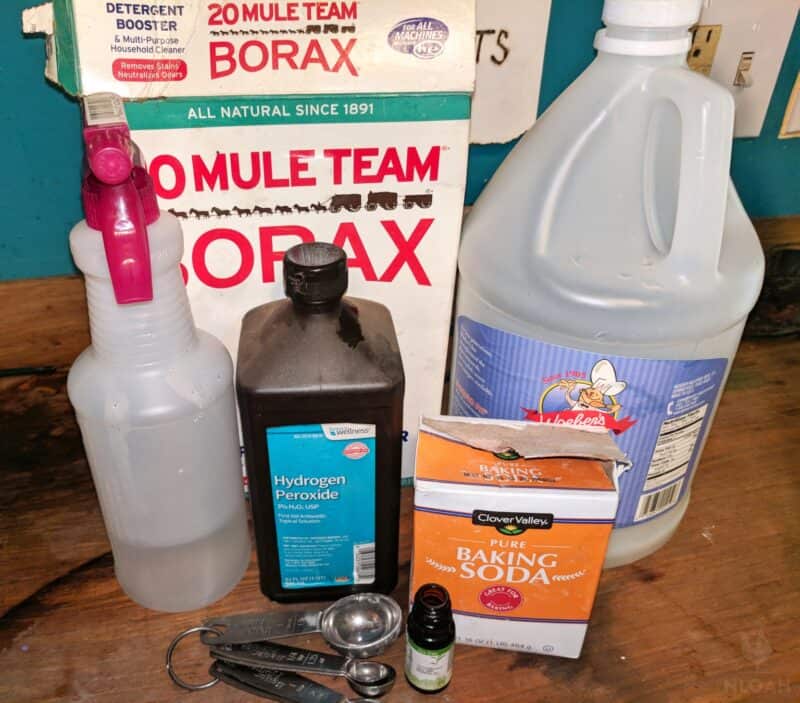
Mold is nasty, and no matter where you live and how tidy you are, it’s always going to crop up now and again.
But if you live in a humid environment, have a leak you don’t know about, or leave surfaces contaminated with biomatter, you might be dealing with a proper mold outbreak. That can be a major health hazard for you and your family.
Remember, houses have been condemned over bad mold infestations before! And even before that point, it’s going to seriously degrade whatever it’s growing on, from fabric to wood, grout to mortar, and everything else.
That’s why you’ve got to get rid of the stubborn stuff, and to do that, you’ll need the right solutions. I’ll tell you about eight that the pros use in the rest of this article…

Common Types of Household Mold
Before we get started, it’s helpful to know the enemy. There are many, many different kinds of household molds, and they range in severity from mere nuisance to really dangerous.
I’ll tell you about them below, but note that you can’t always tell what kind you’re dealing with by the color alone. Most types can be a wide range of colors!
Aspergillus
Rating: hazardous
One of the most common types of mold, often found in house dust. Grows on food, insulation, and wall materials. Common cause of allergic reactions and respiratory issues. Folks with weakened immune systems might suffer from invasive aspergillosis.
Cladosporium
Rating: nuisance, may be hazardous to sensitive individuals
A mold notorious for causing allergies, asthma, and sinus infections. Sensitive folks will suffer far worse. Grows in cool or warm environments on fabric, carpet, and wood.
Stachybotrys
Rating: dangerous
This is the infamous black mold you’ve probably heard about before. Routinely grows in areas that have suffered significant water damage or are subjected to prolonged, moist conditions.
Produces mycotoxins that can cause neurological problems, chronic fatigue, and severe respiratory distress. Must be taken seriously!
Penicillium
Rating: hazardous
Commonly seen with a distinctive blue, green, or blue-green color. Grows on all kinds of water-damaged materials and food. Major allergen, but can cause severe sinus infections and potentially inflammation of the lungs.
Alternaria
Rating: hazardous
A common bathroom mold, usually growing around showers, sinks, toilets, water heaters, basements, and anywhere condensation is common.
Routinely causes significant allergic reactions and asthma attacks. People who are already sick or immunocompromised might suffer serious infection.
Chaetomium
Rating: hazardous
Mold that’s commonly found in flooded or severely water-damaged homes. Has a distinctive cottony texture and changes color as it matures.
Acremonium
Rating: dangerous
A sneaky and potentially lethal mold that looks like dust or fine powder. Grows where condensation is common, particularly humidifiers, CPAP machines, AC cooling coils, drain pans, and similar places.
Directly damages the immune system and can even cause bone marrow diseases! Deadly serious, must be handled with extreme care.
Fusarium
Rating: hazardous, some strains are dangerous
Causes skin infections, allergic reactions, and other systemic infections. Routinely found on water-damaged fabric of all kinds and wallpaper. Will grow readily at low temperatures.
Effective Mold Killer Substances
Now that we know what we are up against, it’s time to vanquish this fungal foe once and for all. The following solutions will do the trick.
Ammonia
Ounce for ounce the strongest mold killer you can get. Ammonia is a potent alkaline that can easily destroy all known mold varieties by dissolving it at the molecular level.
Properly applied, ammonia will destroy mold on hard surfaces and even porous surfaces, right down to the root.
However, you’ve got to be careful because ammonia is highly reactive and also produces strong vapors that can be a major hazard in enclosed spaces with inadequate ventilation, the same kinds of places where mold will commonly grow.
You’ve got to wear a respirator when applying ammonia, and under no conditions mix it with absolutely anything else!
To use ammonia effectively against mold, you’ll want to dilute it in water 50/50, then spray or mop it on the infected area after scraping away what mold you can.
Let it sit, and keep the area wet for at least 3 hours. After that, just wipe it away, then keep an eye on the area in the following days to make sure you got it all.

Bleach
Another proven mold killer that eradicates at the cellular level, bleach gets something of a bad reputation for the job, but in my experience, it’s overhyped.
Yes, bleach is corrosive. Yes, bleach produces hazardous fumes. Yes, bleach works best against mold on hard, non-porous surfaces. And yes, it is reactive…
But guess what? So is ammonia, and I don’t see people flying off the handle about it like they do bleach. Plus, ammonia is even a fixture in common mold-killing agents you can buy over the counter.
You just need to be smart when you’re using bleach to tackle mold: dilute one to two cups of common, unscented sodium hypochlorite bleach in a gallon of water, and use the resulting solution to mop or spray onto the mold-infested area.
Let it sit for anywhere from 15 minutes to half an hour, then scrub everything down and wash with plain water. Notice the affected area in the coming days to make sure you got it all.
I’ve used bleach a bunch for the purpose, on hard and porous surfaces, and believe me, it works wonderfully though it can be destructive on fabric as you might imagine.

Vinegar
If you spend enough time on DIY websites, you’d be under the impression that there is nothing vinegar can’t do. When it comes to mold remediation, I don’t blame you for being skeptical, but I’m thrilled to report that vinegar is extremely effective and far safer than bleach or ammonia.
In fact, vinegar has been proven effective against more than three-quarters of common household mold species, including some of the most dangerous types. It’s easy to use, too, because you can spray it or mop it on as usual.
If you can, get strong vinegar that contains at least 6% acetic acid, though regular old grocery store white vinegar will also work well.
Soak the mold with vinegar for at least an hour, and make sure it stays wet. Come back later, scrape and scrub everything away, then give the surface another wash and wipe with vinegar or plain water, and then dry as thoroughly as you can. Observe, and treat again as necessary.
Tea Tree Oil
Tea tree oil is a known and surprisingly potent antifungal and antimicrobial compound. It’s expensive, though, and not something you probably want to use on its own. But as part of a recipe with other natural, safe ingredients, it does a great job.
It works wonderfully in conjunction with common white vinegar, detailed previously. Adding 5 to 10 drops of tea tree oil to every pint of vinegar you use prior to spraying or wiping on with a rag will imbue it with even more mold-killing punch.
Just as with using vinegar on its own, let it sit for about an hour before you scrape and wipe the mold away, then rinse with water and dry.

Borax
Borax, scientifically known as sodium borate, is a very strong alkaline that mold simply cannot tolerate, and aside from being a proven mold killer, it can be applied to inhibit or completely prevent mold growth in the first place.
Borax is natural, simple, and very safe to use, and has great utility anytime you’ll be working under your home or in a closed-in area because it doesn’t emit any harmful fumes that might overwhelm you.
All you need to do is mix a cup of Borax in a gallon of water, stir thoroughly until it’s fully dissolved, then spray or mop down the moldy area. Let it sit for an hour, maybe a little more, then scrape and repeat if any mold remains. Once it looks good, give it a final rinse with plain water and then dry.

Baking Soda
Baking soda can reliably kill most household molds, though not all, because it is strongly alkaline. Even though it is not 100% effective, it’s certainly worth starting out with because it is so safe, easy, and simple to use, and works well on porous and non-porous surfaces.
Mix the baking soda with water in a 50/50 ratio, and then slather it onto the mold. Let it sit for a few minutes, then scrub the mold away. Thin the solution down a little more with water, then wet the affected area down one more time.
Check back periodically in the coming days to make sure the mold does not resurface.
Hydrogen Peroxide
Hydrogen peroxide is a reasonably effective mold removal agent because it rapidly releases oxygen which can break down mold proteins.
Sadly, it only works reliably on hard, non-porous surfaces and even then it is less effective than other options we’ve already discussed.
Even so, it’s worth a try for basic cleaning duties because it’s totally safe, readily available, and very, very cheap.
All you need to do is spray or pour the hydrogen peroxide on the mold, and let it sit for just 5 to 10 minutes. You’ll know it’s time to scrub it away because it will have stopped bubbling.
Give the area a rinse with water, then dry, and hopefully, you’ll be good to go.
Mold+Mildew Killer
Sometimes it’s best to go with a dedicated product. Professional-grade mold and mildew killer, my favorite is made by RMR, contains a bevy of ingredients which are specially formulated to utterly destroy all kinds of mold.
Usually containing a host of volatile, ammonium-based ingredients, you’ll need to glove up and mask up to use this stuff safely, but it works like a charm in pretty much all situations.
Generally, you’ll spray or soak with these solutions, let them sit for 15 to 30 minutes, then scrub, rinse, and call it good. However, you’d be wise to carefully read the instructions on your product and follow them to the letter.


Get your gift and learn things like:
- how to make this really quick pest spray
- how to prevent egg waste
- two cheap automation devices that will make your life easier
Tom has lived and worked on farms and homesteads from the Carolinas to Kentucky and beyond. He is passionate about helping people prepare for tough times by embracing lifestyles of self-sufficiency.
Great info! Do you have any suggestions for keeping a plaster ceiling wet with solution for an hour or more?
Thanks.
Under no circumstance mix ammonia with bleach. That little chemistry experiment will create chlorine gas, much more dangerous than breathing any of those products separately. Read some World War I stories about the use of chlorine gas and what it does.