
More and more homesteaders are putting up clotheslines in their backyards. And believe it or not, this has nothing to do with getting some charming pictures for social media, though that is a nice perk.
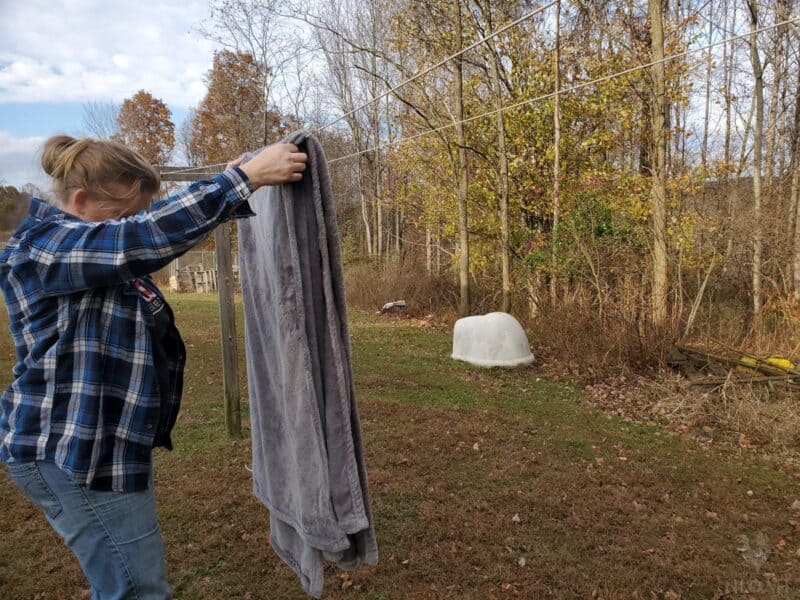
Turns out people want to save money on energy and equipment costs and opt out of buying increasingly expensive, over-engineered, and poor-quality dryers that they have to be replaced eventually.
Clotheslines are the picture of simplicity. Just hang up the clothes with pins, and let nature do the rest. Actually, it isn’t quite so straightforward. Doing it right and saving yourself time, ironing, and embarrassment takes a little know-how.
To help you, I’ve got some tips to help you hang your clothes like a pro. Grab your basket and let’s get going.
CHECK THE WEATHER
As soon as you have a thought of going to hang up a load of clothes outside, the very first thing you should do is check the weather. Oh, that’s okay. You just checked it this morning. Check it again!
It sounds trivial, but it’s worth repeating and worth being sure, or at least as sure as you can be. If your garden is dying for rain, the surest way to make it rain is to hang up a fresh load of laundry outside. Same thing with washing your car, right?
Save yourself some grief and wasted effort by getting that weather report…
Spend More for Good Clothespins
The temptation to use cheaper than cheap wooden clothespins that you can buy by the dozens for just a dollar or two is very high, but I urge you not to do it.
These pins available at most big box department stores, dollar stores, and flea markets are terrible, prone to breaking, and have a poor grip, and that means more of your clothes are going to end up in the grass and stained or else getting dirty and muddy.
Investing in high-quality plastic, metal, or nicer wooden clothespins isn’t frivolity. This is something you’re going to use over and over again to hang up your clothes, which are expensive.
If you’re going with wooden clothespins, make sure they have thick, high-tension springs or else are a springless design. They should also be thick, sturdy, and finished with linseed oil to better resist moisture and weather.
Don’t cut corners on this basic but critical necessity.
Don’t Leave Clothespins Outside
This is a lesson I learned painfully and very young helping my great grandma put her laundry out on the line. You do not ever, and I mean ever, leave your clothespins out on the line. This is a sure way to accelerate wear and tear.
What’s the big deal? They’re designed to be outside, even designed to put up with moisture because your clothes are wet.
The deal is that exposure to dust, wind, UV, and rain all day long, every day, will wear them out and cause them to break. It can also cause the formation of mold or rust which can stain clothes.
I got a butt-whooping for doing that, and you probably won’t, but if you leave your clothespins on the line, you deserve one. Take them down, drop them in a bag, and bring them inside with you when you aren’t using them.
Ladies, Wear an Apron. Men, Don a Pouch
Something that’ll make your life hanging up clothing a whole lot easier. Ladies, put on an apron with a couple of front pockets. Men, clip on a belt pouch used for holding nails or rivets, or a collapsible dump bag if you’re a hiker or hunter.
Use this to hold your clothespins and any stray socks that, once again, have lost their mate between the washing machine and drying.
The alternative of stuffing clothespins into various pockets of your pants, holding them in your teeth, dropping them in the basket with all the clothes, and so on is just not efficient, and adds to the aggravation.

Tension Lines Properly
Clotheslines, no matter the material and no matter the design, will slacken over time…
This means that when they’re loaded down with clothes, especially wet clothes, they will sag closer and closer to the ground, and eventually something will make contact and get dirty or stained.
Before you begin, or periodically depending on the type of clothesline you have, tension the lines. They don’t need to be as tight as a bowstring, but they should be good and snappy so they can put up with some weight without drooping too far.
Some lines will stay tighter than others for longer. You might need attention more or less often depending. Just keep up with it.
Use Cotton or Natural Fiber Clotheslines
Speaking of clotheslines, when it comes to the material of the lines themselves I highly, highly recommend that you use cotton or some other natural fiber.
Yes, they stretch out and droop more. Yes, they tend to wear out quicker. But what they won’t do is stain your clothes from the dyes that are in use on nylon and other synthetic or composite fibers.
Plus synthetic fabrics have a nasty tendency to start accumulating this weird, slick gunk on them that is almost impossible to remove after a time.
Stick with cotton and just keep a spare set on hand; you’ll have less trouble overall, I promise.
Always Give Your Lines a Quick Wipe
Speaking of weird, gross gunk on clotheslines, depending on the environment and the season where you live, it’s worth taking a damp cloth and wiping your lines before you start hanging clothes.
Pollen, bird poop, insect juice, dust, and more will get on your clotheslines because they are, of course, outside.
This quick wipe will show you immediately if there’s anything that needs close inspection and will help your clothes stay cleaner overall.
Smooth it Out!
I know so many folks despise the idea of hanging up their clothes the old-fashioned way because it’s wrinkle city, and that means you’ve got a lot of ironing to look forward to once the clothes are dry.
You can’t ever truly get rid of wrinkles, not really, but you can get rid of the lion’s share just by smoothing out your clothes before you hang them up.
I mean smooth them out; take the time to smooth them out when you hang them or before. Don’t just shake and snap them a couple of times and then hang them up. That’s okay, but it’s not great.
Properly smoothing them pays dividends if you hate ironing. I hate ironing, so you can trust me on this.

Always Go Inside Out!
My recommendation for drying all of your clothes and other fabric items outside is to turn them inside out.
This gives them a margin of protection against anything that might get on them, and also protects them from UV light which can start to fade their colors. It also helps in various other ways that we’ll talk about below…
Hang in the Shade to Save Colors
Everyone loves the idea of hanging clothes in the sun so they have that wonderful warm, fresh crispness when you take them down but something that you must remember is that UV light is intensely powerful and will fade colors like nothing else except a bottle of bleach.
This can happen a lot faster than you think with the cheap dyes that are commonly in use today. This problem is especially egregious if you live in a place with a very high UV index.
If you want to spare your clothing from fading, you should position your clothesline in the shade if you can.
Hang in the Sun to Bleach
Conversely, if you’re dealing with stubborn stains or want to keep your whites whiter, hanging them in direct, full sun is a good way to keep them brilliant looking and eliminate stains.
Prolonged and repeated exposure to the sun can even get rid of some stains that wouldn’t come out any other way!
Because you’ll need sun for some loads and need shade for others, you should carefully plot where you’re going to position your clothesline if it is permanently installed in the ground, or invest in a mobile clothesline that you can drag around.
Disperse Weight Evenly
Organization is a great thing. I used to hang up all of my towels and blankets together, then my clothes, grouped by type and by size.
It looks nice and it will certainly scratch that OCD itch, but hanging a bunch of heavy items like jeans, towels, blankets, comforters and the like together is only going to put too much stress on your line and weigh it down.
Even if it’s tensioned properly, it could potentially stretch and touch the ground…
Distribute these heavier items evenly so you can get more clothes and bigger loads on the line without problems.
Roll Towels Slightly Over the Line Before You Pin
A quick tip when you’re hanging towels…
You’ll typically want to hold them up to the line, parallel and flush with it, and then clip them in place with your pins. Don’t do this.
Instead, just fold the top edge of the towel over the line so it is flush with the bottom on the opposite side. Then pin it. That little bit of extra resistance, and the fact that the pin is getting a better bite on the fabric, will keep them in place, especially if the wind starts blowing!
But, you’re free to do it the other way if you like chasing down your towels…
Hide “Sensitive” Items on the Inner Lines
This is always funny when it comes to line-drying clothes, but it’s also one that has funded more privacy fences than anything else I know and that’s the truth.
When it comes to drying underwear, from men or women, and we’ll say more intimate items, you don’t want your neighbors, company, or passersby to see what you’ve got.
That’s just your business. Or, maybe, you’re trying to keep some old and ratty clothes hanging on for whatever reason.
I’m not judging, and it’s okay to want to keep that stuff private. To do that, you need a clothesline with one or more inner lines.
The idea is that you can hang up all of your other items on the outside lines to create a visual cover for whatever you hang up on the inside.
Hang up the stuff on the outside first and then put your unmentionables, embarrassing stuff, lingerie, and so forth on the inside. When everything is dry, take it down in reverse order.
You’re welcome!
Sock Hangers are Solid Gold
I hate dealing with socks on laundry day. I doubly hate them when I have to line-dry them. They take up too much lateral space on the line, and there are always a million of them, meaning I don’t have enough room for my actual clothes.
You can resort to all sorts of cockamamie improvised solutions for getting more socks on the line, or you can spend a few bucks and get a sock hanger that is designed for clotheslines.
It’s basically a kind of tree that you can hang up a bunch of socks on in a much smaller footprint, if you’ll pardon the pun, saving space on the line.
I’ve got one that holds 15 pairs of socks and I wouldn’t trade it for anything. Get one or two for yourself depending on the size of your family and how often you do laundry.
Hang Shirts Upside Down if You Can…
This is a rite of passage, of sorts, for using a clothesline. This is when it all starts to make sense. If you can, hang shirts upside down.
This simple trick will help eliminate wrinkles, speed up drying time, and reduce unsightly marks left by clothespins.
Hang Shirts Upright by the Seams if You Can’t
Now, not everything can be hung upside down effectively. In this case, for sewn garments try to pin them in place by the seams up on the shoulders, straps, or whatever.
Take a few seconds and figure out the natural position where the top will hang without twisting, slouching, or facilitating wrinkles. You’ll know it when you see it. Once you’ve got it there, pop on the pins and move on to the next one.
Slacks and Jeans Should Hang Upside Down by the Ankles
Just like hanging tops upside down, you should also hang up pants upside down. Pants, jeans, khakis, capris, slacks; all of your long bottoms should dangle by the ankles. This will help them dry quicker, reduce wrinkling, and hide those clothespin marks.
Pick a Good Spot for Clothespins
On the subject of clothespins, no matter how careful you are and how nice your clothespins are, most light-colored fabrics or those with consistent and lightly contrasting patterns will show marks where the teeth or jaws of the pin were gripping the garment.
To avoid this, look over the item for a good spot. Is it possible to hide the marks on a seam, on the interior, under a collar, or under a cuff? Get creative with how you hang your clothes so long as they aren’t wadded up and wrinkly.
Be Ready to Prop for Heavy or Multiple Loads
Sometimes, no matter how nice your clotheslines are, both the brace or mounting point and the actual lines themselves, and no matter how well-tensioned you have it, it’s just going to sag under the load.
If you’re trying to dry out comforters, lots of towels, lots of jeans, canvas, and other heavy stuff, bust out a sturdy pole or rod to help you prop up the line in the middle. This will alleviate the weight and prevent your items from dragging on the ground.
If you do this sort of thing regularly, having a tube or slot in the ground at the midpoint for just such an occasion will save you a lot of aggravation trying to keep it balanced.
Beware of Pollen!
This is sort of related to my admonishment about checking the weather way back at the beginning of this list: if you’re in an area where trees and other plants disperse a ton of pollen, you should be checking the pollen forecast and projections along with the weather.
I can tell you right now, if you live in Florida or many parts of Georgia and Alabama, you’ve got your work cut out for you.
For starters, intense pollen on the wind can actually tint your clothing and leave a trail of dust when you bring them in. Major bummer when you just got done washing and drying them!
Worse yet, if you or someone else in your family is an allergy sufferer, having your clothes literally inundated in the stuff is a fate worse than death.


Get your gift and learn things like:
- how to make this really quick pest spray
- how to prevent egg waste
- two cheap automation devices that will make your life easier
Tom has lived and worked on farms and homesteads from the Carolinas to Kentucky and beyond. He is passionate about helping people prepare for tough times by embracing lifestyles of self-sufficiency.
I have an indoor line in a closet for my underwear; it works; if needed, I use a little fan. I have another in my living room that clothing can go on, and herbs dry on that line, too.
When I was in Marine boot camp in 1971, we had to hand wash our clothing every Sunday morning on large concrete wash racks behind our barracks. Scuz (scrub) brush and Whisk liquid detergent. Prior to starting our wash, we would stick our clothes pins all around the brim of our utility covers (hat) or down the front of our utility shirts and they were easily to hand. Taking clothes down was just as easy. Boot socks were perfect for carrying them to and from the squad bay. These were tricks our DIs taught us. I have pictures of this in my platoon book. But don’t be seen away from the wash rack area with pins clipped to your uniform.
As a kid and adult, when using clothes lines, we usually had a bag with a specialized hook for hanging on the line we could easily pull or push as we moved along. Drop the pins right in the bag when taking stuff down and bring it in with the freshly dried clothes. As the article says, never leave them outside when not hanging clothes.