
I think every homesteader by now understands the importance of storing food for a rainy day, or just storing it to prevent waste.
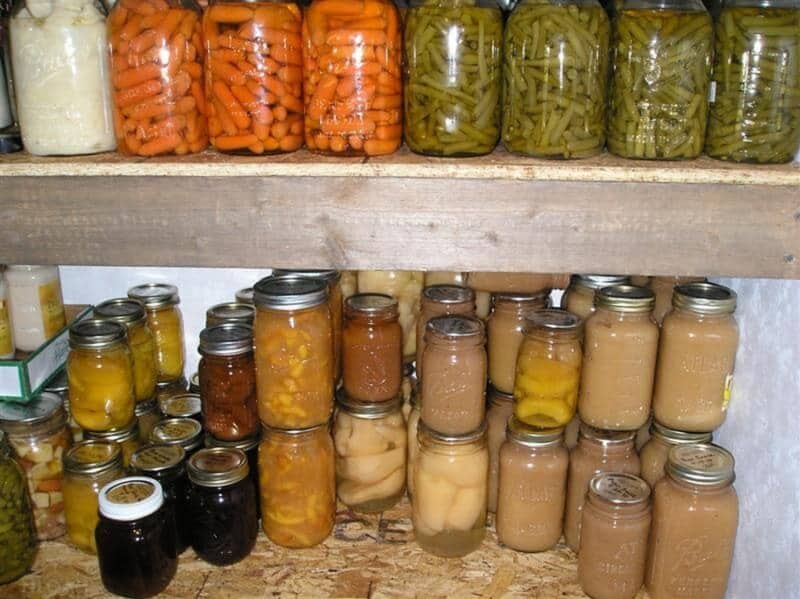
Whether you’re preserving and stashing produce or other food that you grew yourself, or just stocking up on grocery store staples, it’s a great idea and a good way to improve your self-sufficiency.
But I’ve got to tell you, most of my neighbors store food with no purpose, no plan, and barely any thought. They aren’t as well off as they think they are!
Using the wrong procedures and failing to check, rotate, and maintain your supply is only going to leave you with spoiled food and a mishmash of different options to try and eat when the time comes.
You’ve got to store food the right way, and that’s why you need to follow these laws of food storage that I’m going to share with you today. They changed my life for the better, and my storeroom has never been more bountiful. They can do the same for you and your family…
Disregard the Expiration Date
First things first, time to slaughter some sacred cows. You know that printed “expiration” date that’s on every single package of any kind of food you get from the grocery store? Forget about it. Entirely. I’m not kidding.
How can I say such a thing? It’s because it isn’t the expiration date. It’s a ‘Best by’ or ‘Sell by’ date that is mandated by the government. And that’s all it is…
Learn When Foods Actually Go Bad
This is a corollary to the previous law. There are so many foods out here that are entirely edible, and they’ll even stay fresh and delicious, for months and months after that printed date that it is basically useless.
And that’s not getting into enhanced storage techniques that we’re going to cover which might massively improve shelf life.
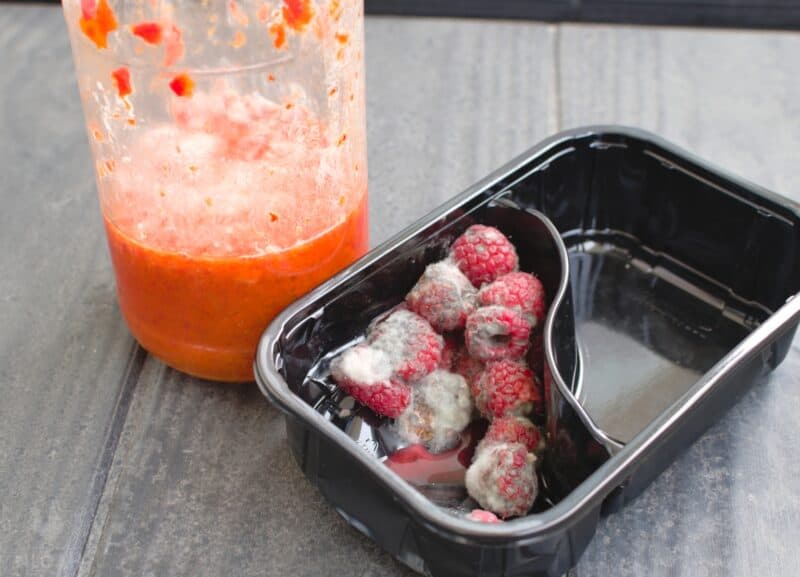
How do you know when a given kind of food will actually go bad? It requires study and experience, and understanding exactly what you can expect based on your storage conditions and techniques.
That’s too much to get into in this article, but suffice it to say for now that you need to make your own decision on that and not trust some printed date on the package. You’ll use this info in your planning every step of the way…
Timely Rotation is the Whole of Law
If you take nothing else away from this article, let it be this: it is imperative that you rotate your stored food, all of it, on a timely basis.
That means the food that goes in first comes out first to be used or thrown out before it goes bad. To do that, you’ll need to label each item with a date that can be referenced on your checklist and planning sheet.
At prescribed intervals, weekly, monthly, or quarterly, go through your stored food and pull out items before they get too old, replacing them with fresh acquisitions.
Don’t Trust Paper Packaging
Any food, of any kind, no matter what it is, cannot be trusted to go the distance if it comes in any sort of paper packaging. A paper packet, cardboard box, fiberboard container, or anything of the sort.
This stuff is impossibly cheap, attracts moisture, and offers absolutely no impediment to most kinds of pests which will clean your clock if they get into your stash.
Any such foods that you want to last must be transferred into appropriately sturdy food storage containers unless you plan on eating them in the near future.
Don’t Be Dazzled by Sales – Do the Math
This is an altogether too common mistake I see many homesteaders make…
When your local grocery, big-box store, or other retailer announces some crazy doorbuster sale on something, there’s invariably a stampede of preppers and other folks who rush to gobble it up because it has to be a good deal. Right? Not necessarily…
Prices get raised or artificially inflated only to get marked down to what seems like a good deal in the ad. Don’t fall for it. Do the math based on quantity and purchase requirements and compare that against the same or competing brands on the shelf to find out what is really a worthwhile buy.
This sort of thing is happening more and more often, so don’t get taken.
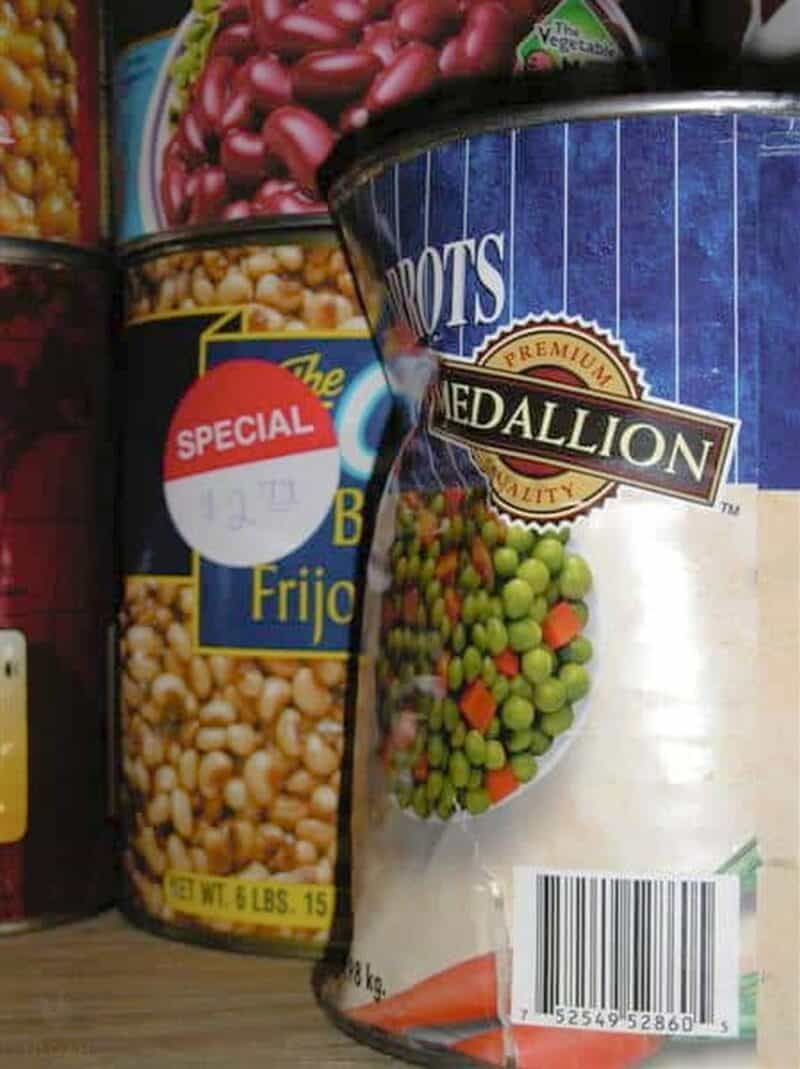
Don’t Store Food with Dented or Janky Containers
This sort of piggybacks onto the previous law. You ever found a great deal at the scratch and dent bin at the grocery store? Cans of soup, fruit, or veggies that have just been knocked around a little bit?
Don’t fall for it. These damaged containers are very likely compromised in some way, even if they’re showing no outward signs at the moment.
They’ll be far more prone to spoiling, and doing so quickly, than ones that are intact. Any savings you might enjoy upfront are a false economy.
Invest in a Vacuum Sealer, Mylar Bags, and Oxygen Absorbers
Far and away one of the best things you can invest in for your overall food storage plan is a vacuum sealer, followed closely by mylar bags and oxygen absorbers.
Oxygen is the enemy when it comes to any kind of food storage, seeing as how it brings with it oxidative damage which will cause spoilage. The air itself also carries moisture which facilitates degradation, mold, and spoilage…
Removing the air from packaging using the vacuum sealer appliance or oxygen absorbers, and preventing it from getting back into the food using mylar bags, will radically extend shelf life two to three times normal or even more.
Maintain a Stable Environment at the Storage Location
This is a really big one, and can sometimes be one of the most challenging laws to follow. It is critical that your food storage stash, or stashes, have a stable environment to ensure maximum longevity of your goods.
A temperature that is between 50° F and 70°F (10° C and 21° C) is ideal for most things, and you want it to be as dry as possible with no fluctuations in humidity or temperature. Higher temps cause quicker spoilage, as does dampness.
You can make use of dehumidifiers and other climate control appliances if you can, but if not, consider a different location.
Periodically Test for Freshness
Your food, whatever it is, might have a claimed or even guaranteed freshness of months, years, or even longer. But how do you really know? Are you going to trust the manufacturer? Are you going to trust random figures on the internet?
Hopefully, you can, and hopefully, they are correct, but the only way you’ll know for sure is to try something yourself.
Don’t hesitate to remove a portion of your food and actually open it, inspect it, prepare it, and if all goes well, eat it. That’s the only way you will really know what you can expect from your food that has been in storage for any great length of time.
If it turns out your canned veggies or meat won’t last quite as long as advertised, at least you’ll know and can plan accordingly. If you find out that some foods will reliably last way, way longer than they are supposed to, consider that a pleasant surprise!
Protect Stored Food from Light
This is another storage law that’s easily forgotten about. Light is problematic for your stored food because it raises temperatures and can degrade packaging, particularly certain types of plastic.
You want to keep the sun off of all stored food, even on an intermittent basis. Likewise, you don’t want to leave lights on in the storage location, and incandescent bulbs particularly which generate more heat.
Any food that you can store in opaque containers should be stored to further protect it from the degradation that light will inflict.
Only Store Food You Know You’ll Eat
Probably the single biggest piece of common-sense advice on this list, it is nonetheless a genuine food storage law. Only store food that you know you, or someone in your family, will actually eat.
No, this doesn’t mean storing nothing but your favorite foods. If that were the case, I would have a colossal walk-in freezer full of frozen pizzas…
Instead, store staples and ingredients that you like well enough to eat without complaint. I don’t care how good canned spinach is; if you find it so repulsive I can’t choke it down, it’s wasting time, money, and space.
And say whatever you want about nutritional needs; there are other foods out there that can supply the same vitamins and minerals. Plan accordingly.
Don’t Neglect “Non-Essentials”
By the same token, you don’t need to follow some spartan food plan either. It’s totally okay to include things that are just comfort foods, flavor enhancers, or little treats.
Think things like condiments, ketchup, and mustard for instance, but also tasty processed foods like Pop-Tarts. If you do fall on hard times for whatever reason, having these little touches of normalcy will go a long way towards keeping everyone happy.

Account for Water Requirements for Pasta, Rice, Beans, Etc.
Another common logistical oversight I see homesteaders fall victim to is failing to account for the water requirements necessary to prepare dry goods like pasta, rice, grains, beans, and so forth.
You might have public or well water at your home, or gargantuan water tanks to draw from. That’s all fine and good, but I strongly recommend you have at least a significant fraction of the needed water for those foods on hand in the form of jugs, cans, or barrels.
If something happens to your other water supplies, including your secondary supply, without this budgeted water all that food will be useless!
Use a Food Storage Planner Religiously
I’ll leave you with the last law, and arguably the most important. Create or download a food storage planner and use it religiously.
This planner should include a spreadsheet with current numbers for the things you have in a way that makes sense to you.
That could be quantity, calories, servings, or something else. It should also have a calendar and tracker for inspections, rotation, replacement, notes, and more.
Put it on a clipboard, put it in a binder, do something like that; just have it at the storage location and get it out to consult it routinely until it’s second nature. Do that, and your storage regimen will be so much easier. I promise!


Get your gift and learn things like:
- how to make this really quick pest spray
- how to prevent egg waste
- two cheap automation devices that will make your life easier
Tom has lived and worked on farms and homesteads from the Carolinas to Kentucky and beyond. He is passionate about helping people prepare for tough times by embracing lifestyles of self-sufficiency.