
If you’ve spent any amount of time in survival and prepping circles, you’ve probably heard of pemmican before. Knowing nothing else about it, you might be under the impression that it is basically old-fashioned beef jerky. But that isn’t quite the case!
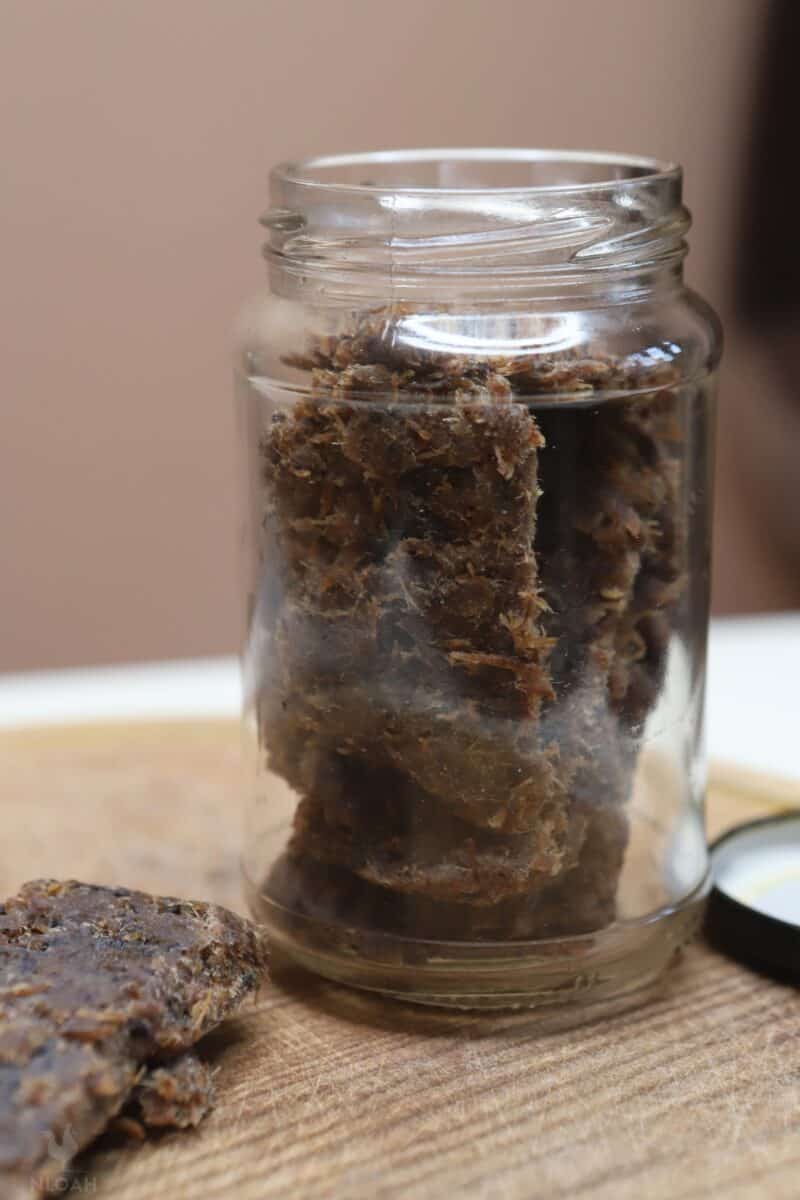
Pemmican is an ancient food first developed and used by Native Americans, and consists of dried and ground meat, rendered animal fat, and sometimes other ingredients like berries. Think of it like a protein bar, but one made from animal protein instead of various plants!
Properly made and carefully stored, pemmican could last for a very long time with no refrigeration, and was a staple for sustaining natives and colonists alike on long journeys or long forays into the field.
It’s amazing stuff, and there’s a lot more to learn about it, so keep reading and I’ll be telling you about 10 incredible pieces of pemmican trivia.
Pemmican Can Last for Months or Even Years
Probably the most amazing attribute of pemmican is how long it will last. Depending on the exact ingredients and how carefully it was made and packed, it can store at room temperature for months on end, or even up to a year and beyond!
Sounds incredible, but it’s true. It’s even more impressive when you remember that pemmican is essentially just meat and melted fat and, only sometimes, added things like berries or seeds.
But because the meat was completely dried out and then pounded into powder, and the animal fat was rendered down and strained of lumps, the uniform consistency helps to get rid of moisture that would lead to spoilage.
In a way, it has some similarities to confit preparation and storage of meat; by fully covering the meat in fat, you prevent air from getting to it and accelerate rancidity.
Storing the pemmican in thick cloth wrappers or other bindings would further protect it from air and moisture, keeping it fresh for a very long time.
It Doesn’t Require Special Tools to Make
Pemmican already sounds impressive enough, but it’s even more noteworthy when you remember that it was made with no special tools, electricity, or facilities for processing.
The meat, whatever kind it was, would be harvested, butchered, and then dried in the sun or over smoke before being ground into a powdery consistency using stone or wooden tools.
Likewise, animal fat would be melted in a heat-resistant vessel over a fire before the two components were mixed together. This was all done the old-fashioned way, by hand, and done for centuries. It’s still done that way today by primitive skills practitioners and Native Americans.
You can make pemmican yourself as a snack or survival ration using a food dehydrator, your oven, blender, and other modern convenience options, but it’s good to know that with a little practice and refinement, you can do it even in a primitive setting.
It Was Traditionally Made from Many Different Kinds of Meat
When you first think of the main ingredient in pemmican, what do you think of? Beef? Not quite! Traditional pemmican was actually made from many kinds of meat, typically bison, elk, or deer.
Different tribes that had access to different kinds of wild game would use whatever sort of meat they could procure as long as it could be successfully dried and then ground.
Today, people continue to make pemmican using these traditional, nutritious, and delicious ingredients, but you can make a great rendition using nearly any kind of meat!
Pemmican Tastes Intensely Meaty and Rich
So, the million-dollar question: what does pemmican taste like exactly? We’re basically talking about meat and fat and that’s it. People today sometimes add salt, but precious little else. Could it possibly taste good?
Pemmican is definitely an acquired taste, but having had the legitimate, real deal, traditional pemmican and modern iterations, I can definitely say it’s pretty good in the end. It tastes very meaty and very rich owing to the fat.
But if you like beef jerky or a nice, well-marbled steak without much in the way of embellishment, you’ll probably come to like pemmican if you try it.
Fatty Fish like Salmon Can be Used to Make It, Too
It wasn’t only ground-bound game that was used to make this stuff. For tribes that lived near lakes and rivers teeming with fish, fatty species worked just as well (though fish-based pemmican was comparatively rare compared to the kind made with red meat).
Salmon was one of the most popular fish species used for the purpose, and certainly worked the best. As long as it could be caught and processed quickly prior to drying, it turned out quite well!
Fish pemmican was considerably more common among Native American tribes living near the Great Lakes regions and throughout Canada, but was also known in America. I’ve never had it myself, but I’m eager to try it!
You Can Add Sweetness or Tartness with Berries
Talk of the taste of pemmican brings us to another important fact about it. Different tribes, and sometimes just different regions of the same tribe, would increase the nutritional content, calories, and flavor by adding dried fruit, typically berries of various kinds.
These berries would add some wonderful sweetness or, in the case of huckleberries or elderberries, tartness that complemented the rich fattiness perfectly.
Often the addition of dried fruit would result in a somewhat decreased shelf life, but for folks who were sick and tired of the same old thing, or makers who had abundant gathered fruit, it was a welcome change and made sense to prevent waste.
Pemmican Can Be Used in Other Recipes
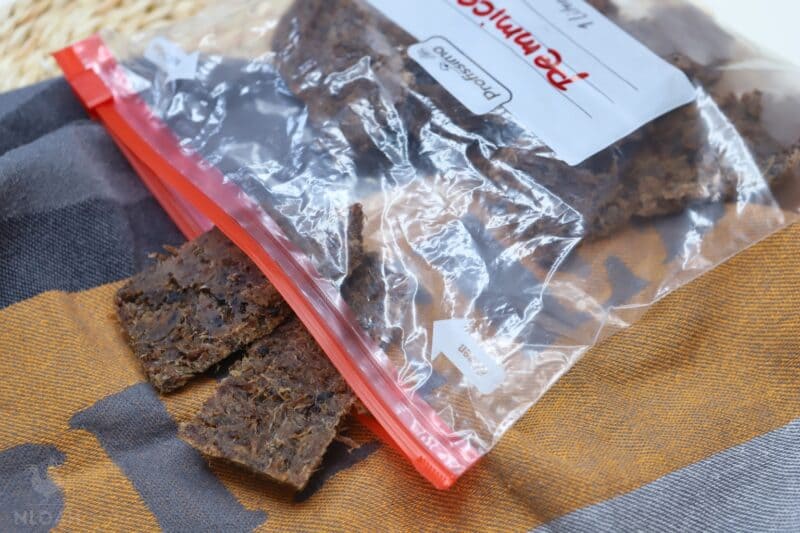
Pemmican was often eaten basically as a protein bar. It would be unwrapped and either broken apart or just eaten right out of hand. But that wasn’t the only way it was used. This stuff is surprisingly versatile around a campfire!
Pemmican stew was a constant creation, simply made by reconstituting pemmican in boiling water. You could use a lot and make a chunky, fortifying soup or a little bit to make a broth that was a great basis for other ingredients like vegetables or fresh wild game.
It was also commonly pan-fried, usually when sliced thin. That sort of reminds me of frying up thin slices of spam to make it a little more appealing! When used this way, pemmican could impart flavor to whatever it was being cooked alongside or bulk up things like fry bread, pancakes, etc.
Pemmican is Keto-Friendly
If you’ve been paying attention, you probably already figured this one out! Traditional pemmican, consisting of nothing but meat and fat, is a keto-friendly survival ration or snack for sure!
If usual energy bars, protein bars, and similar things have way too many carbs to fit your nutritional requirements, you should look into making pemmican yourself. It will fill you up, nourish your body, and won’t blow your diet or knock you out of ketosis.
Take it from me, this is a snack that will stick to your ribs and give you long-lasting energy to help you get through a workout, an emergency, or just make it to your next meal.
Pemmican is Very Calorie-Dense
Speaking of nutritional requirements, you might be shocked to learn how nutritious and calorie-dense pemmican really is.
Now, naturally, there will be considerable variation depending on the preparation method, the kind of meat and fat used, and the presence of any additional ingredients like berries as discussed previously.
But as a baseline, a 2 ¼-ounce serving of pemmican has 295 calories, around 15 grams of protein, and 27 grams of fat or more. It has precious few carbohydrates unless you include berries or other ingredients.
This stuff is heavy-duty, and doubling that tiny serving will provide a grown adult with nearly a quarter of their daily requirement of calories assuming they aren’t heavily exerting themselves.
If you’re concerned with the logistics of survival, meaning how many calories you can carry for a given amount of weight and space, it is very difficult to beat pemmican.
Pemmican Started a War!
And I am not kidding in the least little bit. It’s true: the availability of pemmican, or rather I should say the potential lack thereof among the belligerents, sparked a legitimate regional war.
It is a long, long story in the telling, but the highlight reel is that this took place in 1812 between the Hudson’s Bay Company and the Northwest Company around the Red River Colony in what was then British North America. The Northwest Company, a fur trading business, was utterly dependent on pemmican from local producers for its existence and continued operation in this inhospitable region.
When a competitor, the Hudson’s Bay Company, moved in and threatened to buy off or block their access to the pemmican, embargoes were issued, cannons were rolled out, muskets were loaded, and the conflict went hot… And it stayed that way!
It lasted from 1812 all the way through 1821. Battles, plenty of deaths, and the razing of colonies and settlements ensued. In the end? The feuding companies ended up merging and burying the hatchet. All’s fair in business and war, I guess.
It’s an incredible tale, and one well worth looking into.


Get your gift and learn things like:
- how to make this really quick pest spray
- how to prevent egg waste
- two cheap automation devices that will make your life easier
Tom has lived and worked on farms and homesteads from the Carolinas to Kentucky and beyond. He is passionate about helping people prepare for tough times by embracing lifestyles of self-sufficiency.