
For being so small, rats can be a truly huge problem. Whether they are in your home or just lurking on the homestead, there’s no end to the trouble they can cause… They routinely poach eggs, kill chicks and ducklings, contaminate feed, and spread nasty diseases that you, your family, and your animals can catch. They also tear up insulation and wiring, and generally just stink the whole place up. I despise them, and you should too…

But getting rid of rats is easier said than done. They’re mostly nocturnal, and they stick to the shadows and out-of-the-way places where people and even cats cannot reach.
One of your best weapons in the war against rodent kind is poison. Poison baits exploit a rat’s constant hunger and deployed properly will certainly kill.
But over-the-counter rat baits are very expensive and may not prove to be any more effective than time-tested DIY solutions. I’ll tell you what you need to know to make your own effective rat poison in this article, and give you guidance on how to place them for maximum lethality.
Warning: Be Careful Even with Homemade Solutions
Before we go any further, I want to impress upon you that it’s critical to stay focused when concocting and deploying any of these DIY rat poisons.
I don’t think it’s any exaggeration to say that most folks are entirely acquainted with the risks of actual, commercially produced rat poison.
But, for some reason, I’ve noticed a disturbing tendency for folks to sort of turn off the cautionary part of their brain when mixing up the same thing from a common household goods.
I understand it, I think: a lack of conspicuous skull-and-crossbones and dire warnings about danger on the packaging might lull people into a false sense of security…
You cannot let that happen though! These homemade baits can still prove to be extremely deadly to all other animals, especially pets, and potentially children and adults if mishandled. Some are safer than others, but you really should make sure your pets can’t reach them – why take the chance?
You need to constantly think about proper employment that will minimize the risks of cross-contamination, inadvertent consumption and other harm when using any of the techniques or recipes presented in this article.
Also, most of the DIY formulas on our list are nowhere near as directly dangerous to people and other animals as actual rodenticides, but they should still be handled cautiously.
Ingredients like plaster powder and boric acid, to say nothing of bleach, can be directly harmful to skin and mucous membranes, and potentially even an inhalation hazard if you have an accident.
For that reason, it’s in your best interest to always wear proper protective equipment when preparing and placing your homebrew rat poison. Be especially cautious to avoid contaminating surfaces that you use or are in contact with regularly.
What You’ll Need
You don’t need much to craft your own DIY rat poison at home. You’ll need some stuff to measure and handle ingredients safely for mixing, and maybe a couple of things in order to deploy it for maximum effectiveness.
Measuring Cups: most of the ingredients we will be working with can be combined by weight or by volume, and I prefer the latter. You can use any conventional measuring cups for the purpose, scaling recipes up or down depending on your requirements and how many stations you need.
I strongly recommend that you use a dedicated set of measuring cups separate from the ones that you use in your kitchen every day (unless you’ll be working with only the completely safe ingredients on our list).
Mixing Bowl: a large mixing bowl to combine and stir ingredients together will make your life easy. I prefer a plastic or glass one to ensure no reactivity with some of the chemical ingredients we will feature later.
I again strongly urge you to use one that isn’t an everyday kitchen implement unless you’re only going to be working with completely non-toxic ingredients.
Mixing Utensil: something to stir and mix all of the ingredients together. You can use a fork, a spatula, or anything else. A whisk is handy for powder-only recipes. Just make sure it is sturdy and that you don’t mind discarding it or keeping it for utility use only after you’re finished.
Small Saucers or Cups: for some of the formulas on our list you’ll need a small saucer or cup for each bait station that you’re going to put out.
Some folks have good success with repurposed jar lids, but I think they are too shallow to be easy to handle. I like to use disposable condiment cups or cheap ashtrays for the purpose.
Gloves: wear gloves for all of the following operations. Better safe than sorry when mixing, and even if you’re working with completely safe and non-toxic ingredients, you’ll be working in and around areas where rats and mice have frequently traveled. Gloves will help keep you safe from contracting diseases.
And that is all you need. Time to get on to the recipes.
5 DIY Rat Poison Recipes
Below are five proven DIY rat poison recipes. Read all of the required ingredients and steps carefully before you decide to proceed.

Recipe #1: Bleach and Peanut Butter
Warning! Leaving a plate with this mixture around is dangerous for children, pets, and other livestock. only place it in areas you are 100% sure they won’t get to it. Also avoid storing or placing it near ammonia products.
One of the most lethal DIY rat poisons out there uses nothing more than common bleach and peanut butter. The trick is to get them to eat it since, as some of you wrote in the comment section, the mice will smell it and could just avoid it. But if they do eat it, it’s very likely it’ll work.
If you have a wooden spoon, you probably want to use that as opposed to a metal one. When in contact with metal, bleach can be reactive and, in time and through repeated use, it will lead to oxidation. This really depends on the metal, the concentration of bleach, and the periods of time the metal is exposed to it.
Ingredients:
- Chlorine bleach, unscented.
- Peanut butter.
Instructions:
Add one tablespoon of bleach to the bowl for every two tablespoons of peanut butter you are using:

Stir thoroughly to incorporate and make sure the peanut butter isn’t runny. If it is, add a little more butter and stir again until it takes on a normal consistency.
Place saucers or small cups of the mixture where you know rats are traveling or living. Again, take great care to keep this mixture out of the reach of pets or children! Regular ingestion should lead to death by internal hemorrhaging or organ failure.
Investigate bait stations and refill as needed; replace with fresh mixture every 2 to 3 days.
Recipe #2: Plaster of Paris, Sugar, Cornmeal and Milk
An ingenious and devastating mixture, this one works by solidifying in their stomach and digestive tract, completely blocking it and causing heinous internal injuries.
It’s a bad way to go, but it has advantages: it’s adaptable to lots of different situations and does not require containers for bait thanks to its consistency. As always, make sure there is no way that kids or pets can get to the stuff.
Ingredients:
- Plaster of Paris.
- Sugar, any kind.
- Cornmeal.
- Milk, any kind.
Instructions:
Mix equal parts plaster of Paris and cornmeal in a mixing bowl. Measure both carefully to ensure proper consistency. To this mixture, add the same amount of sugar. Then, slowly add milk, stirring and incorporating as you go. You’ll usually need four parts milk to every one part of plaster and cornmeal.
Keep adding milk slowly and stirring until you don’t notice any dry granules in the mixture.
Once it takes on a dough-like consistency, put your gloves on and then start kneading it thoroughly until it takes on the texture of modeling clay. If it’s too wet, add more of your dry ingredients in equal proportions.
Once the mixture is properly prepared, you can tear off small hunks and then roll them into balls. Aim for something about the size of a ping-pong ball or golf ball.
Place the bait balls anywhere you know rats are frequenting for best results. Again, make sure you keep them out of reach of pets and children!
Recipe #3: Coffee Grounds and Peanut Butter
I’ve already talked about coffee in this other article where I discuss all of the foods that can kill mice. While caffeine helps humans stay alert, it’s lethal to mice. While the smell of coffee may be a bit off-putting to them, we’ll add two extra ingredients to hide it.
Ingredients:
- Coffee grounds (finely ground, like for espresso, darker roasts have a higher caffeine content than lighter ones)
- Peanut butter
- A tablespoon honey
Instructions:
Mix two parts peanut butter with one part ground coffee, adding some honey if you have it. Stir until the coffee is fully incorporated. Roll into small balls or place in saucers near known travel paths or nesting areas.
Recipe #4: Peanut Butter mixed with Vitamin D3
So we know that peanut butter is prime mouse bait, but what’s up with the vitamin D3? Isn’t that supposed to be good for you? Yes, good for you, but not for mice, or at least not good for them and anything but the smallest concentrations.
Vitamin D3 or cholecalciferol is actually used in rodenticides as an active ingredient, though they use a ver concentrated form.
You can already see where this is going. Get yourself some highly concentrated vitamin D3 supplement pills and crush them or break them up and then mix them in with little peanut butter balls to leave out as bait for mice. Get the highest concentration you can find!
A couple of feedings and they will be history. Do take care, though, because this can potentially hurt or kill other mammals too.
Recipe #5: Flour and Quikrete or Cement Mix
This is a recipe that’s seriously effective, and fast-acting, against mice. We know that flour serves as good bait for mice, and is one that will readily attract them. But by mixing in some fine cement or Quikrete with the flour we create a toxic mixture that will kill mice after it solidifies inside them.
This is definitely a bad way to go for the poor little thing, and something you should only use if you want mice dead right away and you know they won’t scurry off back into your walls before perishing.
Recipe #6: Cocoa Powder and Honey
That may seem odd at first glance, but it’s well established that theobromine is toxic to some mammals, including mice and dogs in particular. Per pound, mice need a bit more of it, but it’s still viable for us to work with.
When yo do the math, the measured oral LD50 is about 837 mg/kg in mice, so a 25 grams mouse would need about 20 mg of theobromine – that’s only about 1 gram of pure cocoa.
Now you may be wondering why not just give them milk chocolate instead of paying extra for concentrated cocoa powder, only to mix it with honey or sugar. Sadly, the theobromine concentrations in cocoa are too low to make a difference.
Ingredients:
- Dark cocoa powder (the highest cocoa percentage you can find)
- Flour
- Honey
You probably know how to put this one together: mix all of the ingredients in a bowl, then place within the reach of mice, but out of the reach of pets. Again, be very wary of using this if you own a dog or a cat!
Where to Place the Bait
So you know rats are around, but where do you place the bait exactly if you want them to get it? If you know they’ve been rating a particular area for food, bit animal feed or your own stuff, if you can safely place a bait station or two there that is definitely a great way to start getting some kills.
But other areas that will ensure success include high-traffic paths that rats and mice take regularly, and anywhere that you suspect a nest is nearby.
For locating high-traffic areas, look along walls and other vertical surfaces where they meet the floor for areas that:
- are conspicuously swept clean of dust,
- have odd greasy marks, residual pools of urine or droppings,
- which look like brown grains of rice- exact size dependent upon the specimens in question.
These are all indicators that rodents are around, since they habitually stick close to walls for safety and comfort. Anywhere you locate these paths, place a couple of bait stations in areas of cover where critters will feel secure eating.
Remember, the cardinal rule is to keep bait out of reach of susceptible children, pets, and all other animals that might come into contact with it. Poison, even the homemade kind, is an indiscriminate killer!
You should also keep in mind that these poisons take time to work, and rats that are close to death or highly likely to retreat into an enclosed area or nesting location…
This could mean in or around your home, so be prepared to deal with the stench or else go to the trouble of locating and extricating the corpse.
How Fast Do These Work?
Poison baits will kill, of course, but how fast do they do it? It depends on the lethality of the mixture and the size of the animal, along with the dosage.
Generally speaking, recipes above that incorporate chemicals like bleach or boric acid, or other inedible indigestible stuff like plaster, kill quicker than those that depend on simply harmful foods like instant mashed potatoes – which could take days…
As a rule of thumb, the larger the rodent, the longer it takes – unless the dosage is very high. This is why I encourage you to put out plenty of bait at every station. If a hungry rodent comes along and gorges in on the bait, that might be lights out in short order.
But generally speaking, according to the variables, your baits might take anywhere from a couple of hours to a couple of days to kill assuming that the target rodent is eating them.
Recipes That Don’t Actually Work
I can hear you say:
I’ve heard of so many recipes that work against mice! Baking soda, flour… Where are they?
The reality is, these recipes and substances been propagated by online by people who haven’t tried them. And if you read articles or forum posts by people who actually exterminate mice for a living, they will tell you: they flat-out don’t work.
❌ Instant Mashed Potatoes
The theory with mashed potatoes is that, as the mice eat it, it will swell up in their stomachs and the starchiness will eventually block their digestive tract and result in death.

Many folks like to try this one because the ingredients are totally safe for people and pets… assuming, of course, you don’t let your pets eat as much of this stuff as they want!
But the problem is, they’d need to eat a huge quantity for it to kill them. There’s really no evidence to back this one. Besides, the larger the rodent, the more they’ll have to eat, to ensure a kill. I would skip this one.
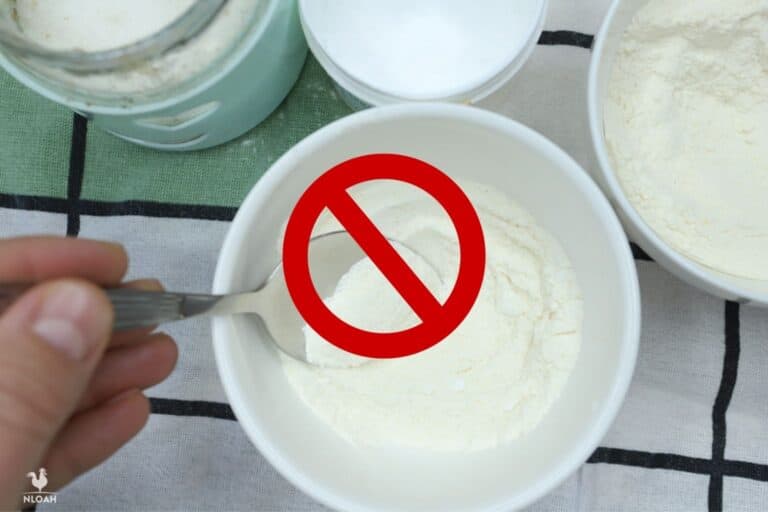
❌ Baking Soda, Flour, and Sugar
You can mix baking soda with anything you want to lure them to eat it – and they will eat it… but just like with mashed potatoes, they’d need to have a huge quantity for it to work. Mice tend to be cautious eaters and, unlike me, they tend not to overeat!
❌ Boric Acid and Chicken Broth
Now, there is some research to back boric acid, though opinions are split on its actual efficacy. This stuff is proven to work as an insecticide, not against rodents. It’s also somewhat messier to prepare, and can be a little more challenging to place without making a mess. Also be really cautious to keep this away from pets, particularly dogs!
If you do decide to try it, mix the broth and boric acid in your mixing container. Stir or whisk thoroughly, being careful to minimize splashing. Once the mixture is fully incorporated, take the time to either place your bait cups or trays and then add solution using a dropper or ladle, or fill your bait stations and then carefully place them without spilling.


Get your gift and learn things like:
- how to make this really quick pest spray
- how to prevent egg waste
- two cheap automation devices that will make your life easier
Tom has lived and worked on farms and homesteads from the Carolinas to Kentucky and beyond. He is passionate about helping people prepare for tough times by embracing lifestyles of self-sufficiency.
Boric Acid and bleach wouldn’t the rats smell the bleach in it and avoid the whole thing all together?
I tried the peanut butter with baking soda and they didn’t eat it. Still have the problem despite $150:paid to a pro with no effect!
I used baking soda and Jiffy corn muffin mix that worked for me
If you don’t have any backing soda would corn starch work in it place
Thank you for all the recipes. You wrote under the Bleach recipe: “Take care to not let the bleach come into contact with any metal during the mixing or placing process because it can be highly reactive.” Yet, the picture you show mixing the bleach and peanut butter is with a metal spoon! Just curious as to what the outcome was from mixing with metal spoon? Thanks!
Hi Kim,
You made a really good point! I went ahead and adjusted that paragraph and linked to a resources that talks more in-depth about how bleach reacts to various metals. Long story short, if you don’t care about the metal spoon, you can use that, though a wooden one is ideal long-term. I hope this helps!
What are the risks to secondary animals, those who eat the dead mouse/rat, especially the boric acid or bleach recipes?