
Mica powders are so fun to use when making homemade soaps and a plethora of other DIY natural home goods and gifts. The powders come in a vast array of colors, offering nearly endless options when creating one-of-a-kind products.
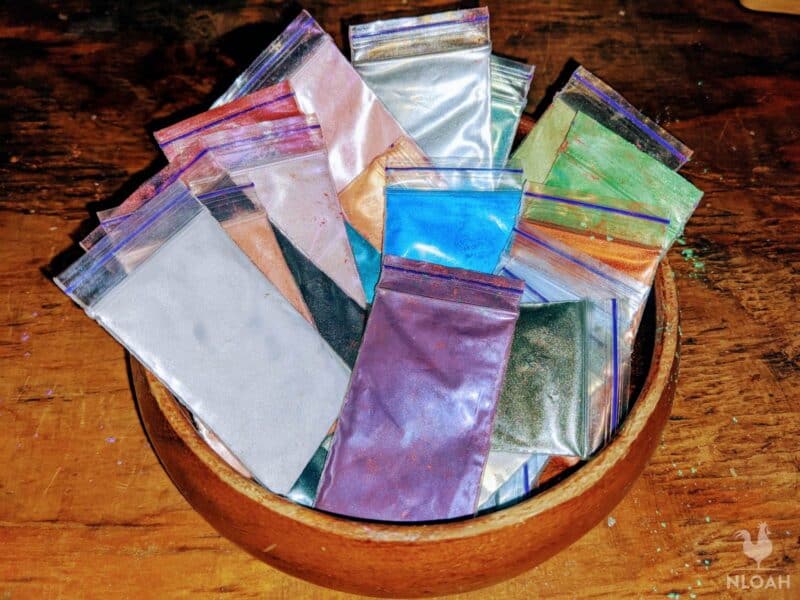
Table of Contents:
What Is Mica Powder, Anyway?
Mica powder is a mineral ground into powder that is derived from the natural stone mineral named muscovite (which is found in rocks) that boasts shiny flakes.
The off white, gray, yellow, or slightly brown mica powders stem from muscovite – a phyllosilicate mineral often found with metamorphic rock that contains potassium aluminum silicate.
How Is Mica Useful?
Mica powder is used as a coloring agent. It has a coloring effect when coming into contact with different surfaces and materials such as soap, candles, cosmetics, epoxy resin, craft paint, and more. In cosmetics, mica powder is mixed with other substances such as iron oxide or titanium oxide.
Mica powders routinely used to dye soap are often colored with ultramarines, titanium dioxide, and other oxides to create bright pigments. Both natural white mica powder and colored mica powder cast a pearly, shimmery, sparkly, and metallic effect when used to decorate or dye a project.
Mica powders can be used in nearly any project that will accept dye or paint. To use them as a natural paint, simply dampen a paintbrush, then dip it into the desired mica powder color. Always wash the brush before switching colors unless you want to blend the shades together.
Natural vs. Synthetic Mica Powder – Read Labels Carefully!
While mica is naturally occurring, the coloring itself is done in laboratory setting. We also have synthetic mica, or fluorphlogopite. The “lab” part of the coloring process is what confuses folks when it comes to understanding their natural vs. synthetic origins…
Most of the mica powder used in cosmetics or sold for the purpose of making them, soap, and candles at home are naturally mined – but likely underwent a coloring process in a lab.
One of the reasons manufacturers tend to prefer natural mica powders over synthetic ones boils down to cost. Synthetic mica powders or fluorphlogopite, cost more to make than mining the natural white powder and coloring it.
Also, the synthetic variant is more pure, resulting in more vivid colors…
Is Mica Powder FDA-Approved?
Mica powders are regulated by the Food and Drug Administration (FDA) under 21 CFR § 73.1496 for cosmetics. At the same time, and this may sound a little confusing, the FDA lists it as exempt from certification in cosmetics. They say:
Mica is safe for use in coloring cosmetics generally, including cosmetics applied to the area of the eye
… and:
Certification of this color additive is not necessary for the protection of the public health, and therefore batches thereof are exempt from the certification pursuant to section 721(c) of the act.
So mica powder is regulated, it”s just that it”s not seen as unsafe when used in skin products to require a certification (to make it easier for the cosmetics manufacturers).
When a color additive is used in a product that will touch the skin, the FDA does require a specific purity level – hence why these powders are colored in a lab to achieve provable purity to meet government regulations.
To meet FDA regulations, natural mica powder designed for cosmetic use must not have a micron size that is in excess of 149. To test it, 100% of the mica has to pass through a 100-mesh sieve.
⚠️ Safety First!
Simply because an item is natural does not mean it’s safe for everyone to use. An allergic reaction can occur when using any natural item – even wild berries as a natural paint. But, there are few side effects to using mica powder on the skin.
More specifically, you should be aware that:
- Non-food-grade mica, like the one we use in this article, is not safe to eat. It has to be labeled as food grade, and even then you can only eat limited amounts to stay within safety limits.
- If you inhale mica, it may cause respiratory issues such as Pneumoconioses.
Mica is not bad for your skin due to its non-irritating and soft nature – unless your skin already has a rash or similar irritation.
Repeated and prolonged exposure to mica powder dust could pose some serious risks, but is not expected to create any typical hazards during normal use.
Normal use, in my personal experience, involves not sniffing the little baggies the mica powder comes in (or working in a lab without a mask), and simply placing the pouch above the work surface and stirring or painting with the product. In addition consider these before trying any of the projects:
| Project | Risk | Precaution |
|---|---|---|
| All powder mixing projects (soap, wax, cosmetics) | Airborne dust when mixing loose mica | Work over a tray, avoid mixing large batches in a small closed room, wear a basic dust mask for bigger batches |
| Cosmetics, bath bombs, anything touching skin/lips/eyes | Craft-grade mica isn’t tested for skin or eye-area use | Use cosmetic-grade or skin-safe mica, not leftover craft mica |
| Any project near food | Standard mica isn’t food-safe | Keep away from anything you eat or drink unless labeled food-grade |
| Epoxy Resin Jewelry project | Uncured resin/hardener can sensitize skin over repeated exposure | Wear nitrile gloves, work in a ventilated area, avoid skin contact |
| DIY Homemade Cement project | Wet cement is caustic; dry mix dust irritates lungs | Wear gloves and eye protection when mixing; wear a dust mask with dry cement powder |
| Slime for the Kids project | Activator is contact lens solution containing boric acid | Adult supervision; don’t let kids eat it or put it near their mouths; wash hands after playing |
Mica Powder Uses
1. To Color Homemade Soap
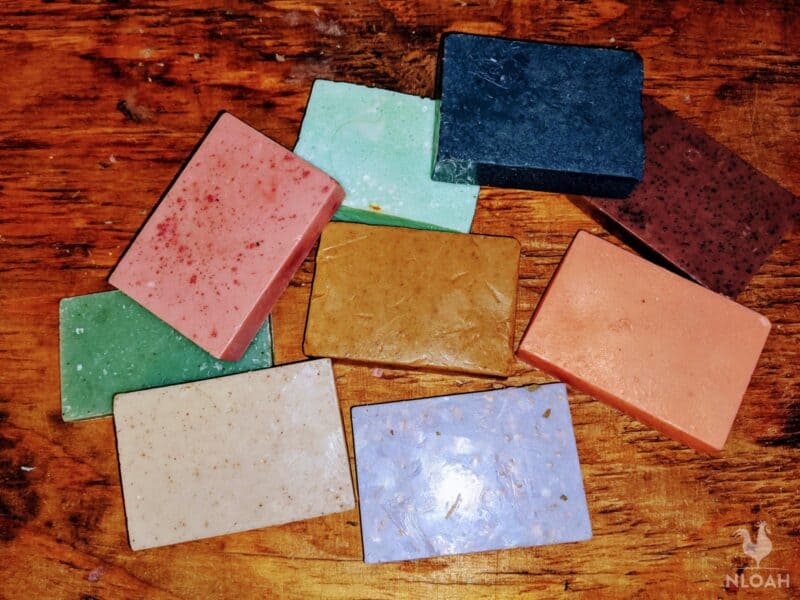
Mica powder works best when used with melt-and-pour soap bases, in my personal experience. You simply pour some of the powder into the soap base after melting it and combine it thoroughly with a spoon.
You can add the mica powder to the soap recipe before or after adding in other ingredients, such as essential oil for scent, shea butter, oatmeal, etc.
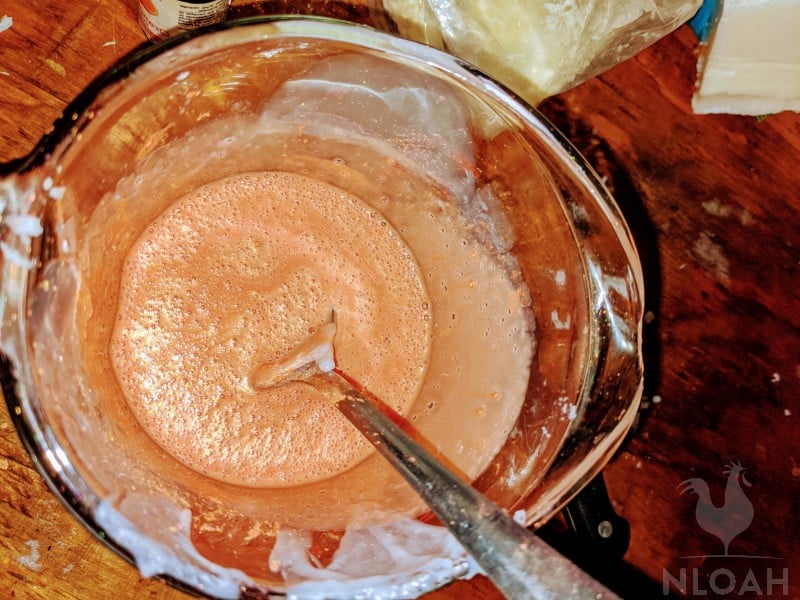
How much powder you add into a melt-and-pour soap base depends on the depth and vibrancy of color you want in the soap bar, and on how much of the base is being used.
I would recommend using ½ to 1 teaspoon of mica powder for every half pound of soap base. Add in ¼ of a teaspoon more after stirring until you achieve the desired color shade.
If you are using a soap mold with a raised design, mica powders can be used to paint the design to add more dimension and visual interest in the homemade bar of soap.
The powder allows you to create customized soap in school colors to make inexpensive gifts out of sports ball or mascot-themed soap molds.
2. To Make Candles
Mica powder is used in much the same to tint soy wax, or white beeswax for candles as it is for soap.
The mica powder must be stirred into the wax while it is really hot and before it goes into any kind of mold, container, or is dipped onto a wick.
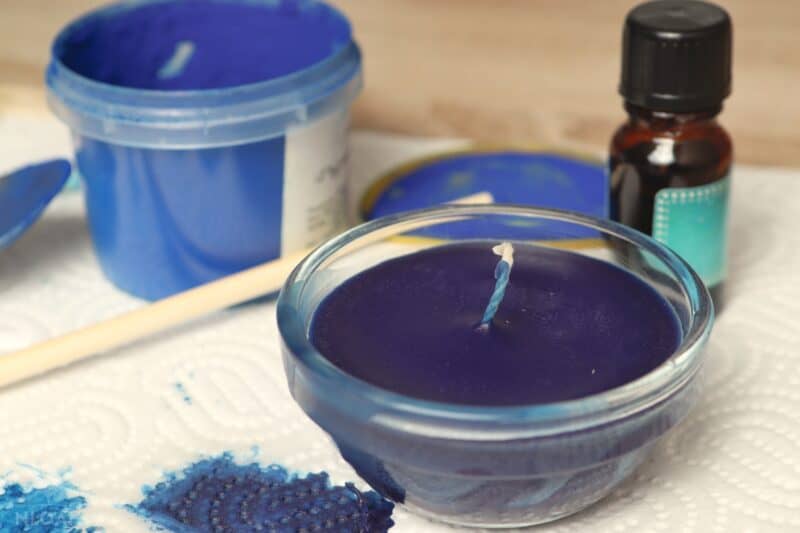
Mica powder can also be used to create a “marbled” look to candles or in tiny molds that are affixed to the candle as decorations. For every 16 ounces of candle wax flakes you should stir in 1 teaspoon of mica powder.
Now, some candle makers stand firmly against coloring wax with mica powder because it can clog around the wick, turn the wick into a sparkler, or appear more like colored flecks instead of a true dye on the wax.
I have never had an issue dying wax with mica powder, but if you do, or if want to avoid any such pitfalls, you can always paint the finished candle with mica powder – as many candle makers opt to do.
You can also use mica powder to create beautiful and colorful wax melts.
3. Fabric Paint
To make your own fabric using mica powder you can use the acrylic style paint instructions, and mix it with equal parts of standard school glue and shaving cream until the desired shade is mixed.
Another way is to simply mix the mica powder into the glue and shaving cream solution until you get the shade you want and then paint a design on fabric that should not wash out.
I would not recommend putting fabric with either mica powder paint option in the dryer. While this process can be used to adorn clothing, it is best used on fabric art projects.
The video below demonstrates the school glue and shaving cream method of DIY fabric paint making:
4. Dissolvable Bath Additives
You can paint a finished bath additive with mica powders or add them to a dissolvable bath additive recipe to give a deeper and more vibrant look to the product.
When you bloom color with mica powder in a dissolvable bath product, the shade first appears light or pastel, but as you add in a few drops of rubbing alcohol and stir, the color becomes far more vibrant.
5. Paper Crafts – Cards, Scrapbooking, Journaling
Greeting cards are ridiculously expensive, as are the intricate and attractive journaling and scrapbook pages sold at craft stores.
Drawing or printing a black and white pattern onto paper and then painting it with mica powder allows you to customize a personalized card or paper project.
6. Cosmetics
Tinting the color of DIY all-natural eyeshadow and foundation makeup recipes or making your own personalized concealer and eyeliner is both fun and simple with the use of mica powders.
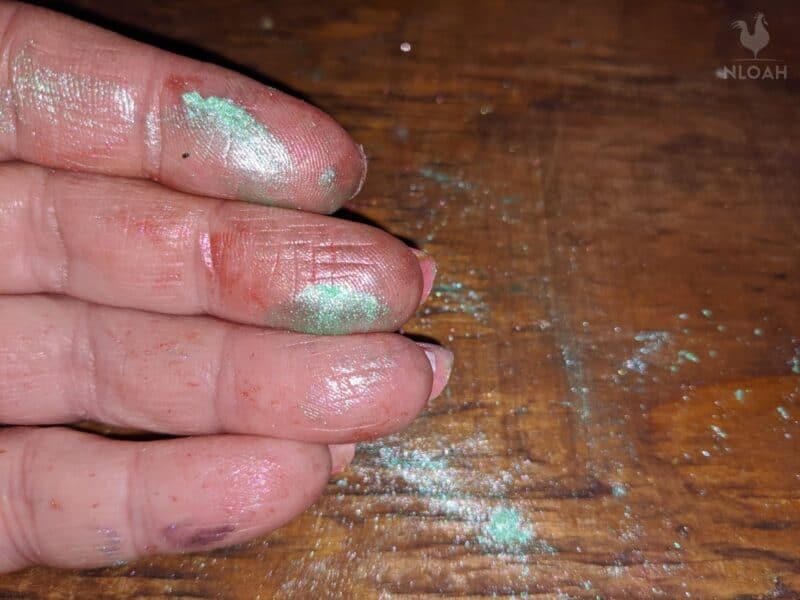
Mica powder has a definite shimmery effect on the skin that last for hours and hours – unless you get caught out in the rain!
You can save a ton of money making your own cosmetics, and never have to worry about slathering chemical ingredients you cannot even pronounce, onto your face.
Mica pigment powders can be used to make just about any kind of cosmetic, including lip gloss, fillers, eye shadow, blush, and many more.
7. Paint on dry clay project
Painting polymer clay or baked clay with mica powder brings out the fine details in the project. The mica powder fills in every nook and cranny of the clay creation, adding both depth and dimension to really bring the clay project to life.
8. Craft Paint
Making your own paint with mica powder is not only easy, but a whole lot of fun.
You can create custom shades that shimmer and sparkle and can be used on any type of paper and most other common crafting medium – tin, balsa wood, cardboard, etc.
How To Make Mica Powder Water Color Paint Video:
How To Make Mica Powder Acrylic Style Paint Video:
9. Dye Raw Clay
Customize your raw clay for ceramics using mica powders. The entire process is simple and quick – with fabulous and lasting results. There is no need to paint the clay after stirring in the mica powder.
Once the project comes out of the kiln the powder will be fully infused into it and produce an earthy hue that highlights the details of the ceramic creation you made.
10. Varnish, Glaze, Or Wax
Take your woodworking or clay craft projects up a notch by inexpensively making your own tinted varnishes, glazes, and waxes.
Refinishing an old piece of furniture or completing a shabby chic makeover with expert results and beginner skills is entirely possible when using mica powders to any standard wax, varnish, or glaze.
DIY Mica Powder Glaze Video:
DIY Mica Powder Wax Video:
11. Epoxy Resin Jewelry Making
Mixing resin with mica powders and acrylic paint adds a lot of shimmer and sparkle to any jewelry project. If you want a piece of jewelry that has a metallic façade, mica powder is the way to go.
Be careful, though! epoxy resin is known to cause dermatitis when coming in contact with skin. Use nitrile gloves, a respiratory mask, and goggles, and make sure the area is ventilated.
12. Decorating Glass
Mica powder can be used to add extra designs and color in not only fused glass projects, but also when making stained glass.
The mica powder can be used to sign glass projects, as well as to adorn them.
13. Rubber Stamp Projects
Creating an embossed look to a project has never been easier. Push the rubber stamp into the ink pad or craft paint firmly and then press the stamp onto the project space – card, wood, fabric, etc.
Next, just shake a small amount of mica powder onto the damp design and allow it to dry slightly before shaking off the excess mica powder just as you would glitter.
Use only a minimal amount of paint when planning to sprinkle mica powder onto the project to prevent it from sinking into the liquid or smearing when the excess powder is shaken away.
14. Mica Powder In Decoupage Projects
Pour some of the decoupage glue into a plastic cup or bowl, and stir in mica powder in increments of ¼ of teaspoon amounts and stir to combine until the desired color is achieved.
The mica powder will add a lot of extra sparkle to the decoupage project even if you are using a pure or clear natural mica powder that has not had any color pigment added.
15. Mold Dusting
If you want to simply add a bit of flare to a resin, candle, soap, clay, or wax melt mold quickly, dusting the inside of the mold with mica powder will add the flourish you seek.
Once the mica powder color, colors, or design has been dropped or brushed into place, simply pour in your resin, wax, or melt and pour soap base and allow the project to cure.
In my personal experience, mica powder retains its sparkly nature for years when used on glass, wood, tin, paper, and even candles.
16. To Cover Wood Stain
Whether you’re refinishing furniture or crafting a new piece from scratch, adding a layer of mica powder can give an interesting twist to the look of stained wood. Simply apply the mica over the stain before sealing it in with polyurethane or varnish.
Here’s a DIY.
17. For Painting Wood
Want to brighten up old wooden shelves or decorate a simple picture frame? With mica powder, you can create beautiful accents on wood pieces that will add shimmer and color without overwhelming the design. Try mixing different colors together to make custom shades or use it as an accent hue on natural wood tones.
Here’s a guide.
18. Painting Metal
If you’ve ever wanted to add a touch of sparkle to metal items like jewelry boxes or decorative knick-knacks, then mica powder is your best bet! Just mix the powder with acrylic paint until you get your desired consistency and use it just like regular paint to coat any metal surface.
Here’s a tutorial.
19. To Paint Your Own Walls
Mica powder isn’t just for small projects – it can also be used to create stunning wall murals! Mix the powder into interior wall paint and use stencils or freehand designs for unique walls that will certainly make a statement in any room of your home. Here’s a guide.
20. DIY Homemade Cement
Believe it or not, mica provides strength when mixed with cement components! This makes it great for creating outdoor structures like garden walls and pathways when mixed with cement mortar and sand. You can even add color pigments into the mix if you want vibrant hues in your finished product.
As you might imagine, you need to protect your eyes, nose and hands when working with the dry powder.
Here’s a tutorial.
21. To Make Translucent Polymer Clay
Want an interesting take on polymer clay? Mix in some mica powder with colors such as green, purple, blue, black, and more! You can use this technique to make jewelry pieces or decorations like figurines that have a shimmery translucent look when held up against light sources.
Here’s how to do it.
22. DIY Bath Bombs
Add some extra pizzazz to your homemade bath bombs by mixing in some mica powder! Whether it’s pink, blue, silver, or gold that tickles your fancy – this method adds both color and shimmer which makes them even more luxurious than regular bath bombs alone.
Here’s a tutorial.
23. Slime for the Kids
Slime is one of today’s most popular DIY activities for kids – why not step it up by adding some sparkly elements into the mix? All you need is clear glue (or white if preferred), baking soda, contact lens solution, food coloring…and last but not least – glittery micas! Not only does this make slime super fun; it promotes creativity too!
Safety precaution: make sure your kids never eat or put this stuff in their mouths. As mentioned, most mica is not edible or food grade. get them tow ash their hands thoroughly at the end of the project.
Here’s how to make it.
How Much Mica Powder to Use
The amount of mica powder you need to use will obviously vary depending on what you’re trying to make…
For soaps, you’ll need to add about 1-2 tsp of mica powder for every pound of soap (if it’s hot process soap, add just ¼ to ½ tsp).
For paint, add 25 to 50 grams of mica powder per gallon. And for small epoxy resin projects, you need about one gram of mica powder for every ounce of resin in your project.
If you’re working on wood projects, you’ll usually need 1.5 to 4 tsp of mica powder for every 8 gallons of product (the less mica powder you use, the more translucent the project will appear).
As you can see, there is a lot of variation in how much mica powder you should use. As a general rule of thumb, start by adding very small amounts of mica powder, then increase the amounts until you have the desired color and consistency.
Mica Powder Q&A
No you can’t, because mica is not actually a dye.
No you cannot, because mica, as we said, is not a dye.
Mica won’t typically stain your clothes, and whatever stain you do get will wash off easily.
Mica is typically an off-white yellowish color, but mix it with the right ingredients and it can have any color you want!
It can be. Some mica powders are natural, while others are colored in the lab. The mineral from which mica is derived, muscovite, is naturally occurring.
Mostly no. You can eat certified, food/grade mica, in some situations and in limited amounts. but you can’t digest it, so it doesn’t offer anything in terms of nutrition. It’s not soluble in stomach acid (or in water, for that matter). On the other had, mica that is not labeled as edible should not be eaten, including natural mica or the one used in cosmetics.
Are You Ready to Use Mica?
Mica powders are a wonderfully versatile crafting resource. They not only add shimmer and shine to any project, but allow you to completely customize shades and add texture to any homemade gift, beauty aid, or home decor project.
When mixed with paint, glaze, varnish, rubbing alcohol, wax, or a soap base, the wow factor of anything you are making to use, display, or gift is increased exponentially – even if you are a beginner at the particular crafting medium, and are working on a tight time and money budget.

Get your gift and learn things like:
- how to make this really quick pest spray
- how to prevent egg waste
- two cheap automation devices that will make your life easier

Tara lives on a 56 acres farm in the Appalachian Mountains, where she faces homesteading and farming challenges every single day, raising chickens, goats, horses, and tons of vegetables. She’s an expert in all sorts of homesteading skills such as hide tanning, doll making, tree tapping, and many more.
Not all mica powder is graded to be used in cosmetics, especially cosmetics going around your eyes so you need to check your individual micro powder to ensure that what you’re using in the cosmetics that you’re making especially eyeshadows is rated specifically for cosmetics and if you’re gonna use it around your eyes for eyeshadows in cosmetics because most Mica powders are not graded for that
Can mica powder be mixed with clear polyurethane and be used for wood finish?
Can mica powders be added to a cement mix when casting small flower pots?
If so, what would be the ratio of powder to cement?