
Mold inside the home can be a very dangerous thing, but cleaning it doesn’t have to be. If you are dealing with any mold infestation, or want to avoid one, bleach is probably what the internet is suggesting you use. Sure, bleach works on mold, but it can also be toxic to both humans, animals, aquatic life, and nature at large.
DIY natural cleaners can work as effectively as bleach – without all of the nasty potential side effects. Sodium Hypochlorite, a.k.a. bleach, is regarded as an asthmagen that can cause reproductive toxicity, organ damage – or possibly even cancer, the Environmental Working Groups Guide To Healthy Cleaning reports.
Not all products that contain bleach actually advertise it on the label. At least one popular brand contains Sodium Polyacrylate a.k.a acrylic acid, which at high enough doses can cause skin and respiratory issues. Probably not a big concern for most people
When the environmental conditions are right, mold can double and then quadruple in dimension in as little as 24 to 48 hours.
Table of Contents:
Types of Household Mold
Before we delve into several potent DIY natural mold cleaner recipes, we must first determine what type of mold is potentially growing in our homes.
Mold is classified into three categories:
- Allergenic. This type typically causes both asthma attacks and allergic reactions that are similar to seasonal allergies.
- Pathogenic. Mold of this type can exacerbate existing health, breathing, and allergy problems in folks who are already suffering from either chronic or acute illness.
- Toxigenic. Mold of this type, black mold in particular, cause potentially lethal conditions to develop – or worsen existing health issues. Toxigenic mold varieties are often referred to as “toxic mold.”
Black Mold
This is the worst type of mold to come across. Homes have been condemned over black mold infestations. Black mold (or Stachybotrys chartarum or Stachybotrys atra, as it is more technically known) is a variety of fungus. It generally thrives in environments that are both moist and warm, which is why it is often found in bathrooms.
Black mold typically grows on wood, gypsum board, paper, dust, fiberboard, lint – or other common high cellulose matter. Even though this potentially dangerous type of mold has been dubbed black mold, it can also grow in a shade of gray or dark green. Regardless of the color, black mold stinks, and it smells musty.
Exposure to it can cause eye irritation, coughing, sinus problems, headaches, fever, and chronic fatigue. More serious reactions to this toxic mold can occur over time if the area is not cleaned and exposure is prolonged. Potential black mold health risks include upper respiratory tract issues, allergic reactions, and a few other issues.
Other Common Mold Types
Aspergillus mold spores create thick walls or layers of mold that eventually morph into mold chains. The long flask shaped spores come in a vast array of colors in the over 180 species of mold in this classification.
Aspergillus mold varieties contain aflatoxins – deadly carcinogens. Exposure to mold can cause respiratory infections, and asthma attacks. It is one of the most commonly found varieties of mold found inside of homes in the United States.
Alternaria is perhaps the most common type of allergenic mold found around the globe. It is a dark green shade of mol. Alternaria mold boasts a velvety texture that includes growth of fine brown hairs.
It is sometimes mistaken for black mold, and often found under leaking sinks, in showers, and bathtubs. If there is water damage in the home, it is likely alternaria mold will develop.
Upper respiratory tract, mouth, and nose asthma like conditions can develop when someone is exposed to this rapidly spreading mold.
Chaetomium mold thrives in chronically damp areas. It has a cotton type texture, and ranges in color from white to gray to brown – but can turn black over time. Chaetomium can cause both skin and nail infections.
This mold produces mycotoxins that are particularly dangerous to folks who suffer from compromised immune systems.
Aureobasidium molds are typically found beneath painted surfaces or growing behind wallpaper. This type of mold is usually black, brown, or pink in color – turning a dark brown once it ages.
Aureobasidium mold has been known to cause skin, eye, and nail infections that could cause overall body rashes.
Cladosporium is another type of allergenic mold. Unlike almost all other mold types, cladosporium can grow in both war and cold environments. It is typically found on upholstery, curtains, carpet, and other household fabric – as well as inside cabinets and under floorboards.
Cladosporium mold is usually brown or an olive green shade and has a suede style texture. This type of mold causes allergic-like reactions on the skin, nose, throat, and eyes. It can also provoke lung infection, severe skin rash and lesions, sinusitis, and asthma attacks.
Acremonium is a species of mold that is most commonly found growing on humidifiers, cooling coils, in windowsills, and drain pans. It is not uncommon to find this type of mold growing on, under, or around, black mold. It is a toxic mold.
In its early stages of growing, acremonium mold is a moist compound, but as it matures it takes on a powder texture. The mold ranges in color from white to pink to orange.
Exposure to this toxic mold could provoke bone marrow disease, immune system problems, organ damage and even brain function problems because it is also a carcinogen.
Mucor is yet another variety of allergenic mold type that is common in North America. The shading of this type of mold is most typically either gray or white. Mucor mold grows in thick patches in environments that are prone to condensation like HVAC systems, air conditioners, and damp carpeting.
Exposure to this mold can cause asthma, prompt asthma attacks in current sufferers, fever – and other flu-like symptoms. If the exposure to mucor mold is prolonged, it could lead to mucormycosis. This type of fungal infection can damage the lungs, sinuses, and brain.
Fusarium mold can spread quickly in cold environments. It is both an allergenic and toxic old type.
Fusarium mold is commonly found in homes or areas of homes that have suffered water damage – especially in carpets, on fabric items, and behind wallpaper. It is typically white, pink or a light red in color. It naturally grows in compost piles and on food products.
Fusarium mold can cause common outdoor allergy symptoms along with dermatitis. When prolonged exposure happens, it could lead to potentially deadly brain abscesses, bone infections, as well as nervous system problems that can lead to internal bleeding and hemorrhages.
DIY Natural Black Mold Cleaner Components
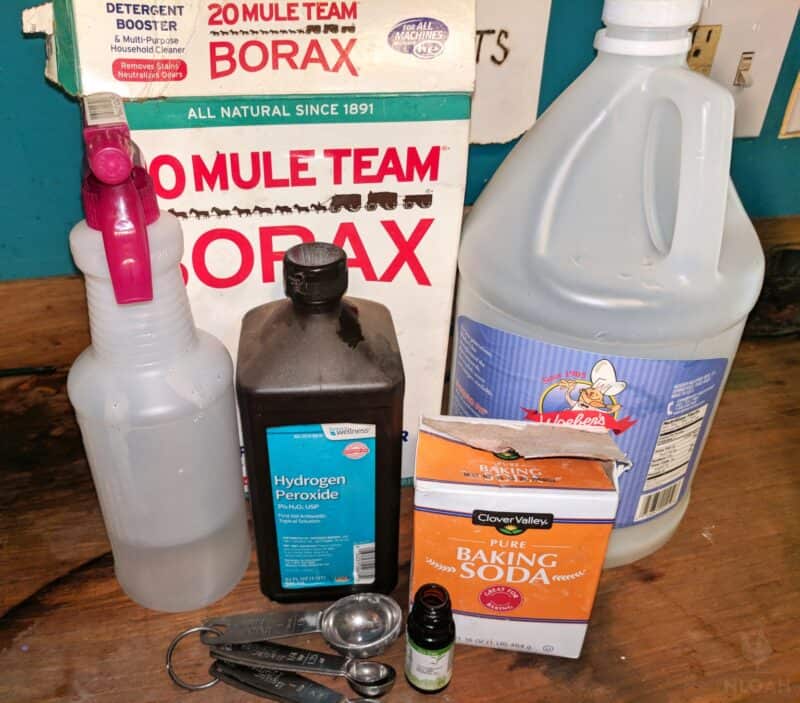
- Distilled White Vinegar – The vinegar is a natural anti-microbial acidic liquid. Research showed that 4% – 4.2% vinegar can inhibit the growth to inhibit the growth of P. chrysogenum.
- Tea Tree Oil – This essential oil also boasts antimicrobial and antifungal properties.
- Baking Soda – The baking soda will not only get rid of most types of mold, it also absorbs moisture from the area where it was found to help prevent it from growing again.
- Hydrogen Peroxide – This all purpose first aid staple boasts antifungal, anti-microbial, and antibacterial properties.
- Borax – Unless ingested, borax is not harmful, nor will it emit any dangerous or toxic fumes. Borax and boric acid are NOT the same thing. Borax has disinfecting properties that make it an excellent choice for deep cleaning on most surfaces.
Distilled White Vinegar Mold Cleaning Recipe
- Combine 2 parts distilled white vinegar with 5 drops of tea tree oil in a squirt bottle.
- Spray the area where mold is present and do not scrub.
- Allow the mixture to sit on the mold area for a half an hour before wiping it away.
Baking Soda Mold Cleaner Recipe
- Combine equal parts baking soda and warm water in a bowl or pitcher with a spout. This mixture will be too thick to put inside a spray bottle.
- Cover the mold with the baking soda and water mixture.
- Allow the mixture to sit upon the mold for 60 minutes.
- Scoop of the now mold-infused solution and dispose of it safely.
If this is a particularly bad mold infestation, follow up this treatment by combine ½ a teaspoon of baking soda with 16 ounces of water in a squirt bottle. Spray the area with the mixture and then scrub away any residue with an old toothbrush you don’t mind pitching after the chore is done.
Hydrogen Peroxide Mold Disinfecting Recipe
- Pour a 3 percent concentration of hydrogen peroxide into a squirt bottle and spray the moldy area.
- Wait at least 15 minutes before you wipe away the mixture.
- If battling a thick mold infestation, you may need to scrub away any residue as noted above.
Natural Mold Deep Cleaning Recipe
This one’s best kept to hard, non-porous surfaces. I know mold tends to show up in my bathroom, right under the soft plastic sealant along the tub edge — not a great spot for this recipe. But it works well on the individual tiles that get moldy, especially in the corners…
- Spray the whole area with tea tree oil. Let it sit for 10 minutes.
- Scrub with toothbrush. Remove with a dry cloth.
- Now spray again with undiluted white vinegar. Let it sit for one hour.
- Scrub with toothbrush. Remove with a dry cloth. (again)
- Now use the 3rd spray with 3% hydrogen peroxide, and let it sit for 15 minutes.
- Scrub with toothbrush. Remove with a dry cloth. (and yet again!)
Note: do not rinse with water because we don”t want to dilute these substances.
And that”s it! In essence, you apply the three substances in order. And if the mold comes back( and it probably will, sooner or later), you can do this again. The total time of the process is about an hour and a half, but it”s mostly sitting around and waiting for each substance to work its magic.
DIY Natural Fabric Mold Removal Recipe
- Combine 2 teaspoons of tea tree oil, ½ of a cup of borax, and ½ of a cup of distilled white vinegar in a pitcher of 2 cups of warm water. This mixture will be too thick to spray through a squirt bottle but might be thin enough to flow through a clean agriculture sprayer.
- Shake the mixture vigorously and make certain the borax has dissolved completely.
- Spray the mold covered areas and then scrub them with a toothbrush or larger still scrub brush.
Borax Mold Killer Recipe
An effective and inexpensive mold killer can be made with just two regular household items: borax and water. The solution works by killing the spores of existing mold while preventing any new growth.
Note before we start: since borax and bleach are both alkaline, mixing them will not result in toxic fumes.
To make:
- Mix one cup of borax into one gallon of hot water, stirring until completely dissolved.
- Once cooled, dampen a cloth or sponge with the mixture and scrub the affected areas until all traces of mold are gone. Be sure to use gloves!
- Leave the solution on for several minutes to ensure complete eradication, then rinse thoroughly with plain water to remove any residue.
The combination of borax’s antifungal properties and its low pH level make it ideal for mildew control, while the concentration ratio ensures that you don’t spend more money than necessary on this frugal cleaning remedy.
Ammonia Mold Killer
Ammonia is a powerful cleaning agent and can be used as a mold killer when diluted with water. To create this mixture:
- Combine 1/2 cup of ammonia with 1/2 gallon of water in a spray bottle or bucket.
- Spray or pour this solution on the affected areas and let sit for 20 minutes before wiping away any residue with a damp cloth.
It’s important to note that ammonia should never be mixed with bleach as the combination creates toxic fumes.
Killing Mold With Fresh Lemons
Lemons have natural bleaching properties that make them an effective way to kill mold in your home. To use lemons as a natural mold killer:
- Cut one lemon into slices.
- Rub them directly onto the affected area until it is saturated with juice from the lemon slices. Let sit for up to 30 minutes before rinsing off with warm water and wiping away any remaining residue with a cloth or sponge.
This method works best on non-porous surfaces like tile, porcelain, glass, or metal.
Bonus Recipe: Bleach+Borax
OK, so I bashed bleach in the intro, but just in case you wanted a recipe recipe that includes it, here’s a really basic one…
- Mix one cup of bleach (regular strength) with 1/4 cup Borax in one gallon of hot water and stir until dissolved completely.
- Pour this solution into a spray bottle and apply liberally onto the affected area(s).
- Let sit for 15-20 minutes before scrubbing off any remaining residue with a brush or sponge then rinse off thoroughly with warm water once done scrubbing.
This method works best on hard surfaces such as tile floors or countertops but should not be used on fabrics or other porous materials as it could cause discoloration or damage due to the bleach in the mixture.
Usage Tips
All of these recipes are effective alternatives to using bleach or other harsh chemical ingredients to get rid of mold. All of the ingredients used in the various mold cleaner recipes are safe for both your home and the environment.
When using a natural mold cleaner recipe that contains borax, keep pets and livestock clear of the area until it dries to ensure the wet liquid mixture is not licked and ingested.
Take proper precautions before cleaning any type of mold – but particularly toxic varieties like black mold. Always wear thick cleaning gloves and a mask over your nose and mouth. When dealing with toxic mold or in an area where ventilation is at a minimum, donning protective eyewear is also highly recommended.
In addition to cleaning the mold, you will also need to remove any contaminated materials that are too damaged, absorbent, or porous to be saved – such as drywall, carpeting, particle board – fiberboard, and ceiling tiles.
Once the cleaning and debris are chores are completed, the mold removal job is still not complete. Examine the area where the mold grew and determine how you can help deter regrowth.
Running an exhaust fan or ceiling fan in the bathroom can be an inexpensive and consistent way to keep mold growth in check. Sometimes fixing a water leak or running a dehumidifier is all that it will take.
It is best to keep the humidity levels inside the home below 50% to thwart the growth of mold. Diligently monitor damp areas inside the house, storage buildings, and barns on the homestead for signs of mold growth, especially during times of intense rain.
What Doesn’t Work
As you probably noticed, these recipes use mostly the same ingredients, and that’s because they work. But on the flip side, there are several that don’t work that keep popping up online. I wanted to list these real quick.
If you see any mold recipe using them, either assume they are there for fragrance, or that they’re completely useless. They are:
- ❌ grapefruit seed extract
- ❌ vodka (it’s only 40% alcohol, not nearly strong enough to kill germs)
- ❌ lemon juice (it’s acidic but not strong enough to disrupt the fungi’s cell membranes – this is why we used 5% vinegar)

Get your gift and learn things like:
- how to make this really quick pest spray
- how to prevent egg waste
- two cheap automation devices that will make your life easier

Tara lives on a 56 acres farm in the Appalachian Mountains, where she faces homesteading and farming challenges every single day, raising chickens, goats, horses, and tons of vegetables. She’s an expert in all sorts of homesteading skills such as hide tanning, doll making, tree tapping, and many more.
I am a bit concerned with 2 things: I have always been told NEVER to mix BLEACH with ANYTHING. I assume this would also mean things like borax…..that it could create a toxic gas…..
The other thing, is I would NEVER shake vigorously something that has any kind of vinegar with baking soda!!! Are you not aware of what happens when you mix the two??? It explodes. This is the combination of ingredients that are used to create school volcano projects!!!
Please rethink these two directions carefully.
Hey Carol,
Sorry for the late reply, I was reviewing this article for accuracy when I came across your comment. I do see this claim on one website, but most sources say the opposite. The reasoning is that both substances are alkaline, so they won”t react with each-other.
THat being said, your rule of thumb about not mixing bleach in general is a good one to remember> better safe than sorry! Though I would argue Tara’s recipe is an exception…
Thank you for this article! I purchased a home that is one hundred years old and although most of the interior is renovated, I’ve been having respiratory problems which I suspect are related to and/or exacerbated by mold exposure. I found some mold in the bathroom and will try the deep cleaning recipe there. But, if you can see mold, it is highly likely there is mold hiding in other places as well.
Hi Jacqueline,
Please note that I changed the recipe so that the substances are used sequentially. This way they should do a much better job at removing the mold.
Also note that this won”t prevent the mold from reappearing since bathrooms have such a high humidity. I know because I have the same problem!