
How many pigs can I raise per acre? Pastured pork gets lots of attention these days, and pasturing pigs can be good for the pigs, the soil, and the farmer’s pocket. On the other hand, there are many horror stories about the damage pigs do to pastures.
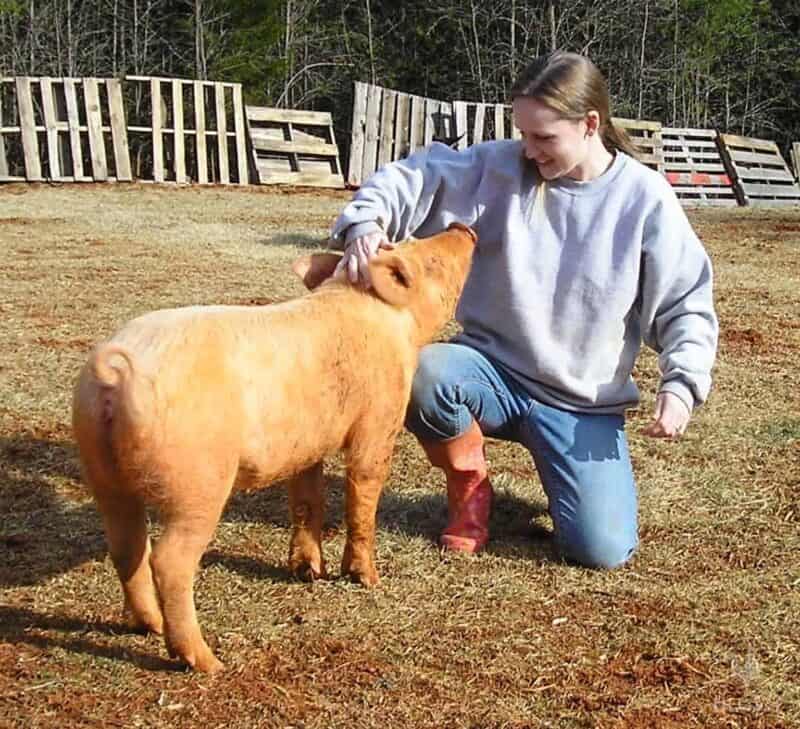
New pig keepers often wonder about the right number of pigs per acre. Just how many pigs per acre of land can you raise?#
Although the answer depends, a good rule of thumb would be between 10 and 30 pigs per acre of land , though 15 to 20 is an efficient but sustainable number. Overstocking your land will lead to greatly diminished regrowth of forage and stunted biodiversity., and can also contribute to parasite problems.
Pig size, forage availability, financial goals, and overall farm goals all affect the actual number of pigs you can put on an acre.
There’s a lot that goes into the right final number, but it isn’t too hard to figure out. Keep reading and I will show you what you need to know.
Pigs per Acre at a Glance
| Pig under 100 lbs. (45 kgs) | 20 per acre |
| Pig over 100 lbs. (45 kgs) | 15 per acre |
| Gestating sows | 10 – 12 / acre |
| Sows with piglets | 7 – 8 / acre |
Why Is Overstocking Your Land Bad?
Overstocking your land with pigs is not merely a matter of crowding your animals. It has serious, progressively worsening effects on the land and the ongoing health of your herd. Consider the following:
Plant Hardiness Suffers
One factor that many new pig keepers don’t understand or fail to consider is that poor grazing management practices slowly and steadily reduce the net tolerance of plants to various stressors. In other words, plants become less resistant to intense heat, extreme cold, drought, pests, and diseases.
Essentially, once pigs have spent too long on a pasture and have basically obliterated the plants there, the ones that are able to regrow from damage or grow anew from seed won’t be as tough as plants that have been established and lightly grazed.
This will contribute to a steady decline in pasture capacity and quality over time.
More Nutritious Plants Die Off in Time
Another major drawback of overstocking is the fact that the most nutritious plants, usually the ones most preferred and targeted by pigs, will suffer from reduced presence with each grazing.
Much of the time, these plants take more time and resources to regrow, and in their absence, other, less nutritious plants and weeds will grow in their place.
This displacement, reduction, and eventual elimination of more nutritious plants mean less nutritious forage overall, and that means the next time around your pigs won’t be getting as much nutrition from the same plot of land. This effect is exacerbated with prolonged grazing and reduced with quicker rotations.
Increases Feed Costs
Concurrent with a reduction in overall pasture quality and nutrition is the necessity of supplementing the diet of your pigs with more feed, whatever it is.
If your land is naturally providing less food but your hogs are growing or steady in their nutritional requirements, the balance has to come from somewhere. In this case, it’s coming from your pocketbook!
There’s a definite financial incentive to maintain a proper stocking rate and grazing interval.
Bare Ground Turns Boggy
Pigs are amazingly destructive, and they will root continuously looking for tasty morsels, even on land that is already badly depleted.
When pigs start eating above-ground forage, they will eat it right down to the ground and, many times, continue below ground to eat roots, tubers, and all.
Between the wholesale removal of the plants and the rooting necessary to get to them, you’ll have lots of bald spots on your land once your pigs are done with it. The longer they stay, the worse it gets, and without any root systems or top cover, this ground will be extremely vulnerable to turning boggy.
Obviously, this will greatly impair the regrowth of forage, and if not kept in check, will result in puddles and small ponds of stagnant water, which can be a health hazard.
Erosion Increases
Another worrying side effect of overgrazing is attendant with the bogginess we just discussed: bare soil is far, far more vulnerable to erosion compared to ground that has grass, other plants, and litter on it.
Wind and water can both carry away soil, and when topsoil is lost, the mineralization cycle is disrupted. This means that even if plants are able to get reestablished on said ground, it will have far fewer nutrients to draw from, and that means stunted plant growth and ultimately lackluster nutrition for your pigs.
Ecosystem Disruption
The ravages of overstocking will culminate in legitimate local ecosystem disruption. The elimination of various plants will mean there is no food for other animals and insects.
Plus, pollinators will have to look elsewhere, meaning that the rest of the plant life on your property and in the surrounding area will start to slowly suffer and degrade.
Larger Herds With Rotational Grazing
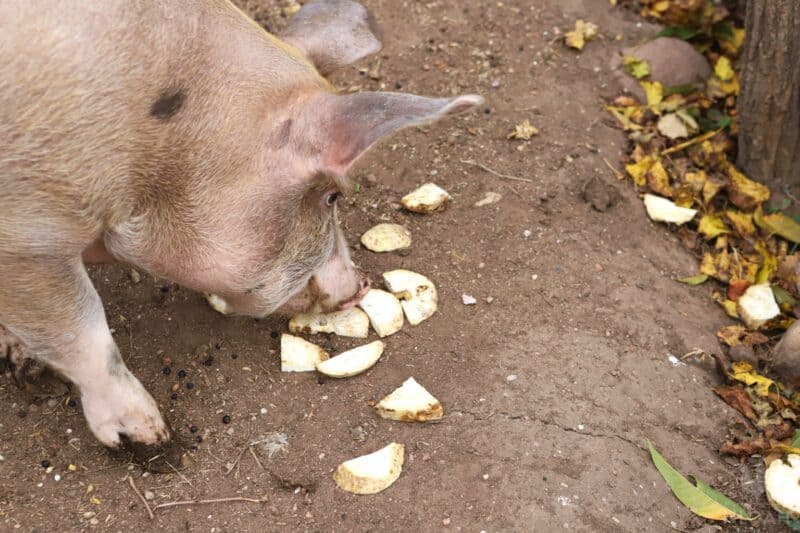
One of the best ways to pasture pigs is with rotational grazing. In a rotational grazing system, the pigs are only given access to a small part of the pasture at any given time.
After a few days, the pigs are moved to a fresh piece of ground and the previous spot is left to rest. In a good rotational system, most of the ground won’t have pigs at any given time.
The number of pigs per acre is called the stocking rate. Your overall stocking rate should be 3,000 to 6,000 pounds of pig per acre.
Why pounds and not pigs? Pigs come in a wide range of sizes. Ten feeder pigs at 65 pounds have the same impact on the soil as one sow that weighs 650 pounds.
On the low end, that works out to 50 feeder pigs or just five grown sows per acre. On the high end, you could keep as many as 100 feeders or ten sows per acre.
If you are just keeping a few pigs, plan on 450 to 875 square feet per feeder or 8,500 to 17,000 square feet for sows on pasture.
Stocking Density of Livestock
Another important concept in raising pastured pigs is stock density. The stocking rate is the total number of pigs per acre over time. Stock density is the number of pigs in a specific area at a specific moment.
Keeping the pigs on smaller units of the overall area allows you to spread out the impact of the pigs more evenly.
Rooting and wallowing damage will be less in any particular part of the pasture. Manure is spread out more evenly, and the best forage plants have time to regrow.
New producers should aim for a stocking density of about 20,000 pounds per acre. For feeders, that works out to about 130 square feet per pig. Grown sows need around 1,300 square feet per pig in a rotational system.
When and How to Rotate Pigs
The trick to using high stocking density is to move the pigs at the right time. Since they have a single stomach set up to digest a bit of everything, they will need some grain to grow at their best.
A good rule of thumb is to rotate pigs when they have eaten between 180 and 200 pounds of grain per thousand square feet of pasture.
Many pastured pork producers fill the feeder with just the right amount of feed for the pasture available. When the feed is gone, it is time to move the pigs. Also, moving an empty feeder is much easier than moving a full one.
You can vary the time in each rotation to change the impact. For example, pigs excel at rooting up brush and small trees.
Keeping your pigs in brushy areas longer will give them more time to clear underbrush, and make way for better pasture.
On the other hand, shorter rotations are warranted if you are trying to protect very high-quality forages. Giving the pigs a quick stay then moving them on minimizes the damage they can do to pastures.
Equipment Needed to Rotate Livestock
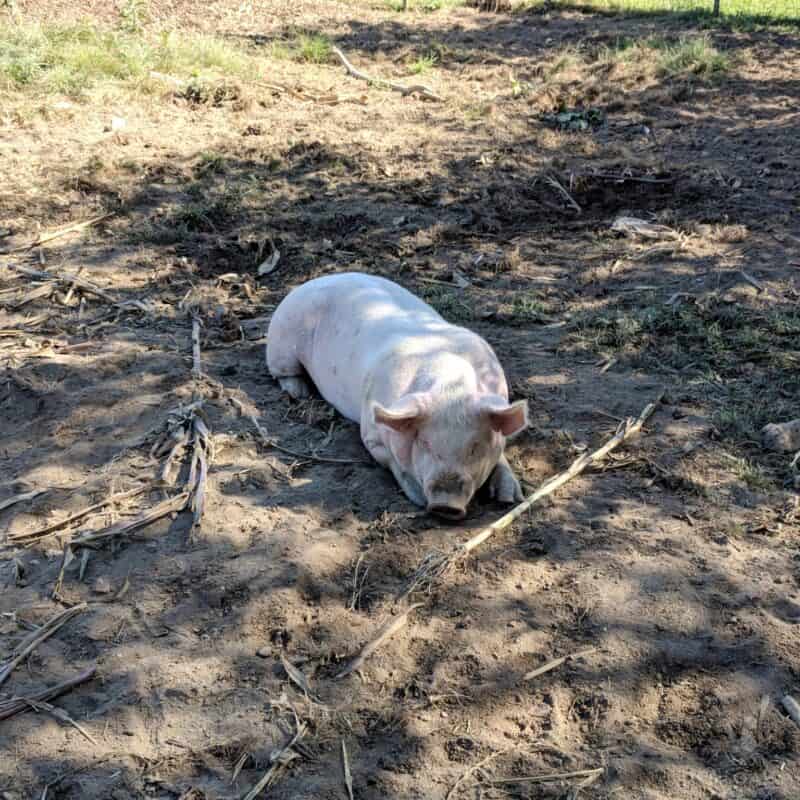
Portable electric fencing works best with this kind of system. Portable electric net systems are the strongest and easy to move but can be expensive. Standard poly twine with fiberglass posts is a good alternative.
Make sure to get an insulated reel for the extra poly twine. Solar energizers are adequate for the short runs of fencing required for rotational grazing. Pigs are smart and will quickly learn to avoid the electric fence.
Other portable equipment is also helpful when grazing pigs. Plastic barrels make good waterers that can be easily moved. Portable housing for shade or for warmth will keep your pigs comfortable.
If portable equipment isn’t really an option, you can use a hub-and-spoke design for your pig grazing.
Put the house and water at the center of your grazing area, then set up the grazing boundaries like the spokes of a wheel. The pigs still just get a little bit at a time, but you won’t have to move the house.
Building permanent fences for rotational grazing is possible, but it’s very expensive. Pigs are escape artists and will quickly find holes or weak spots in fencing.
Exterior fencing for a property with pigs should include woven net wire and good sturdy posts to keep the pigs on your property.
If you have six paddocks set up for the pigs to rotate through, each one will be used for about a week then rested for five weeks.
Environmental Impacts of Rotational Grazing
Managing the forage this way ensures that the best plants will have time to regrow and spreads the fertilizer equally across the entire area.
There are three good results from this kind of system. First, parasite life cycles are broken. Most parasites lay eggs that pass through the pig’s digestive system and hatch out on the ground.
If there are no pigs around when the eggs hatch, the young parasites die. Second, rotational grazing keeps the pigs from destroying the best plants in the pasture.
They will eat the tops of the plants down, but the plants have time to regrow between rotations.
Third, manure is evenly distributed through the larger area. By moving the pigs at regular intervals, you can make sure that all parts of the pasture get used and fertilized equally.
Other Variables to Consider in Your Stocking Density Math
Even if you rotationally graze your paddocks with your hogs, it’s important to remember that there are other factors that come into play.
Type of Forage
The type of forage you have available on your farm will directly affect how many pigs you can raise per acre.
For example, alfalfa has higher nutritional value than some other types of hay, meaning your herd may need less feed if they are grazing on alfalfa compared to clover or tall fescue.
In addition, consider whether or not you have control over soil erosion – this factor can affect both the quality and quantity of forage available on your farm.
Age of Pigs
Another variable to consider when calculating stocking density is the age of the pigs being raised. The size and number of piglets versus an adult breeding herd are different; as such, there needs to be an understanding as to which age group will inhabit each paddock before determining stocking density numbers.
Whether Other Animals Will Be Used
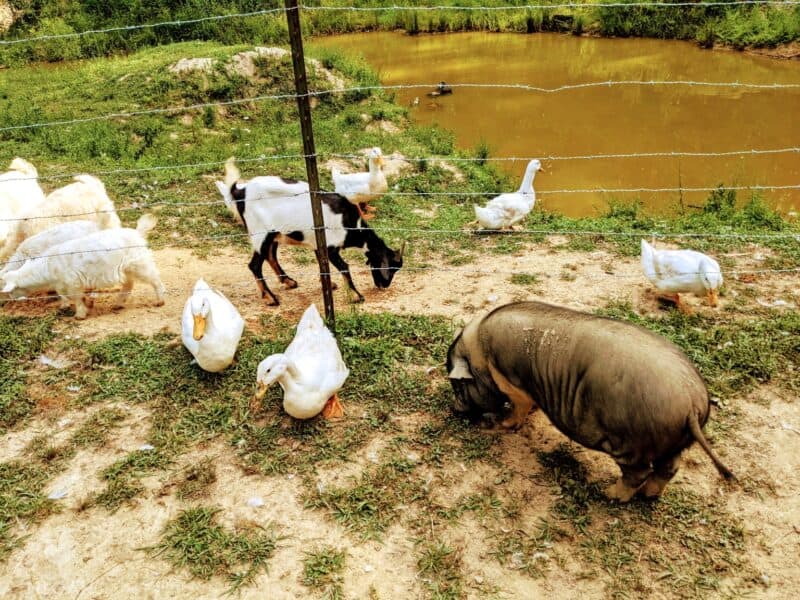
If you are running multiple species on your farm (such as sheep or cattle), there are additional considerations that come into play when calculating stocking density. It is important to note that different species require different lengths of time in each paddock.
Supplemental Feed, Minerals, and Vitamins Being Used
High protein, legume-based feeds such as corn silage or alfalfa hay are essential for growing hogs.
This type of feed will help hogs reach their optimal weight in less time. In addition to these types of feed, you’ll need to provide minerals and vitamins so they can obtain the nutrients needed for good health.
Pig Breeds
The type of pig breed you choose will also affect stocking density and number of pigs per acre. Large breeds like Large Blacks require more space than small breeds.
Berkshires and Kunekunes grow more slowly, but often take up less space and offer better land utilization. Weigh out all those pros and cons carefully.
Best Stocking Rates for Swine Production
Some experienced producers use stocking rates as high as 40,000 pounds per acre. However, a lower rate is better to start with.
Aim to stock pigs at 10,000 to 20,000 pounds per acre. That works out to two to four pounds of pig per square foot.
Depending on the size of the pigs, each rotation will need to have:
- 80 pounds per pig X 2 square feet per pound = 160 square feet per pig
- 80 pounds per pig X 4 square feet per pound = 320 square feet per pig
- 220 pounds per pig X 2 square feet per pound = 440 square feet per pig
- 220 pounds per pig X 4 square feet per pound = 880 square feet per pig
- 600 pounds per sow X 2 square feet per pound = 1,200 square feet per sow
- 600 pounds per sow X 4 square feet per pound = 2,400 square feet per sow

Get your gift and learn things like:
- how to make this really quick pest spray
- how to prevent egg waste
- two cheap automation devices that will make your life easier
Aaron Cummins operates a small farm in the Cross Timbers region of Texas. He raises pastured pigs, grass-fed cattle, and vegetables. He cures pork and makes his own sausages. He enjoys hunting, fishing, and raising his three sons.
Dose it mater where we set our pigs from buildings or homes?